Wilson’s Warbler (Wilsonia pusilla) Parulidae, male

Yaquina Head Outstanding Natural Area (BLM), OR
June 12, 2015
Robert Niese

Wilson’s Warbler was first identified by the father of American Ornithology, Alexander Wilson, in 1811. In his honor, the species was placed in a new genus, Wilsonia, in 1838 along with the Canada Warbler (W. canadensis) and the Hooded Warbler (W. citrina). But recent genetic evidence suggests that the genus Wilsonia should be split and merged with Setophaga and Cardellina. Although, considering that the methods used to determine these new relations are six years old, another revision of the Parulid family tree would not be surprising. Wilson’s Warblers are a common resident of moist forests throughout the PNW and perhaps best identified, like all warblers, by their song.

Paonias excaecata “Blinded Sphinx” Sphingidae

Lewis and Clark Trail State Park, WA
June 9, 2015
Robert Niese

These relatively large sphinx moths are quite common throughout the PNW. Their unusual, scalloped forewings are definitely beautiful, but their most striking feature is certainly their hindwings which possess startlingly prominent eyespots. Sorry I couldn’t get a photo of them for you though. Check out this unhappy individual here instead. Look for them around light sources near riparian, mixed-hardwood forests this summer!

Be sure to participate in National Moth Week July 18-26! To find events near you, check out their webpage! This year, we’re focusing on the Sphingids like this guy here!

Sebastes pinniger “Canary Rockfish” Sebastidae

Oregon Coast Aquarium, Newport, OR
June 12, 2015
Robert Niese

Canary Rockfish are among three species of PNW rockfish that are listed as threatened or endangered under the Endangered Species Act. All rockfish species are long-lived and overfished, however, and many populations are in massive decline. Fortunately, since 2007, regulations in British Columbia and Washington have banned the the fishing of all rockfish species living in most of the Puget Sound and Georgia Basin.

Cornus canadensis “Canadian Bunchberry” Cornaceae

Weir Hot Springs, Clearwater National Forest, ID
June 8, 2015
Robert Niese

Bunchberry is another member of the genus Cornus, but unlike its shrubby cousins, C. sericea and C. nuttallii, this species rarely grows more than a few inches from the ground. And unlike C. sericea, bunchberry flowers are minute, inconspicuous, and subtended by large, white bracts which are often mistaken for petals. It shares this type of inflorescence with the Pacific Dogwood, C. nuttallii. The fruits of the bunchberry, while not particularly tasty, are high in pectin and are often added to jams and puddings.

Cornus sericea “Red Osier Dogwood” Cornaceae

Weir Hot Springs, Clearwater National Forest, ID
June 8, 2015
Robert Niese

Red Osier Dogwood, so named for its beautiful red bark, is a common riparian and moist forest species throughout the PNW. Our region is home to three members of the genus Cornus and they couldn’t look any less alike! While C. sericea grows in a large shrubby form, it’s close cousin C. canadensis only grows a single stem a few centimeters off the ground. And C. nuttallii grows as a tree with large, white, showy “flowers.” In the fall and winter, Red Osier Dogwood’s white berries attract grouse and other birds, but are largely unpalatable to humans. Its bark, however, is often used in kinnikinnick and tobacco smoking mixtures.

Cornus sericea “Red Osier Dogwood” Cornaceae

Weir Hot Springs, Clearwater National Forest, ID
June 8, 2015
Robert Niese

Red Osier Dogwood, so named for its beautiful red bark, is a common riparian and moist forest species throughout the PNW. Our region is home to three members of the genus Cornus and they couldn’t look any less alike! While C. sericea grows in a large shrubby form, it’s close cousin C. canadensis only grows a single stem a few centimeters off the ground. And C. nuttallii grows as a tree with large, white, showy “flowers.” In the fall and winter, Red Osier Dogwood’s white berries attract grouse and other birds, but are largely unpalatable to humans. Its bark, however, is often used in kinnikinnick and tobacco smoking mixtures.

Pollicipes polymerus “Gooseneck Barnacle” Cirripedia (Crustacea)

Seal Rock State Park, OR
June 11, 2015
Robert Niese

This species of Gooseneck Barnacle is the most common species of intertidal goosenecks in the PNW. In Portugal and Spain, their cousin P. pollicipes, is a common delicacy, but due to over-harvesting and coastline habitat destruction, the PNW now regularly exports this species to Europe. Check out Gordon Ramsey preparing a traditional, tapas-style barnacle recipe here. Also, this species is in direct competition for space and resources with California Mussels (Mytilus californianus) and will out-compete them in the absence of their primary predators, the Ochre Sea Star (Pisaster ochraceous) and the Glaucous-winged Gull (Larus glaucescens).

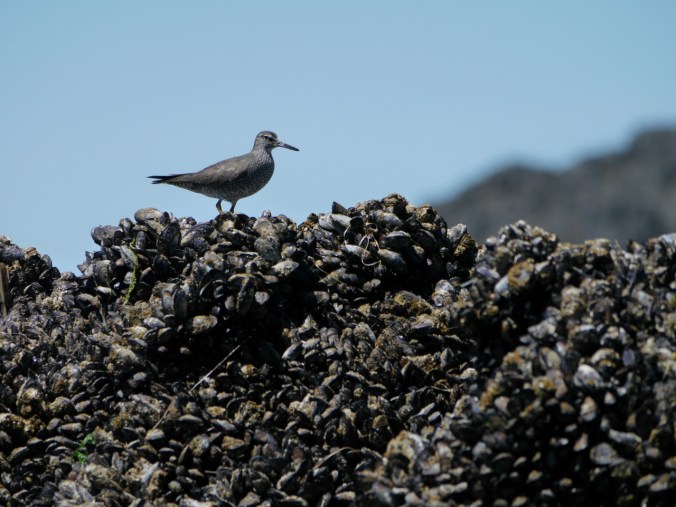
Wandering Tattler (Tringa incana) Scolopacidae

Seal Rock State Park, OR
June 11, 2015
Robert Niese

This Tattler was certainly wandering! It’s breeding season for most shorebirds this time of year, but this lone Wandering Tattler is hundreds of miles away from its typical breeding grounds in NE Russia, Alaska, and NW Canada. What’cha doing here, buddy?

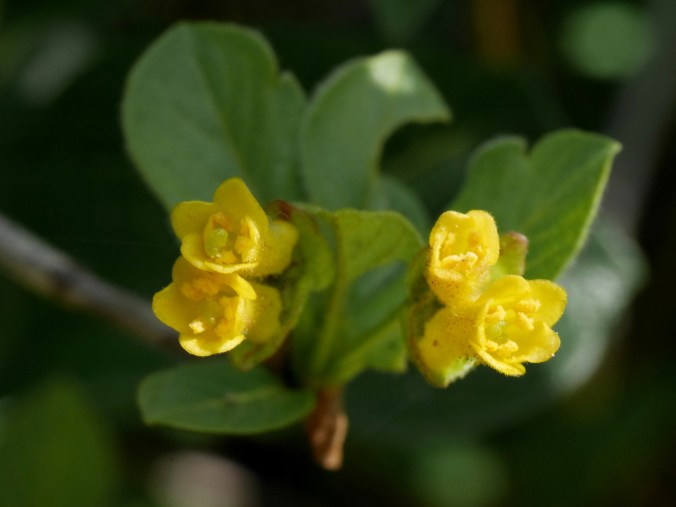
Lonicera involucrata “Twinberry” Caprifoliaceae

Beachside State Park, OR
June 11, 2015
Robert Niese

Twinberry is a common coastal shrub in the PNW. It tends to produce flowers in pairs that are regularly defended by Rufous Hummingbirds. These flowers usually develop into a pair of inedible berries. Many coastal native peoples held taboos against eating these berries. Some said that they were the food of monsters and the dead. Others believed that you would be unable to speak after consuming them. Instead the berries were often used as a hair dye and to prevent graying.

Lonicera involucrata “Twinberry” Caprifoliaceae

Beachside State Park, OR
June 11, 2015
Robert Niese

Twinberry is a common coastal shrub in the PNW. It tends to produce flowers in pairs that are regularly defended by Rufous Hummingbirds. These flowers usually develop into a pair of inedible berries, but in this sad bush, most of the berries had lost their twins. Many coastal native peoples held taboos against eating these berries. Some said that they were the food of monsters and the dead. Others believed that you would be unable to speak after consuming them. Instead the berries were often used as a hair dye and to prevent graying.