Dodecatheon pulchellum “Prairie Shooting Star” Primulaceae

Blackfoot River Recreation Corridor (BLM), MT
April 23, 2014
Robert Niese

Our two most common Shooting Stars in the Missoula area are D. conjugens and D. pulchellum. They are nearly identical and can even occur side-by-side on shrub-steppe hillsides, but a careful examination of the wrinkles at the base of the anthers and the shape of the stigma can usually assist in identification. D. pulchellum tends to have a slightly enlarged stigma and has anthers with wrinkles that run vertically. Conversely, D. conjugens has a narrow, almost imperceptible stigma and has wrinkles on its anthers that run horizontally. This individual has some nice vertical wrinkles and an obvious stigma.

Dodecatheon conjugens “Desert Shooting Star” Primulaceae

Lolo National Forest, Bitterroot Mountains, MT
March 18, 2015
Robert Niese

Our two most common Shooting Stars in the Missoula area are D. conjugens and D. pulchellum. They are nearly identical and can even occur side-by-side on shrub-steppe hillsides, but a careful examination of the wrinkles at the base of the anthers and the shape of the stigma can usually assist in identification. D. pulchellum tends to have a slightly enlarged stigma and has anthers with wrinkles that run vertically. Conversely, D. conjugens has a narrow, almost imperceptible stigma and has wrinkles on its anthers that run horizontally. This individual has some nice horizontal wrinkles and a very small stigma. After editing this picture, I noticed that there is also a louse or springtail hanging out on the style, presumably waiting for a pollinator to stop by so it can hitch a ride to another flower.

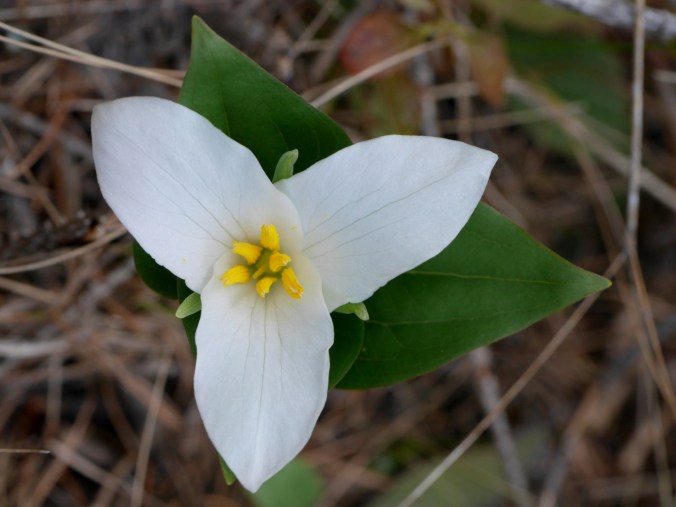
Trillium ovatum “Wakerobin/Western Trillium” Liliaceae

Lolo National Forest, Bitterroot Mountains, MT
March 18, 2015
Robert Niese

Trillium is, by far and away, my favorite spring arrival to our PNW forests. They like moist areas around rivers and streams, especially those that have a nice mossy carpet to keep the soil damp throughout the year.

Ribes setosum (R. oxyacanthoides ssp. setosum) “Gooseberry” Grossulariaceae

Lolo National Forest, Bitterroot Mountains, MT
April 18, 2015
Robert Niese

I was surprised to find this currant blooming on my hike this weekend. This individual must have been receiving direct sunlight for a good portion of the day to have bloomed so much sooner than all the others along our trail. Later in the summer these adorable flowers will become delicious, juicy black currants and will make an excellent trail-side treat!

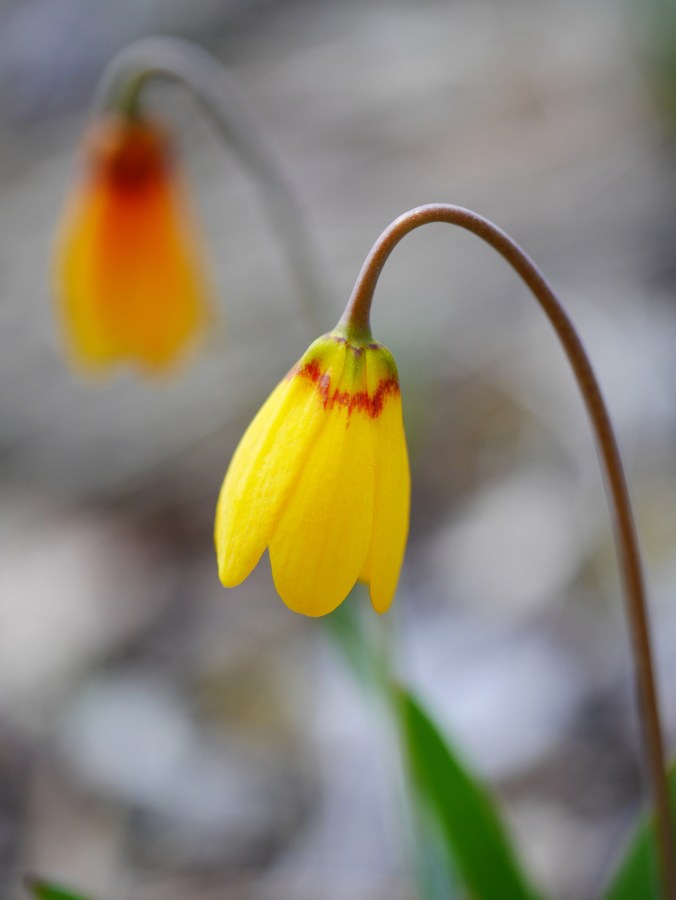
Fritillaria pudica “Yellowbells/Yellow Fritillary” Liliaceae

Lolo National Forest, Bitterroot Mountains, MT
April 18, 2015
Robert Niese

Yellow Fritillaries are a sure sign of spring in the PNW east of the Cascades. They tend to make their appearance around the same time as species like the Sagebrush Buttercup and Biscuitroot. The roots of F. pudica are edible and quite starchy. They are said to taste like rice after they have been cooked.

Collinsia parviflora “Blue-eyed Mary” Plantaginaceae (Scrophulariaceae)

Lolo National Forest, Bitterroot Mountains, MT
April 18, 2015
Robert Niese

The Smallflowered Blue-eyed Mary is a common PNW plant, but its diminuitive growth habit makes it easy to miss. The flowers of this plant are rarely more than a few millimeters across and they rarely grow more than 10cm off the ground. Here in Montana, they begin blooming as soon as the snow melts in March and will continue through July.

Arctostaphylos uva-ursi “Bearberry/Kinnikinnick” Ericaceae

Lolo National Forest, Bitterroot Mountains, MT
April 18, 2015
Robert Niese

Bearberry is a ubiquitous, vining Ericad here in the pinelands of the eastern PNW. The dried leaves of this plant are very popular in traditional Native American smoking mixtures. The dried leaves are also used in teas to treat mild urinary tract problems.

Berberis repens “Creeping Oregon Grape” Berberidaceae

Salmon-Challis National Forest, ID
March 19, 2015
Robert Niese

It’s a little early for Oregon Grape to be blooming! This species is our only Berberis native to the dry pinelands of the Northwest.

Opuntia polyacantha “Plains Prickly Pear” Cactaceae

Salmon-Challis National Forest, ID
March 19, 2015
Robert Niese

Cacti are not really the kinds of plants I normally associate with the Pacific Northwest, but we have several species native to our area (two and some hybrids, really). They are commonly found in arid, open areas east of the Cascades, but can also be found on many of the islands throughout the Salish Sea!

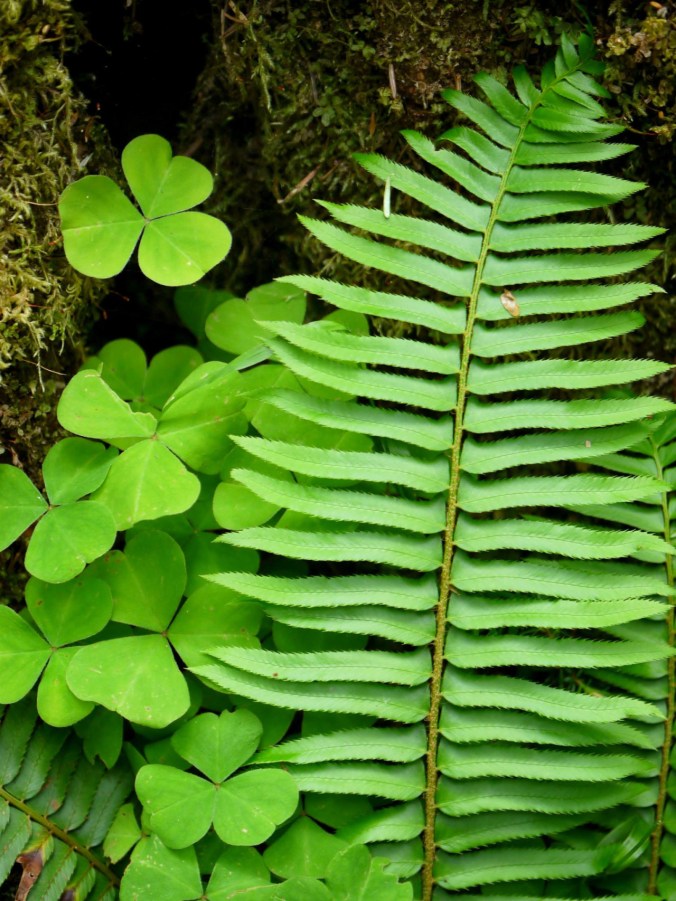
Oxalis oregana “Oregon Wood-sorrel” Oxalidaceae
with Polystichum munitum “Western Sword Fern” Dryopteridaceae

Olympic National Park, WA
June 5, 2013
Robert Niese

This is a common scene throughout the Olympic Peninsula where rainforest floors are literally carpeted with these two species. Both species are edible, but Oxalis is by far my favorite of the two. There’s nothing quite like munching on Oxalis straight from the trail while hiking through a PNW rainforest.