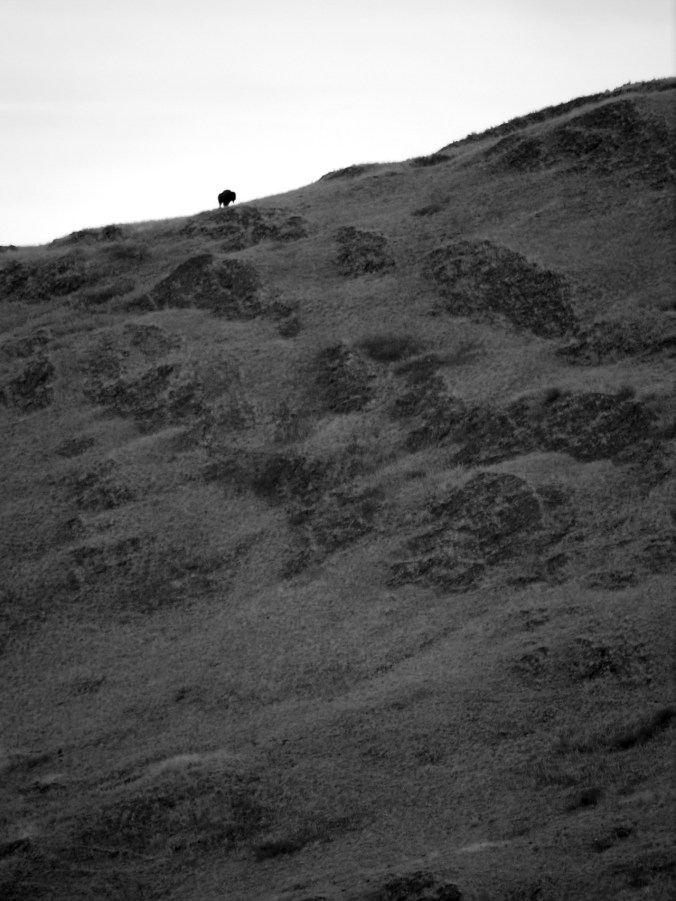
Ridgeline Bison
National Bison Range, MT
September 21, 2013
Robert Niese
Ridgeline Bison
National Bison Range, MT
September 21, 2013
Robert Niese
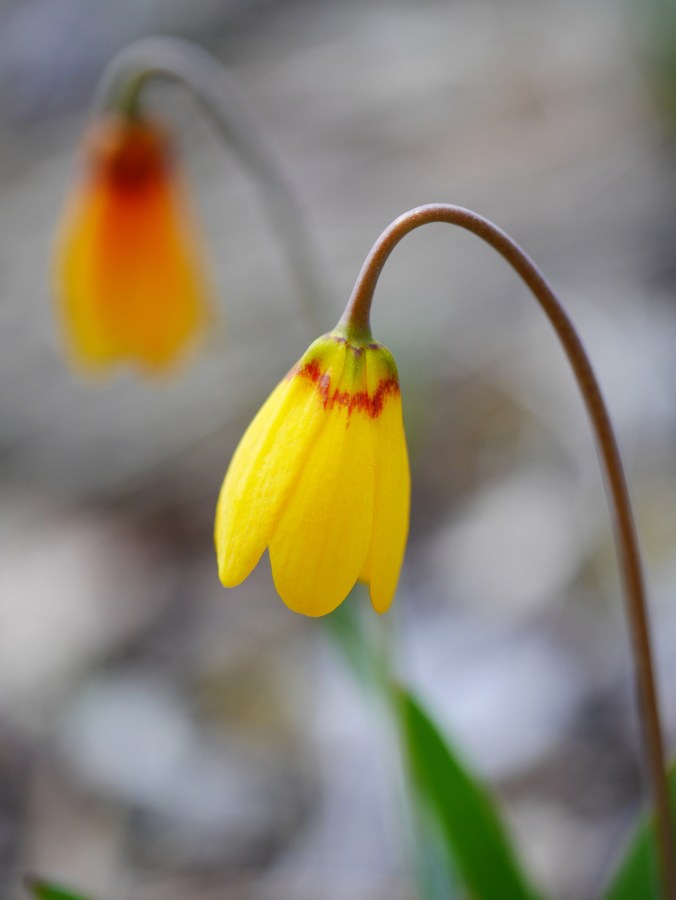
Fritillaria pudica “Yellowbells/Yellow Fritillary” Liliaceae
Lolo National Forest, Bitterroot Mountains, MT
April 18, 2015
Robert Niese
Yellow Fritillaries are a sure sign of spring in the PNW east of the Cascades. They tend to make their appearance around the same time as species like the Sagebrush Buttercup and Biscuitroot. The roots of F. pudica are edible and quite starchy. They are said to taste like rice after they have been cooked.

Collinsia parviflora “Blue-eyed Mary” Plantaginaceae (Scrophulariaceae)
Lolo National Forest, Bitterroot Mountains, MT
April 18, 2015
Robert Niese
The Smallflowered Blue-eyed Mary is a common PNW plant, but its diminuitive growth habit makes it easy to miss. The flowers of this plant are rarely more than a few millimeters across and they rarely grow more than 10cm off the ground. Here in Montana, they begin blooming as soon as the snow melts in March and will continue through July.

Platycryptus californicus Salticidae
Missoula, MT
June 5, 2014
Robert Niese
An extremely abundant, charismatic jumper commonly found on door frames and windowsills throughout the summer here in Missoula.

Arctostaphylos uva-ursi “Bearberry/Kinnikinnick” Ericaceae
Lolo National Forest, Bitterroot Mountains, MT
April 18, 2015
Robert Niese
Bearberry is a ubiquitous, vining Ericad here in the pinelands of the eastern PNW. The dried leaves of this plant are very popular in traditional Native American smoking mixtures. The dried leaves are also used in teas to treat mild urinary tract problems.
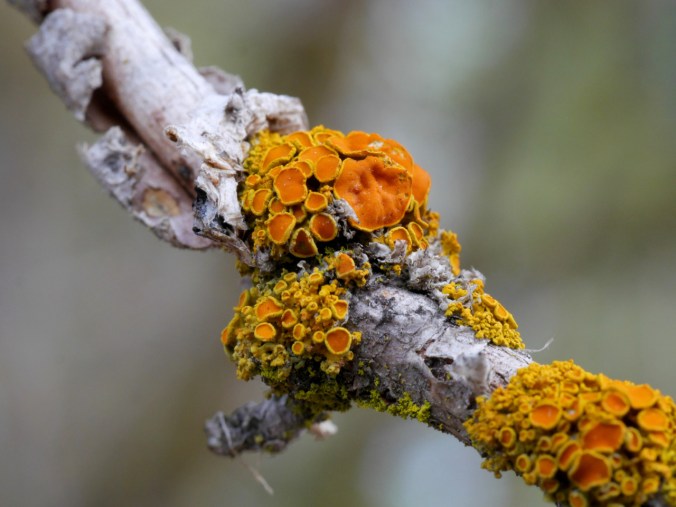
Xanthoria polycarpa “Pincushion Xanthoria”
Council Grove State Park, MT
March 16, 2015
Robert Niese
This lichen is relatively common on the old twigs of Populus and Pinus in open, nutrient-enriched areas (e.g. cow pastures) of the PNW. On angiosperm twigs, they tend to grow in a small pincushion-like form no more than 25mm across.
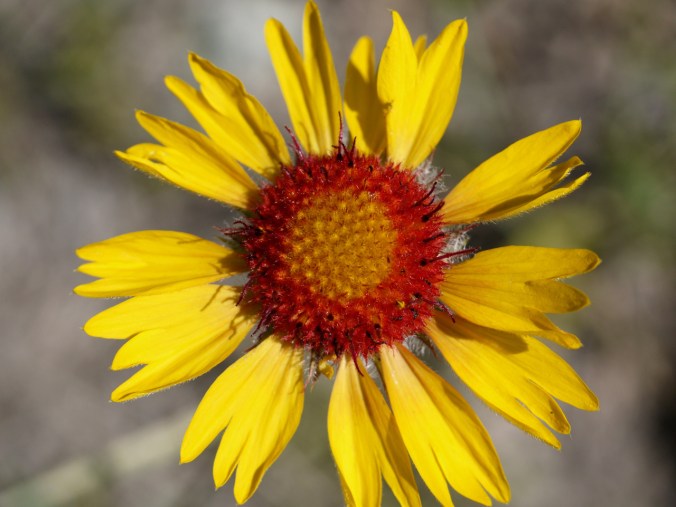
Gaillardia aristata “Blanketflower” Asteraceae
National Bison Range, MT
June 8, 2014
Robert Niese
Blanketflowers are a common native wildflower throughout the dry, open areas of the Pacific Northwest east of the Cascades. You can also find it as a cultivated plant in gardens around town.
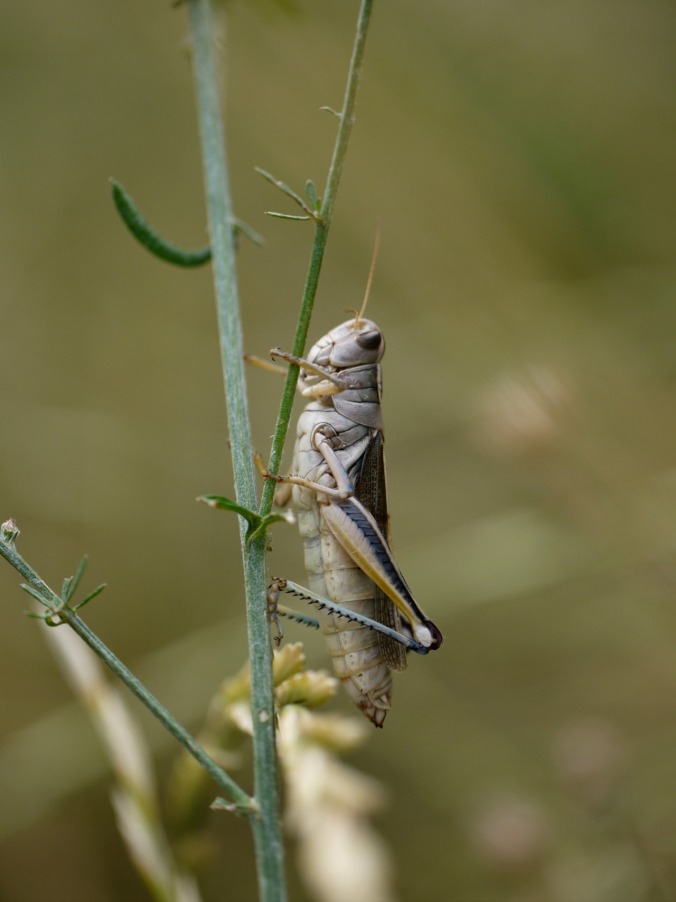
Melanoplus bivittatus bivittatus “Two-striped Grasshopper” Acrididae
Missoula, MT
September 2, 2013
Robert Niese
The Two-striped Grasshopper can be found throughout North America and can be quite variable morphologically. In drier regions here in the PNW, M. bivittatus bivittatus tends to be a dull yellow-brown color with blueish legs. In wetter, coastal regions, M. bivittatus femoratus will be green with red legs. Throughout the Northwest however, these grasshoppers are abundant and often found in gardens and vacant lots around town.

Ochlodes sylvanoides “Woodland Skipper” Hesperiidae
Missoula, MT
September 2, 2013
Robert Niese
These little guys are pretty common around Missoula in the late summer when they complete their metamorphosis. Look for them in grassy areas throughout the Pacific Northwest feeding on Asteraceae flowers like these weedy asters.

Populus tremuloides “Quaking Aspen” Salicaceae
Council Grove State Park, MT
March 16, 2015
Robert Niese
We have several species of willows, aspens (well, one aspen), and poplars in the PNW that produce these adorable fuzzy flowers in the early spring. These compact “pussy-foot” catkins are very typical of willows (Salix), but Quaking Aspen produces a very similar inflorescence. The easiest way to tell the two apart is to look at the buds. In Aspen, you’ll see lots of overlapping bud scales while in willows, the buds are smooth and consist of a single, wrap-around scale.
 Northwest Naturalist