Ribes cereum “Wax Currant” Grossulariaceae

Missoula, MT
July 19, 2015
Robert Niese

Apparently the berries of the Wax Currant are not very palatable. In fact, its young leaves and flowers are a much more prized trailside treat than its fruits! These little berries will retain their characteristically long, shriveled flowers to maturity when they start to turn red. Perhaps I’ll collect some for a wildberry jam later this summer.

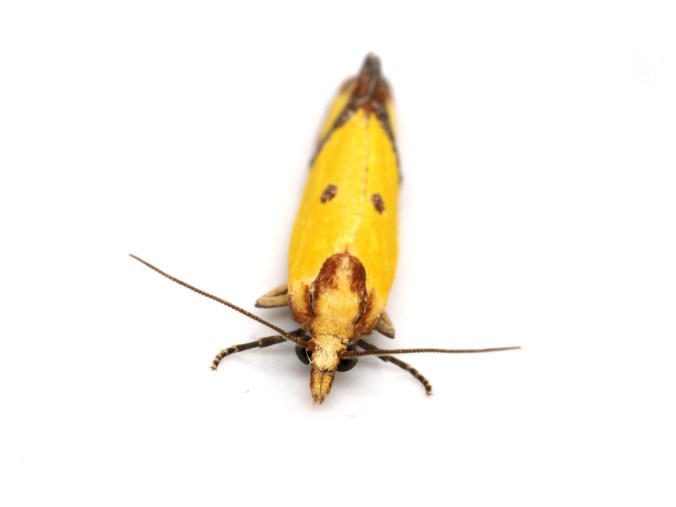
Agapeta zoegana “Sulphur Knapweed Moth” Tortricidae

August 14, 2014
Missoula, MT
Robert Niese

These diminutive moths (10mm in length) are obligate parasites of our invasive knapweed (Centaurea maculosa) and were introduced in 1984 as a potential biological control agent.

Happy National Moth Week!

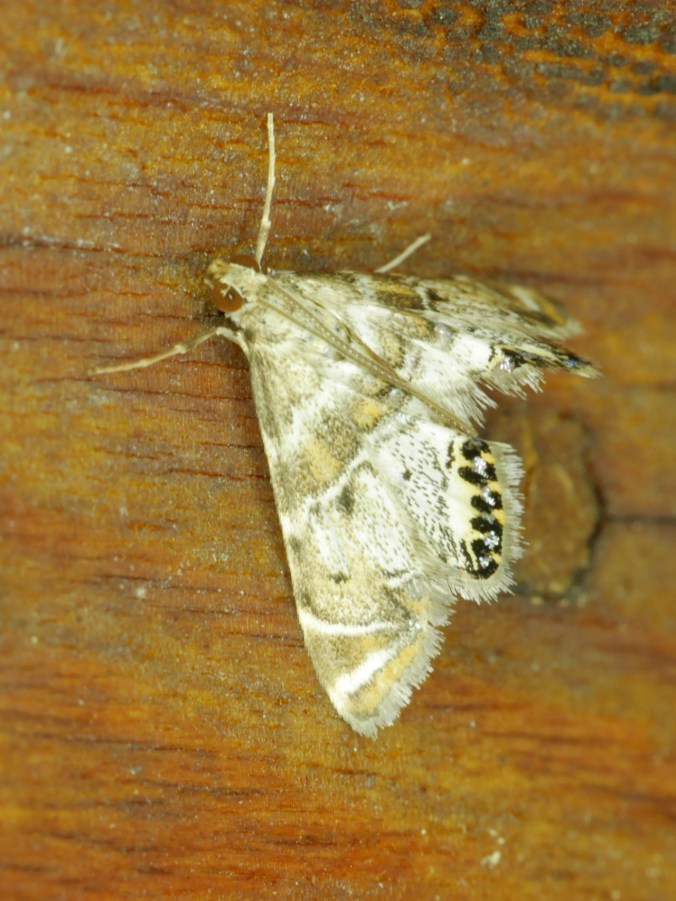
Petrophila confusalis Crambidae

Missoula, MT
July 21, 2015
Robert Niese

These adorable moths are absolutely fascinating! They often rest with their hindwings partially visible, displaying these prominent black spots. It’s likely that these patterns look like jumping spiders to potential predators or parasites (i.e. wasps). Check out this awesome video of the moth moving its wings to make its eyespots look extra scary, and this cool video of a different species chasing a male jumping spider like it’s a potential mate. In addition to this cool ability to mimic its predators, these moths also lay their eggs underwater! Females actually dive down to the bottom of fast-flowing streams to lay their eggs on algae-ridden rocks in riffles and rapids. During these dives, their abdomens get encased in a bubble of air, providing them with oxygen just like a scuba diver! The larvae then hatch and consume the diatoms and algae growing on the stream-bottom.

We must have had six of these moths at our lights last night! Happy National Moth Week!

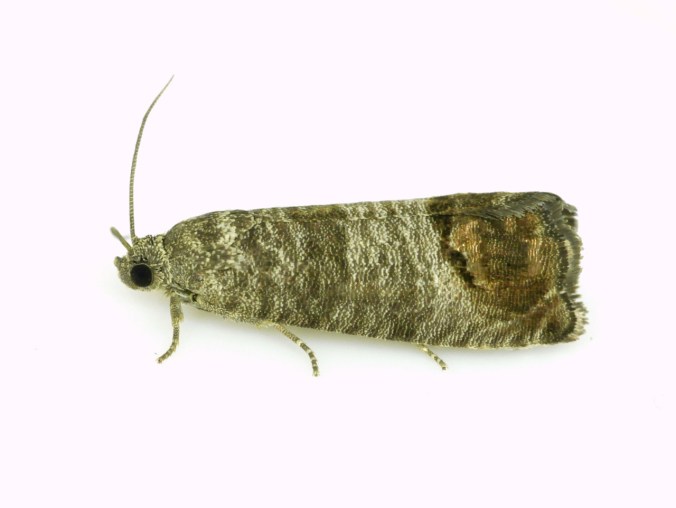
Cydia pomonella “Codling Moth” Tortricidae

Missoula, MT
July 20, 2015
Robert Niese

Codling Moths are perhaps the most infamous moths in the world. They are found everywhere there are apple trees. In fact, these moths are so widespread that no one is quite sure where they came from, although it’s likely they evolved in Eurasia with the apple tree. Females lay their eggs on apple trees and the larvae hatch and immediately burrow into the fruit where they consume the flesh and seeds. The moths are controlled through various means of suppression including pheromone traps that catch males searching for females, trunk banding that captures larvae as they leave the tree to pupate, and releasing Trichogramma parasitic wasps to kill eggs. But the most common form of control is through the application of Codling Moth Granulosis Virus which kills larvae a few days after hatching.

Happy National Moth Week!

Ectoedemia sericopeza “Norway Maple Seedminer” Nepticulidae

Missoula, MT
September 25, 2014
Robert Niese

These teensy-tiny moths are rarely over 2mm in length and are among some of the smallest lepidopterans in the world. Their larvae, which are equally infinitesimal, feed exclusively on (and within!) the tissues of the Norway Maple (Acer platanoides), an introduced species which lines most of our streets here in Missoula.

Happy National Moth Week!

Alucita montana “Montana Six-plumed Moth” Alucitidae

Missoula, MT
November 20, 2013
Robert Niese

This is a member of a rather large group of moths that fly using rackets, not paddles. The “plumes” of the plume moths are remarkably similar to feathers on a bird. Learn more about how these cool organisms are capable of flying here.

Happy National Moth Week!

Alucita montana “Montana Six-plumed Moth” Alucitidae

Missoula, MT
November 20, 2013
Robert Niese

This is a member of a rather large group of moths that fly using rackets, not paddles. The “plumes” of the plume moths are remarkably similar to feathers on a bird. Learn more about how these cool organisms are capable of flying here.

Happy National Moth Week!

Agapeta zoegana “Sulphur Knapweed Moth” Tortricidae

August 14, 2014
Missoula, MT
Robert Niese

These diminutive moths (10mm in length) are obligate parasites of our invasive knapweed (Centaurea maculosa) and were introduced in 1984 as a potential biological control agent.

Happy National Moth Week!

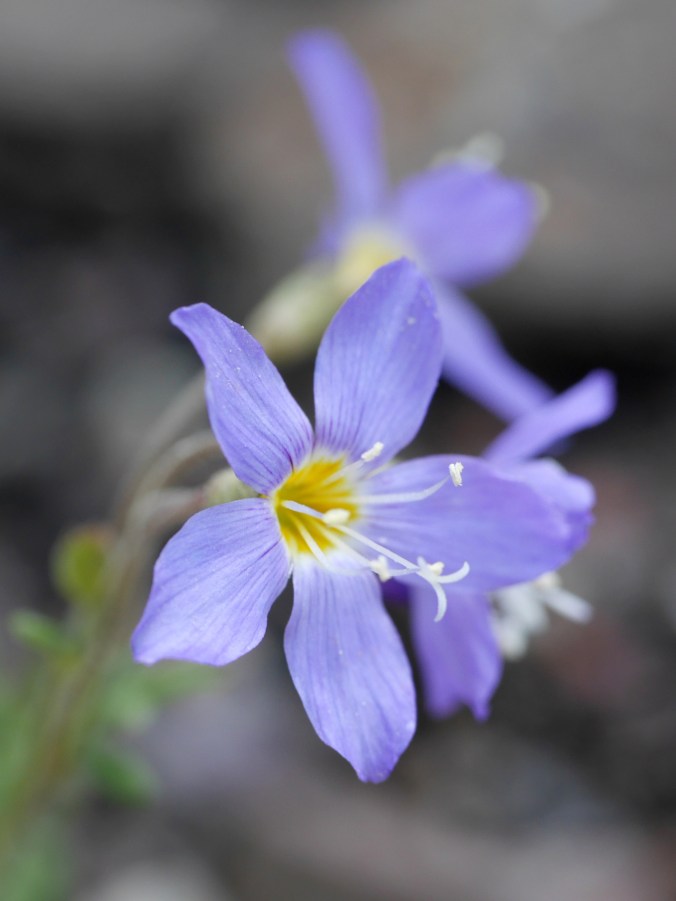
Polemonium pulcherrimum var. pulcherrimum “Jacob’s Ladder” Polemoniaceae

Missoula, MT
April 25, 2015
Robert Niese

Jacob’s Ladder is an abundant wildflower found on talus slopes or rocky outcrops throughout lower elevations of western Montana. However, in Washington, these plants, while equally common, are restricted to sub-alpine zones and are regularly found above the tree-line.