Misumena vatia “Goldenrod Crab Spider” Thomisidae on
Cymopterus glaucus “Waxy Spring Parsley” Apiaceae

Lolo National Forest, Bitterroot Mountains, MT
May 10, 2015
Robert Niese

Goldenrod Crab Spiders are inordinately abundant in spring blooms all around the PNW. They can be differentiated from their cousins in the genus Misumenoides by the lack of a faint white ridge on their face between their lower eyes and their jaws. But far more interesting than this lurking ambush predator is the fact that this image of Cymopterus glaucus is the first to grace the internet. And all because I thought I was taking a picture of a cool spider. You can see more photos of this plant below. C. glaucus is endemic to Idaho and western Montana where it is locally common on sandy or gravely slopes in dry Ponderosa Pinelands. I’m so confounded by the lack of images of this plant online that I’ll be checking out the UM herbarium later to verify that this is indeed C. glaucus. Any suggestions to the contrary would be much appreciated.

Equisetum arvense “Common Horsetail” Equisetaceae

Lolo National Forest, Bitterroot Mountains, MT
May 10, 2015
Robert Niese

Horsetails were once abundant, diverse organisms, but today all surviving members of this ancient clade are restricted to a single genus with a worldwide distribution. This particular stalk is a fertile, strobilus-bearing stem. Their infertile counterparts look almost nothing alike!

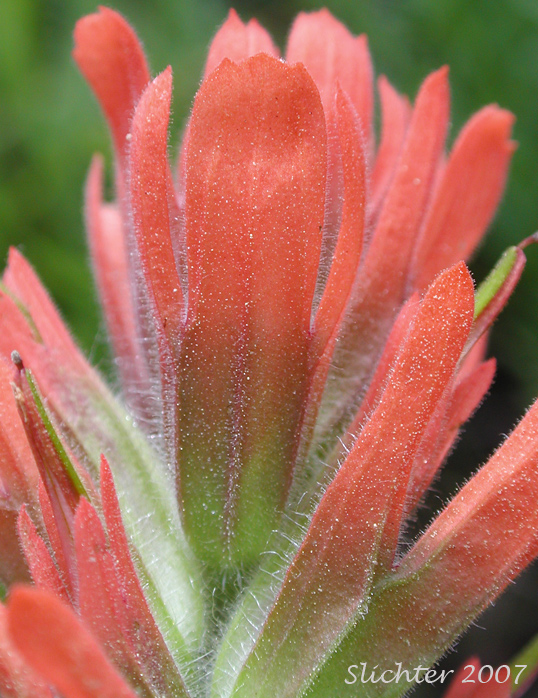
Castilleja hispida “Harsh Paintbrush” Orobanchaceae

Lolo National Forest, Bitterroot Mountains, MT
May 10, 2015
Robert Niese

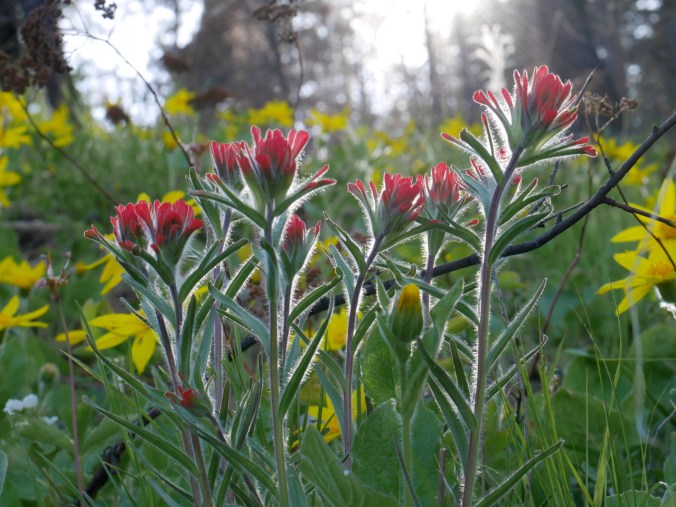
There are three or four species of paintbrushes with red bracts in the Pacific Northwest. The two most common are the Harsh Paintbrush (C. hispida) and the Common Crimson Paintbrush (C. miniata). C. hispida has a dense coat of long, hispid hairs (which look lovely when back-lit!) and will always have lobed leaves on the upper third of their stems. Conversely C. miniata is often less hairy and will have unlobed leaves on the entire stem (sometimes with small lobes on the upper-most portion). The two can also be differentiated by their calyces which are pointed in C. miniata and blunt in C. hispida.
Fun Fact: All paintbrush species are parasites, growing on the roots of other plants to survive.

Dodecatheon conjugens “Desert Shooting Star” Primulaceae

Lolo National Forest, Bitterroot Mountains, MT
March 18, 2015
Robert Niese

Our two most common Shooting Stars in the Missoula area are D. conjugens and D. pulchellum. They are nearly identical and can even occur side-by-side on shrub-steppe hillsides, but a careful examination of the wrinkles at the base of the anthers and the shape of the stigma can usually assist in identification. D. pulchellum tends to have a slightly enlarged stigma and has anthers with wrinkles that run vertically. Conversely, D. conjugens has a narrow, almost imperceptible stigma and has wrinkles on its anthers that run horizontally. This individual has some nice horizontal wrinkles and a very small stigma. After editing this picture, I noticed that there is also a louse or springtail hanging out on the style, presumably waiting for a pollinator to stop by so it can hitch a ride to another flower.

Geopyxis carbonaria “Goblet Fungus” Ascomycota

Lolo National Forest, Bitterroot Mountains, MT
March 18, 2015
Robert Niese

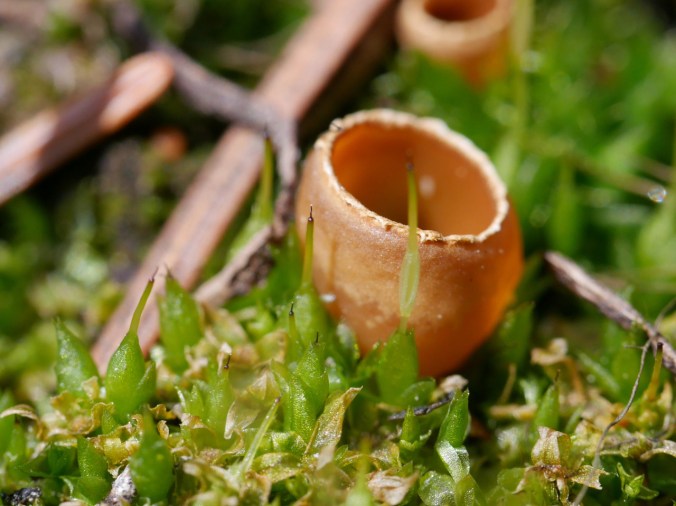
These adorable cup fungi are inordinately abundant in areas following fires. We counted more than a hundred in a single square meter on a hillside that had burned in 2013.

Trillium ovatum “Wakerobin/Western Trillium” Liliaceae

Lolo National Forest, Bitterroot Mountains, MT
March 18, 2015
Robert Niese

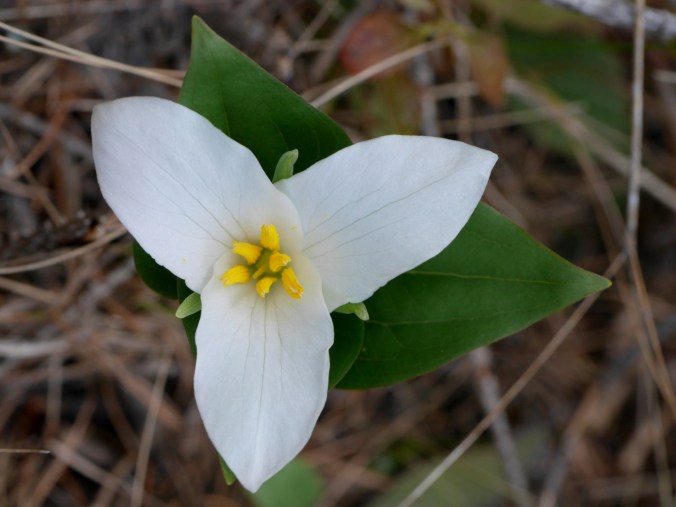
Trillium is, by far and away, my favorite spring arrival to our PNW forests. They like moist areas around rivers and streams, especially those that have a nice mossy carpet to keep the soil damp throughout the year.

Night Sky over Ponderosa Pines

Lolo National Forest, Sapphire Mountains, MT
June 6, 2014
Robert Niese

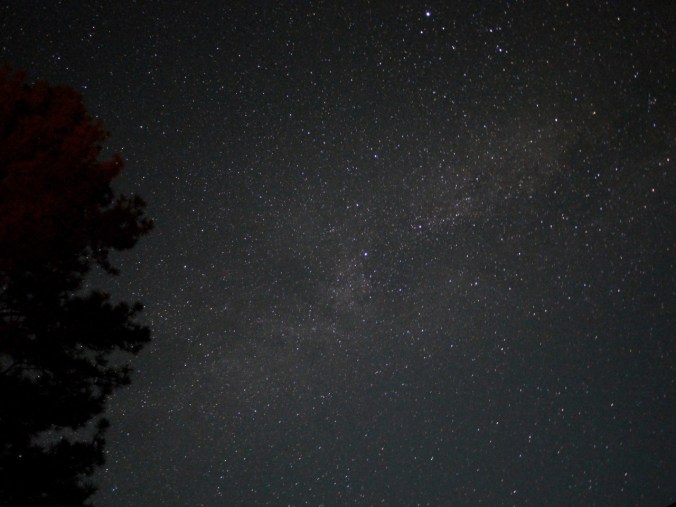
Nighttime photography can be a difficult, time-consuming skill to learn through trial and error. If you’d like some good how-to guides on getting the perfet stellar shot, check out Dark Clear Skies and download a star-viewing program like Stellarium or, for your mobile device, SkyView.

Pseudoplectania nigrella “black cup fungus” Ascomycota

Lolo National Forest, Bitterroot Mountains, MT
March 18, 2015
Robert Niese

These cup fungi are very early bloomers here in the PNW. Some members of this genus will even pop up out of the snow before the plants have even begun to stir. These fungi are quite common, but, along with their small size and inconspicuous coloration, they are easily missed by all but the most observant hikers.

Ribes setosum (R. oxyacanthoides ssp. setosum) “Gooseberry” Grossulariaceae

Lolo National Forest, Bitterroot Mountains, MT
April 18, 2015
Robert Niese

I was surprised to find this currant blooming on my hike this weekend. This individual must have been receiving direct sunlight for a good portion of the day to have bloomed so much sooner than all the others along our trail. Later in the summer these adorable flowers will become delicious, juicy black currants and will make an excellent trail-side treat!

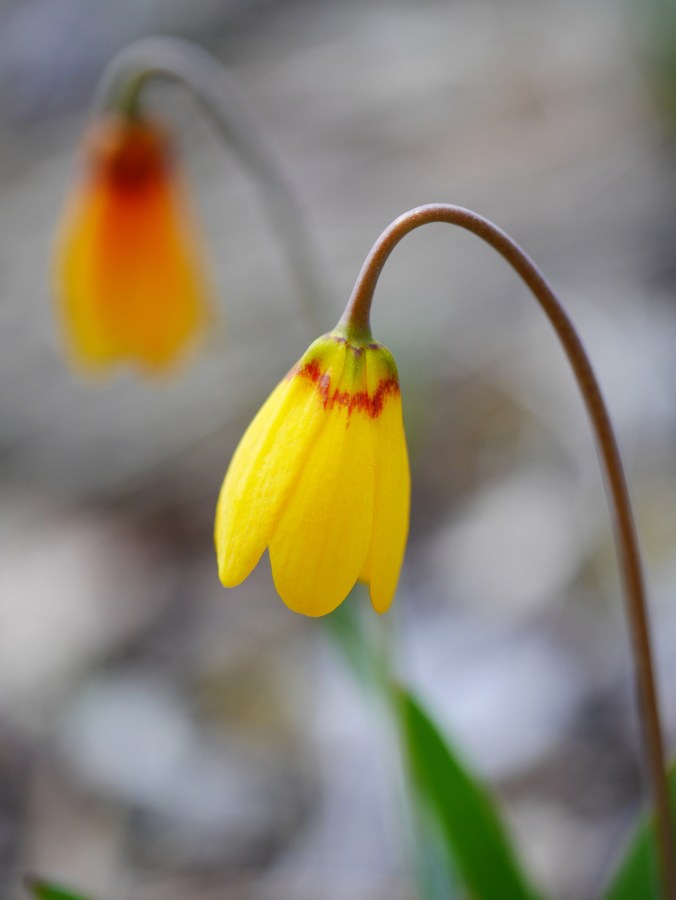
Fritillaria pudica “Yellowbells/Yellow Fritillary” Liliaceae

Lolo National Forest, Bitterroot Mountains, MT
April 18, 2015
Robert Niese

Yellow Fritillaries are a sure sign of spring in the PNW east of the Cascades. They tend to make their appearance around the same time as species like the Sagebrush Buttercup and Biscuitroot. The roots of F. pudica are edible and quite starchy. They are said to taste like rice after they have been cooked.