Cyphocleonus achates “Knapweed Root Weevil” Curculionidae

Missoula, MT
August 13, 2015
Robert Niese

These weevils are native to Europe, but were introduced in the 1980s as a potential biological control agent for various species of knapweed. Various studies have shown that they are actually quite good at reducing the biomass of Spotted Knapweed, and have been successful in various locations in Montana, Minnesota, Oregon, Nevada, British Columbia, and recently, Michigan.

Ceutorhynchus erysimi “Shepherd’s Purse Weevil” Curculionidae

Missoula, MT
June 19, 2015
Robert Niese

These adorable weevils were introduced along with the invasive weed, Shepherd’s Purse (Capsella bursa-pastoris; Brassicaceae) from Europe. They have iridescent green-blue elytra and rarely reach a size of more than 2mm. They’re my new favorite introduced species.

Agapeta zoegana “Sulphur Knapweed Moth” Tortricidae

August 14, 2014
Missoula, MT
Robert Niese

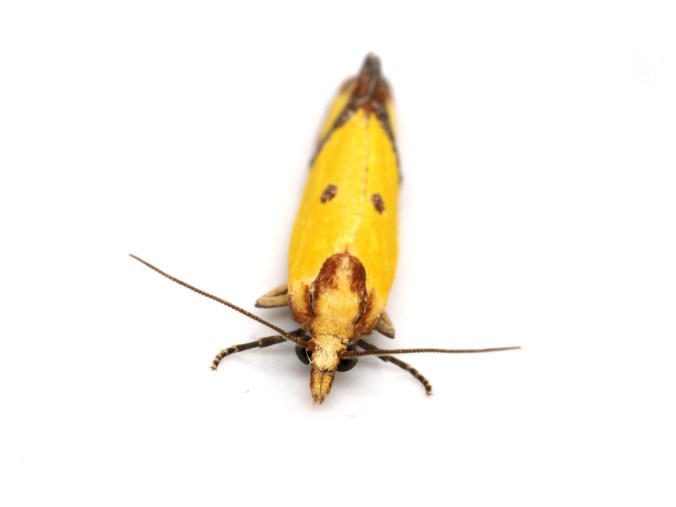
These diminutive moths (10mm in length) are obligate parasites of our invasive knapweed (Centaurea maculosa) and were introduced in 1984 as a potential biological control agent.

Happy National Moth Week!

Cydia pomonella “Codling Moth” Tortricidae

Missoula, MT
July 20, 2015
Robert Niese

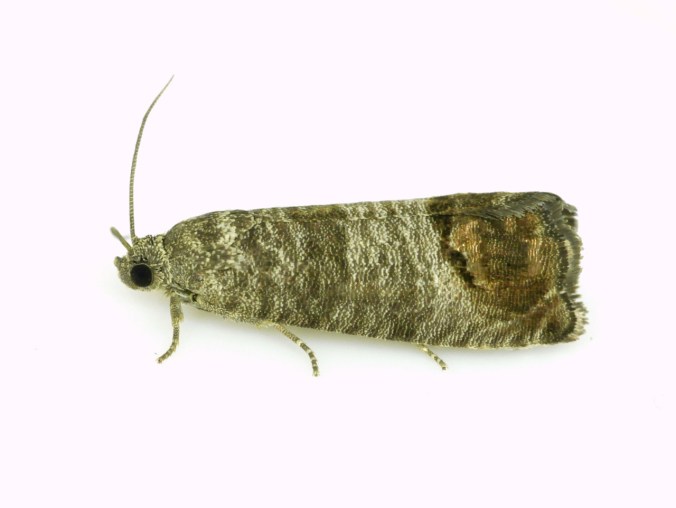
Codling Moths are perhaps the most infamous moths in the world. They are found everywhere there are apple trees. In fact, these moths are so widespread that no one is quite sure where they came from, although it’s likely they evolved in Eurasia with the apple tree. Females lay their eggs on apple trees and the larvae hatch and immediately burrow into the fruit where they consume the flesh and seeds. The moths are controlled through various means of suppression including pheromone traps that catch males searching for females, trunk banding that captures larvae as they leave the tree to pupate, and releasing Trichogramma parasitic wasps to kill eggs. But the most common form of control is through the application of Codling Moth Granulosis Virus which kills larvae a few days after hatching.

Happy National Moth Week!

Anania hortulata “Small Magpie” Crambidae

Tacoma, WA
July 8, 2013
Robert Niese

The Small Magpie is an adorable moth that was accidentally introduced from Europe. Its larvae feed on Stinging Nettle (Urtica dioica) and many members of the mint family.

Happy National Moth Week!

Agapeta zoegana “Sulphur Knapweed Moth” Tortricidae

August 14, 2014
Missoula, MT
Robert Niese

These diminutive moths (10mm in length) are obligate parasites of our invasive knapweed (Centaurea maculosa) and were introduced in 1984 as a potential biological control agent.

Happy National Moth Week!

Erodium cicutarium “Stork’s Bill” Geraniaceae

Missoula, MT
April 23, 2015
Robert Niese

Erodium is famous for its fascinating dispersal mechanism. Their fruits are shaped like a stork’s bill (hence the common name) and separate into five seeds with a wirey tip upon maturity. As the seeds dry out, they begin to curl up into a corkscrew-like shape. If they are resting on soil as they begin to dry, this curling process will drive them into the ground. You can watch this self-planting mechanism here or check out the GIF below. It’s really freaking awesome!

Alyssum desertorum “Desert Madwort” Brassicaceae

Missoula, MT
April 23, 2015
Robert Niese

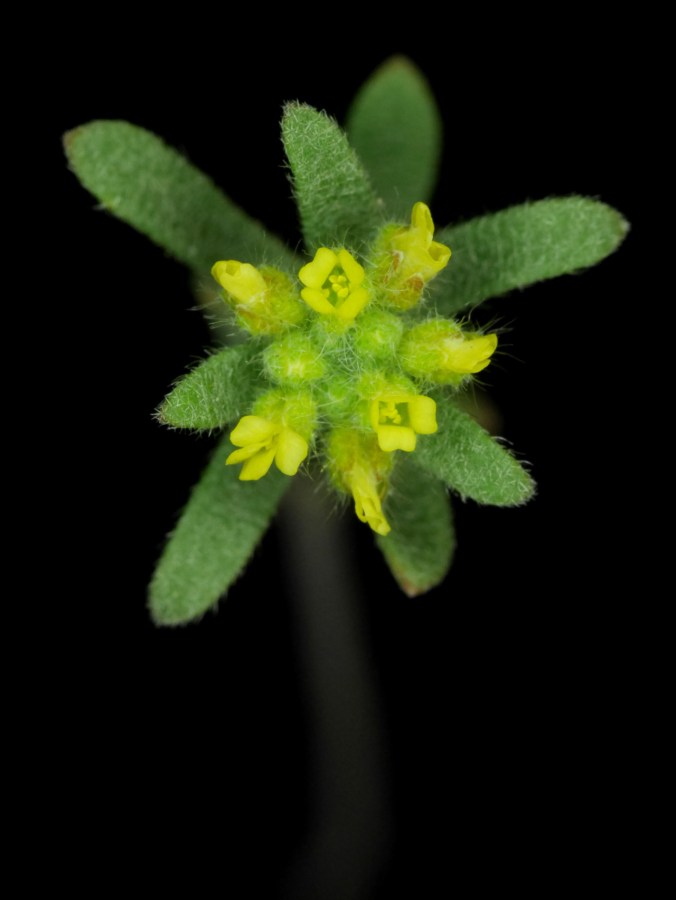
Desert Madwort is a common weed east of the Cascades. Although it is an invasive plant (native to Eurasia), the madwort has been incorporated into the diets of many important PNW species. For example, Pronghorn Antelope consume large quantities of madwort in the winter when other food is scarce. And harvester ants have been known to collect copious quantities of madwort seeds in the fall, and will sometimes collect every single seed that was dropped in a given season.

Chrysolina hyperici “St. Johnswort Beetle” Chrysomelidae

Joint Base Lewis-McChord, WA
May 2013
Robert Niese

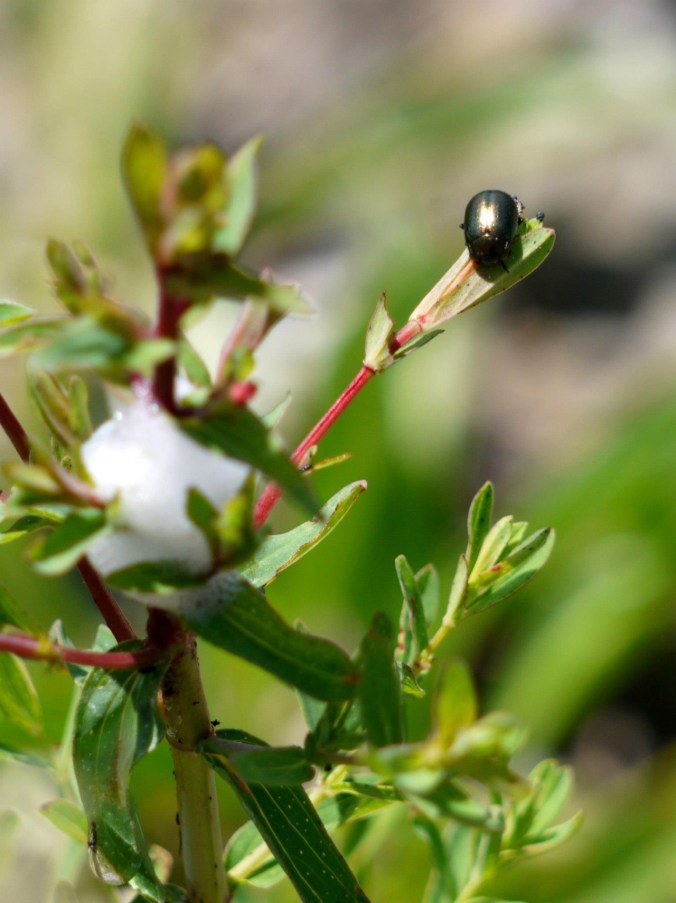
In the late 1940s these beetles were introduced to California to control the spread of the weed St. Johnswort (Hypericum perforatum). The introduction of the beetles was so successful that the state erected a monument commemorating their success in Eureka, CA.