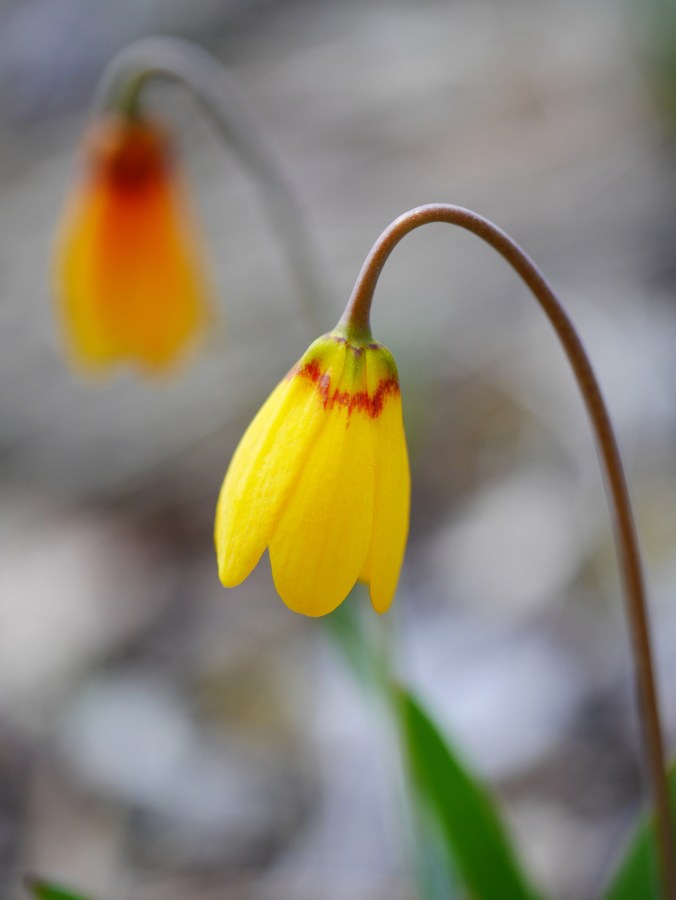
Fritillaria pudica “Yellowbells/Yellow Fritillary” Liliaceae

Lolo National Forest, Bitterroot Mountains, MT
April 18, 2015
Robert Niese

Yellow Fritillaries are a sure sign of spring in the PNW east of the Cascades. They tend to make their appearance around the same time as species like the Sagebrush Buttercup and Biscuitroot. The roots of F. pudica are edible and quite starchy. They are said to taste like rice after they have been cooked.

Collinsia parviflora “Blue-eyed Mary” Plantaginaceae (Scrophulariaceae)

Lolo National Forest, Bitterroot Mountains, MT
April 18, 2015
Robert Niese

The Smallflowered Blue-eyed Mary is a common PNW plant, but its diminuitive growth habit makes it easy to miss. The flowers of this plant are rarely more than a few millimeters across and they rarely grow more than 10cm off the ground. Here in Montana, they begin blooming as soon as the snow melts in March and will continue through July.

Platycryptus californicus Salticidae

Missoula, MT
June 5, 2014
Robert Niese

An extremely abundant, charismatic jumper commonly found on door frames and windowsills throughout the summer here in Missoula.

Arctostaphylos uva-ursi “Bearberry/Kinnikinnick” Ericaceae

Lolo National Forest, Bitterroot Mountains, MT
April 18, 2015
Robert Niese

Bearberry is a ubiquitous, vining Ericad here in the pinelands of the eastern PNW. The dried leaves of this plant are very popular in traditional Native American smoking mixtures. The dried leaves are also used in teas to treat mild urinary tract problems.

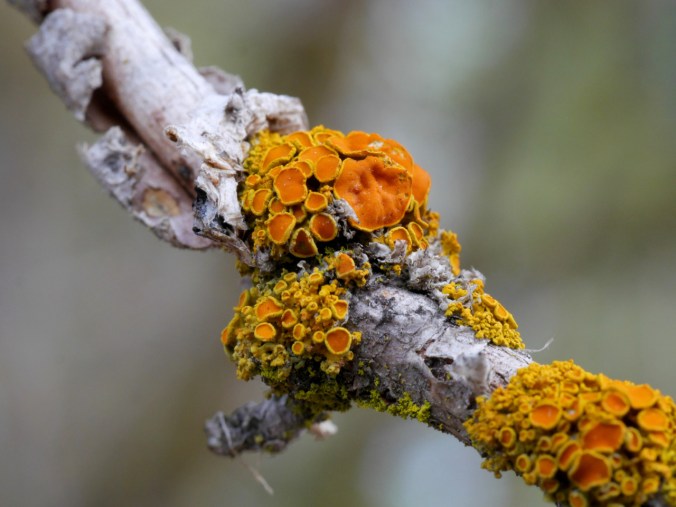
Xanthoria polycarpa “Pincushion Xanthoria”

Council Grove State Park, MT
March 16, 2015
Robert Niese

This lichen is relatively common on the old twigs of Populus and Pinus in open, nutrient-enriched areas (e.g. cow pastures) of the PNW. On angiosperm twigs, they tend to grow in a small pincushion-like form no more than 25mm across.

Berberis repens “Creeping Oregon Grape” Berberidaceae

Salmon-Challis National Forest, ID
March 19, 2015
Robert Niese

It’s a little early for Oregon Grape to be blooming! This species is our only Berberis native to the dry pinelands of the Northwest.

Juniperus scopulorum “Rocky Mountain Juniper” Cupressaceae

Salmon-Challis National Forest, ID
March 19, 2015
Robert Niese

Recent genetic evidence suggests that the Puget Sound populations of Juniperus scopulorum are actually a separate species (J. maritimus), although the two are nearly impossible to distinguish morphologically. The berries of both species are not particularly palatable, but make a good laxative.

Nymphalis antiopa “Mourning Cloak” Nymphalidae

Salmon-Challis National Forest, ID
March 20, 2015
Robert Niese

Mourning Cloaks are very territorial butterflies and will aggressively defend their feeding sites against intruding insects and have even been known to chase off hummingbirds! Also, March is really early to be seeing these guys out and about. There are hardly any flowers blooming that early!

Opuntia polyacantha “Plains Prickly Pear” Cactaceae

Salmon-Challis National Forest, ID
March 19, 2015
Robert Niese

Cacti are not really the kinds of plants I normally associate with the Pacific Northwest, but we have several species native to our area (two and some hybrids, really). They are commonly found in arid, open areas east of the Cascades, but can also be found on many of the islands throughout the Salish Sea!

Green-winged Teal (Anas crecca carolinensis) Anatidae, male

Seattle, WA
January 13, 2013
Robert Niese

Teal are definitely some of the most attractive waterfowl we have in Western Washington. Which northwest ducks are your favorite?