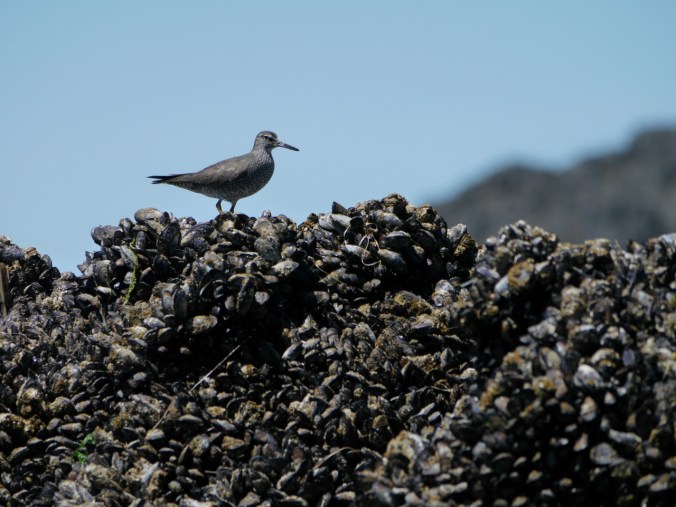
Wandering Tattler (Tringa incana) Scolopacidae

Seal Rock State Park, OR
June 11, 2015
Robert Niese

This Tattler was certainly wandering! It’s breeding season for most shorebirds this time of year, but this lone Wandering Tattler is hundreds of miles away from its typical breeding grounds in NE Russia, Alaska, and NW Canada. What’cha doing here, buddy?

Lonicera involucrata “Twinberry” Caprifoliaceae

Beachside State Park, OR
June 11, 2015
Robert Niese

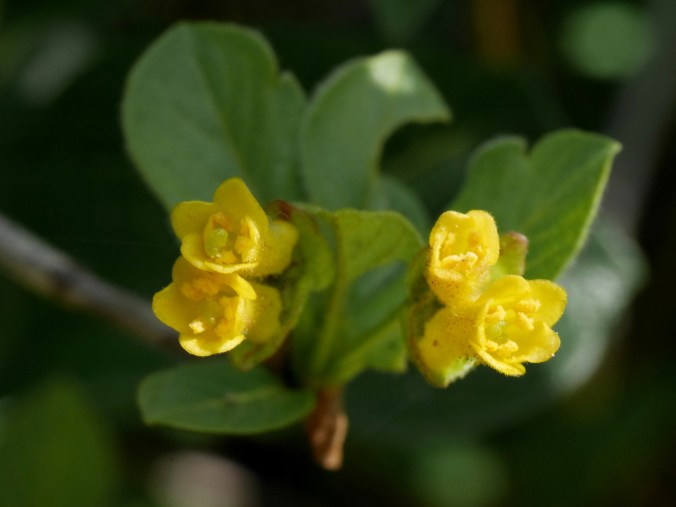
Twinberry is a common coastal shrub in the PNW. It tends to produce flowers in pairs that are regularly defended by Rufous Hummingbirds. These flowers usually develop into a pair of inedible berries. Many coastal native peoples held taboos against eating these berries. Some said that they were the food of monsters and the dead. Others believed that you would be unable to speak after consuming them. Instead the berries were often used as a hair dye and to prevent graying.

Lonicera involucrata “Twinberry” Caprifoliaceae

Beachside State Park, OR
June 11, 2015
Robert Niese

Twinberry is a common coastal shrub in the PNW. It tends to produce flowers in pairs that are regularly defended by Rufous Hummingbirds. These flowers usually develop into a pair of inedible berries, but in this sad bush, most of the berries had lost their twins. Many coastal native peoples held taboos against eating these berries. Some said that they were the food of monsters and the dead. Others believed that you would be unable to speak after consuming them. Instead the berries were often used as a hair dye and to prevent graying.

Eleodes “Desert Stink Beetle” Tenebrionidae

Palouse Falls State Park, WA
June 8, 2015
Robert Niese

Stink beetles are very common throughout the sagebrush deserts of eastern Washington. The Tenebrionid family’s taxonomy is extremely complex and often requires an examination of female genitalia to identify an organism with any further specificity, but most of the large black species fall into this supergenus. This beetle is posed and ready to release nasty-smelling chemicals in response to my terrifying camera lens. 

Asarum caudatum “Wild Ginger” Aristolochiaceae

Weir Hot Springs, Clearwater National Forest, ID
June 8, 2015
Robert Niese

The leaves of Asarum caudatum (a PNW endemic) smell like ginger when you rub them, but apparently contain carcinogens and may or may not be good in your tea. Their flowers grow on the ground beneath the leaves and are pollinated by beetles, flies, and even rodents. Pollinated flowers produce seeds with a fatty elaiosomes that are collected by ants and subsequently planted in the colony. 

Vanessa atalanta “Red Admiral” Nymphalidae

Palouse Falls State Park, WA
June 8, 2015
Robert Niese

This lovely Red Admiral sought refuge on this tree as the wind picked up at Palouse. This is an uncommon view of this species whose common name reflects its bright red markings on its upper surfaces. The Red Admiral also has red markings on its underwings, but keeps them hidden while attempting to camouflage itself as it is doing here.

Western Kingbird (Tyrannus verticalis) Tyrannidae

Palouse Falls State Park, WA
June 8, 2015
Robert Niese

Western Kingbirds are well deserving of the genus name Tyrannus because they are truly tyrannical terrors. Any bird that happens to wander too close to a kingbird nest (even fearsome ravens and falcons!) will immediately be assaulted by a flurry of feathers. I decided not to test their patience with human intruders. This guy did not seem too pleased to be my subject for a photo shoot in the first place.

Rhamnus purshiana “Cascara” Rhamnaceae

Weir Hot Springs, Clearwater National Forest ID
June 8, 2015
Robert Niese

Cascara is a Pacific Northwest endemic famous for the laxative properties of its bark. In fact, the bark of this species is in such high demand that the plant has been eradicated from some parts of its range. Regardless of its medicinal uses, Cascara is one of my favorite PNW trees because of its unmistakable, heavily veined leaves and its adorable, teensy-tiny flowers! These are only a few millimeters across!

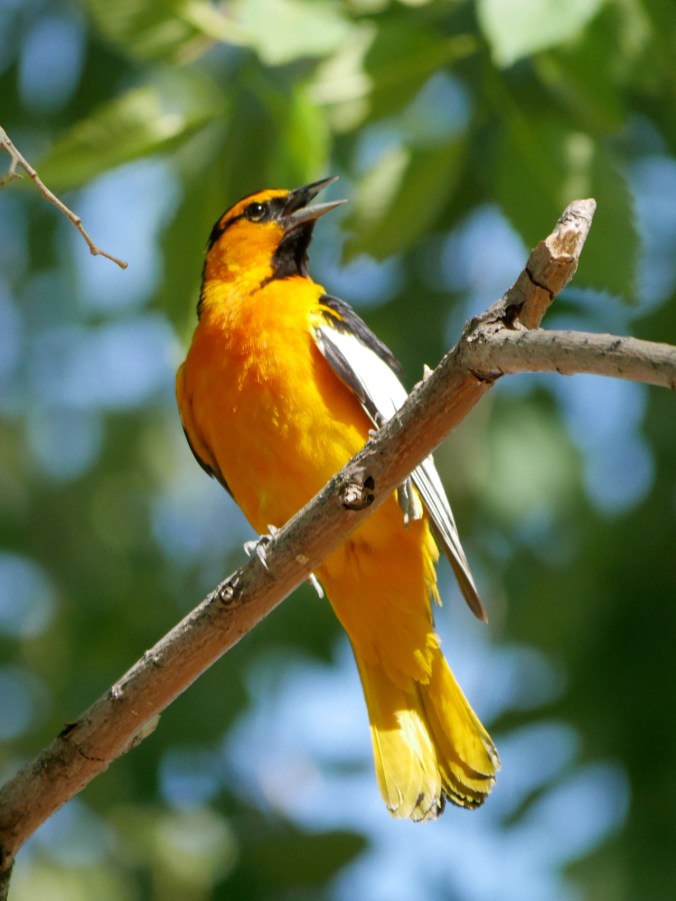
Bullock’s Oriole (Icterus bullockii) Icteridae, male

Palouse Falls State Park, WA
June 8, 2015
Robert Niese

Bullock’s Orioles are the only oriole species found in the Pacific Northwest. They are members of the “blackbird” family which includes a very large fraction of not-black species including the meadowlarks, oropendolas, bobolinks, and, of course, the orioles. Icterid blackbirds are not, however, related to the European Common Blackbird which is actually a robin, which are not related to European Robins which are actually chats, which are not related to Yellow-breasted Chats which are actually New World Warblers in the genus Icteria, which is not to be confused with the genus Icterus, because, as previously stated, orioles are blackbirds which are not robins which are not chats, which are not Yellow-breasted Chats which are New World Warblers, not blackbirds. More reasons to hate common names…
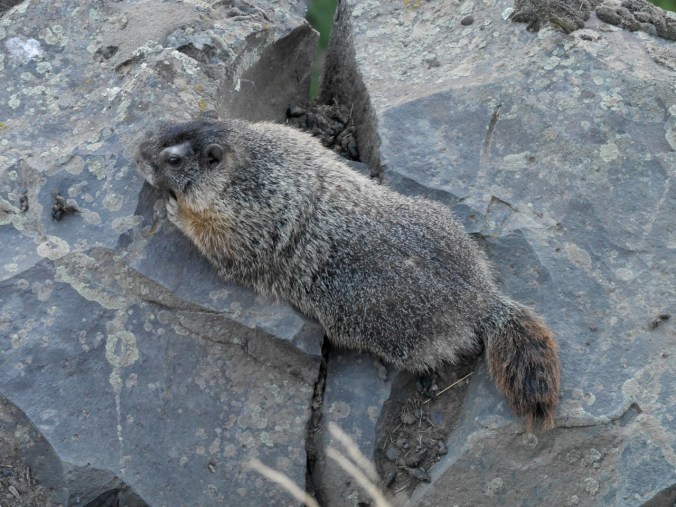
Marmota flaviventris “Yellow-bellied Marmot” Sciuridae

Palouse Falls State Park, WA
June 8, 2015
Robert Niese

Yellow-bellied Marmots are some of the largest rodents in North America. They are a member of the squirrel family, and have a plethora of common names including “whistle pigs,” “wood chucks,” “rock chucks,” and “ground hogs.” Ugh, this is why I hate common names.