Ceutorhynchus erysimi “Shepherd’s Purse Weevil” Curculionidae

Missoula, MT
June 19, 2015
Robert Niese

These adorable weevils were introduced along with the invasive weed, Shepherd’s Purse (Capsella bursa-pastoris; Brassicaceae) from Europe. They have iridescent green-blue elytra and rarely reach a size of more than 2mm. They’re my new favorite introduced species.
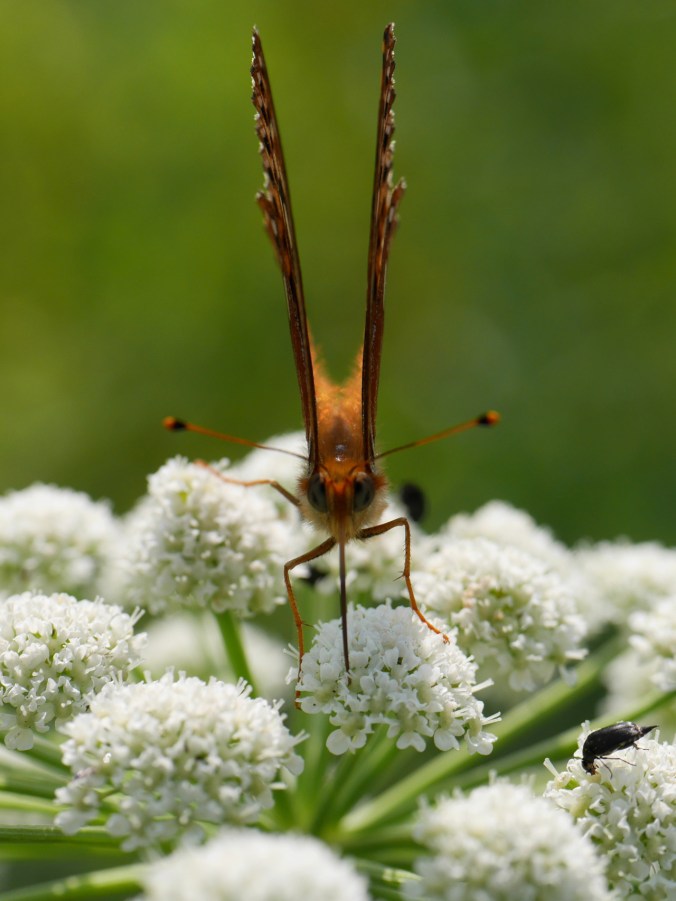
Speyeria hydaspe “Hydaspe Fritillary” Nymphalidae

Great Burn, Lolo National Forest, MT
July 10, 2015
Robert Niese


Fritillaries are common residents of moist meadows throughout North America. They lay their eggs on a variety of violet species. Upon hatching, the larvae immediately burrow into the ground (before eating) and hibernate until spring when they emerge and munch on the violet leaves.

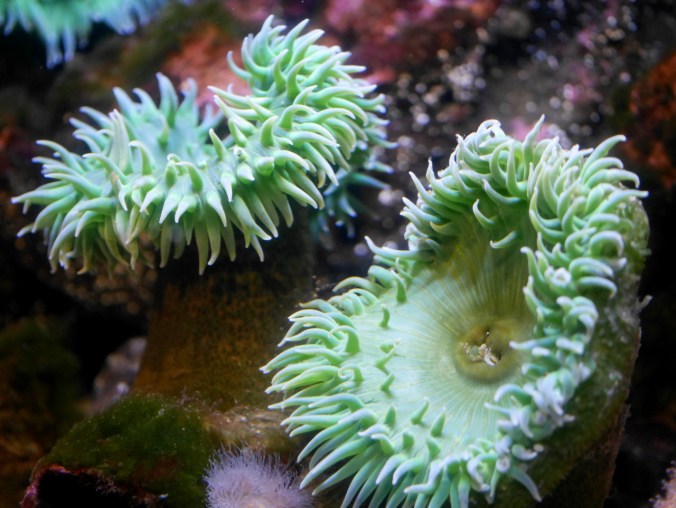
Anthopleura xanthogrammica “Giant Green Anemone” Anthozoa

Oregon Coast Aquarium, Newport, OR
June 12, 2015
Robert Niese


These anemones can grow up to a foot tall and a foot across! They’re abundant on rocky and sandy shores throughout the north-eastern Pacific (from Alaska to Panama). They tend to occur lower in the intertidal zone than their little, pink counterparts (A. elegantissima). The Giant Green Anemone primarily consumes dislodged mussels, crabs, small fish, and urchins, but has been recorded consuming larger animals including baby birds! It’s primary predators are leather stars, snails, and the shaggy mouse nudibranch.

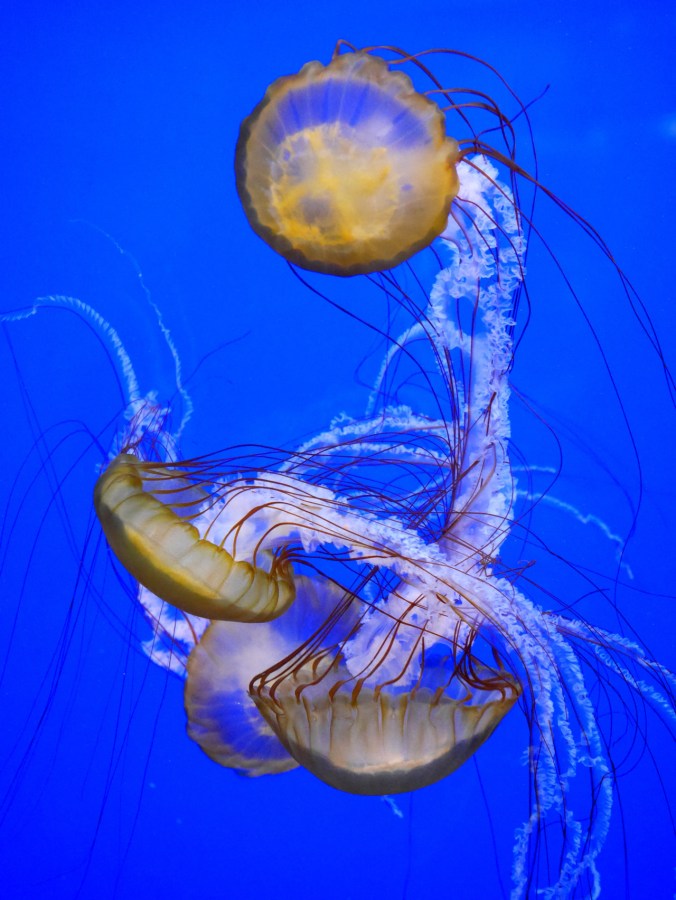
Chrysaora fuscescens “Pacific Sea Nettle” Scyphozoa

Oregon Coast Aquarium, Newport, OR
June 12, 2015
Robert Niese


The Pacific Sea Nettle is a relatively common sea jelly along North America’s Pacific Coast. They are also commonly kept in captivity due to their relatively simple care and attractive coloration. The tentacles of this species can easily grow up to 5 meters long, but are specialized for capturing small zooplankton and are relatively harmless to humans. These sea nettles have been increasing in abundance along the coasts of Oregon for the past few years. It’s possible that rising global sea temperatures or other anthropogenic changes to the local environment are the cause of this drastic increase in nettle populations.

Anatis rathvoni “Rathvon’s Giant Lady Beetle” Coccinellidae

Great Burn, Lolo National Forest, MT
July 10, 2015
Robert Niese

These massive (10mm) ladybugs are endemic to the PNW and are normally found in pines and other conifers where they voraciously consume aphids, caterpillars, and other small, fleshy-bodied herbivores. Their elytra vary in color from yellow, pale brown, to brown-red, darkening with age. Rathvon’s Giant Ladybird Beetles are named for a relatively obscure 19th century entomologist, S. S. Rathvon from Pennsylvania, who was one of North America’s first entomologists dedicated to educating the public about their local beneficial and pest-insects. Learn more about his life here.

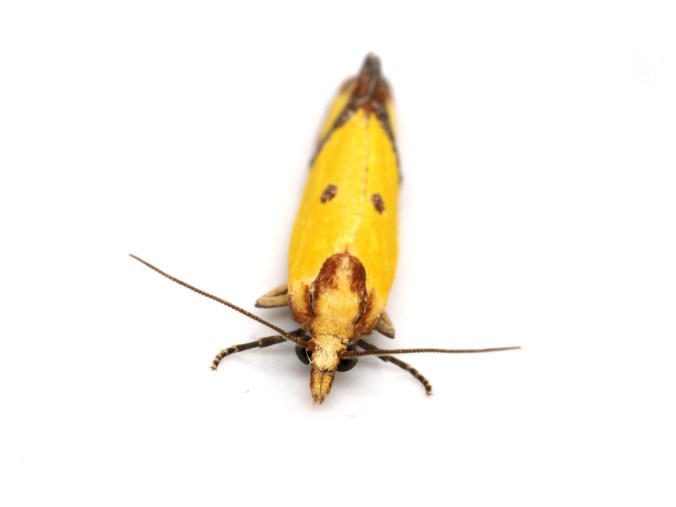
Agapeta zoegana “Sulphur Knapweed Moth” Tortricidae

August 14, 2014
Missoula, MT
Robert Niese

These diminutive moths (10mm in length) are obligate parasites of our invasive knapweed (Centaurea maculosa) and were introduced in 1984 as a potential biological control agent.

Happy National Moth Week!

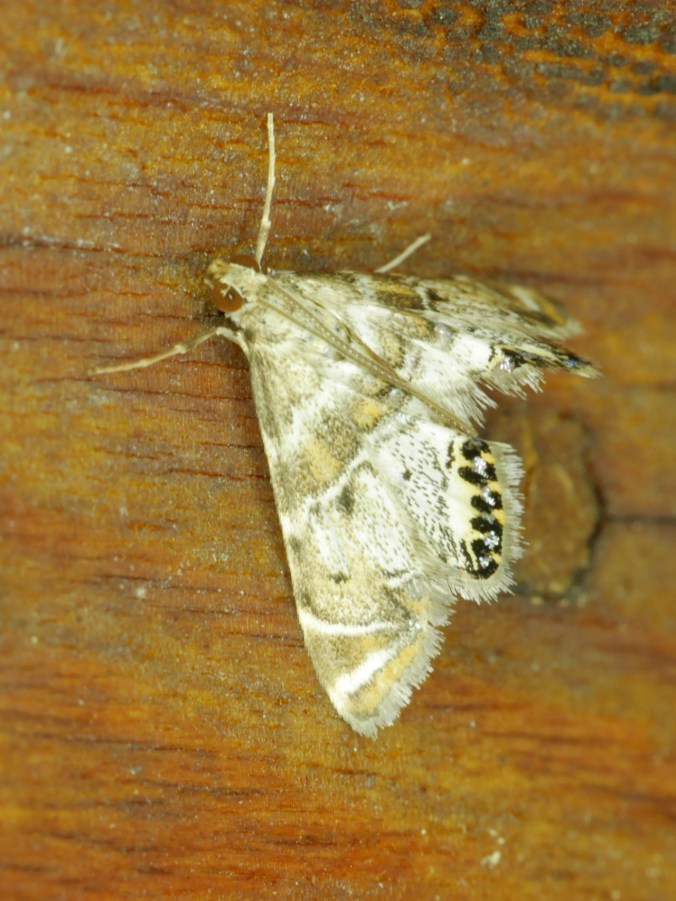
Petrophila confusalis Crambidae

Missoula, MT
July 21, 2015
Robert Niese

These adorable moths are absolutely fascinating! They often rest with their hindwings partially visible, displaying these prominent black spots. It’s likely that these patterns look like jumping spiders to potential predators or parasites (i.e. wasps). Check out this awesome video of the moth moving its wings to make its eyespots look extra scary, and this cool video of a different species chasing a male jumping spider like it’s a potential mate. In addition to this cool ability to mimic its predators, these moths also lay their eggs underwater! Females actually dive down to the bottom of fast-flowing streams to lay their eggs on algae-ridden rocks in riffles and rapids. During these dives, their abdomens get encased in a bubble of air, providing them with oxygen just like a scuba diver! The larvae then hatch and consume the diatoms and algae growing on the stream-bottom.

We must have had six of these moths at our lights last night! Happy National Moth Week!

Malacosoma californica “Western Tent Caterpillar” Lasiocampidae

Drinking Horse Mountain, Bozeman, MT
June 3, 2015
Robert Niese

Normally, tent caterpillars live in large groups in the safety of their silk “tents,” but this individual appears to have wandered off on its own. Often, after defoliating all the foliage on their first tent-plant, caterpillars will seek out food on nearby trees. But this individual looks really big and I suspect that it is seeking some quiet place to metamorphose into an adult moth. Learn more about these awesome moths here.

Happy National Moth Week!

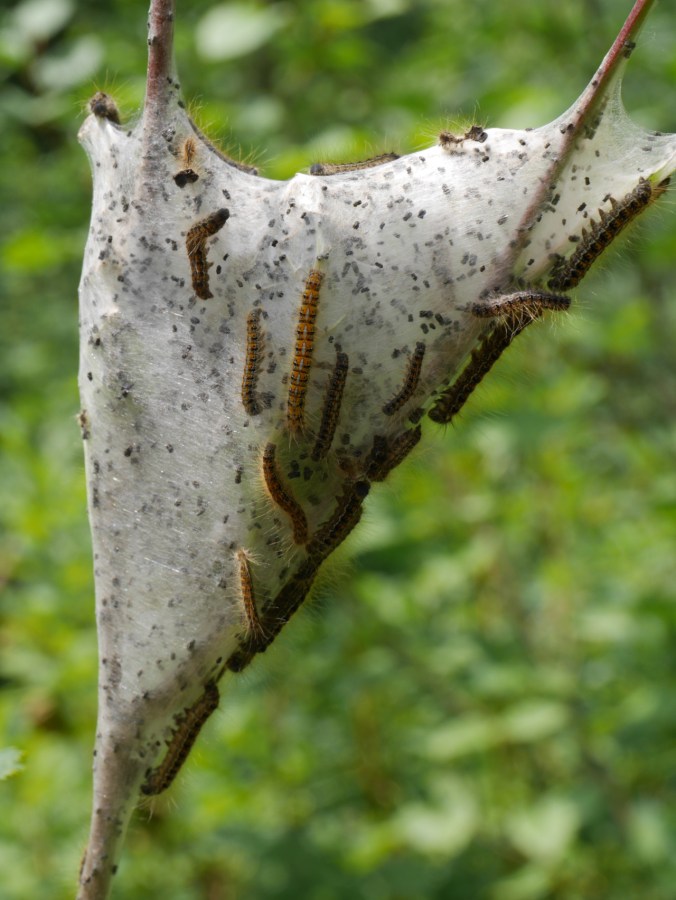
Malacosoma californica “Western Tent Caterpillar” Lasiocampidae

Great Burn, Lolo National Forest, MT
July 10, 2015
Robert Niese

Tent caterpillars are really fascinating critters! In some years, populations of tent caterpillars explode and entire forests can be defoliated by these voracious animals. Fortunately, this extensive herbivory does will not kill most trees, although some eastern forests have experienced large-scale tree deaths when tent caterpillar outbreaks coincided with drought. This year, tent caterpillars have been in relatively low numbers. Learn more about these awesome moths here!

Happy National Moth Week!

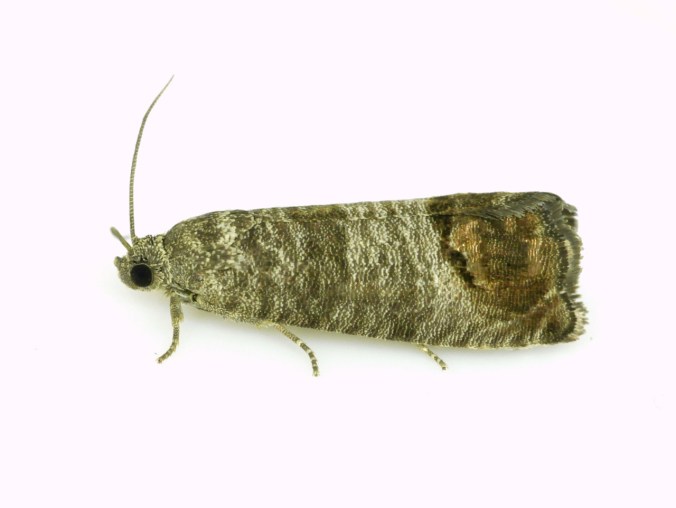
Cydia pomonella “Codling Moth” Tortricidae

Missoula, MT
July 20, 2015
Robert Niese

Codling Moths are perhaps the most infamous moths in the world. They are found everywhere there are apple trees. In fact, these moths are so widespread that no one is quite sure where they came from, although it’s likely they evolved in Eurasia with the apple tree. Females lay their eggs on apple trees and the larvae hatch and immediately burrow into the fruit where they consume the flesh and seeds. The moths are controlled through various means of suppression including pheromone traps that catch males searching for females, trunk banding that captures larvae as they leave the tree to pupate, and releasing Trichogramma parasitic wasps to kill eggs. But the most common form of control is through the application of Codling Moth Granulosis Virus which kills larvae a few days after hatching.

Happy National Moth Week!