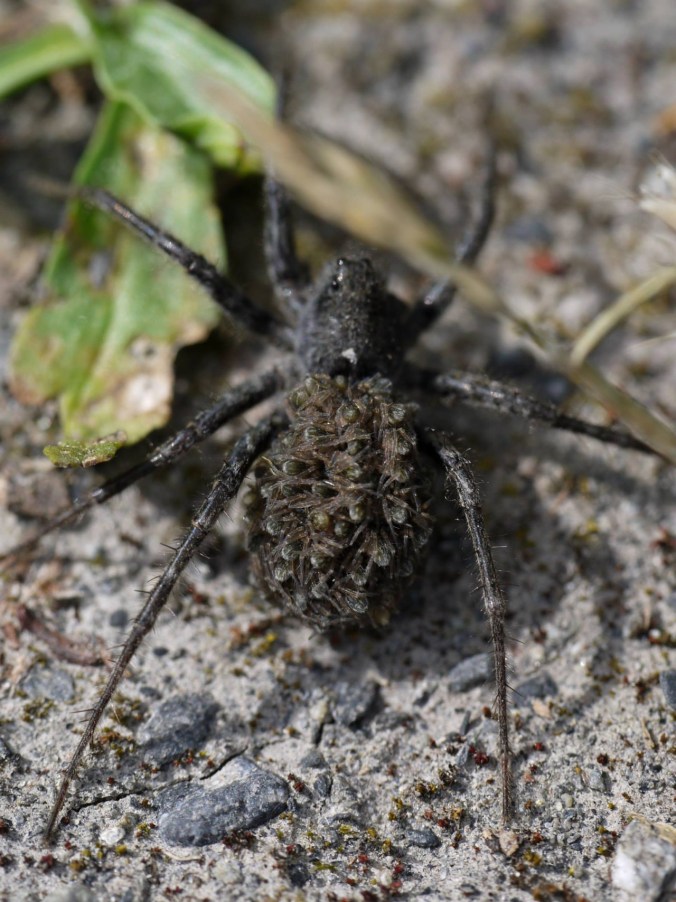
Pardosa sp. “Thin-legged Wolf Spider” Lycosidae, with young

Olympic National Park, WA
June 8, 2013
Robert Niese

Female wolf spiders spin an egg sac and attach it to their spinnerets, carrying around their

precious cargo until the spiderlings hatch and crawl onto her back. There, the babies will stay until they’re old enough to venture out into the world on their own.

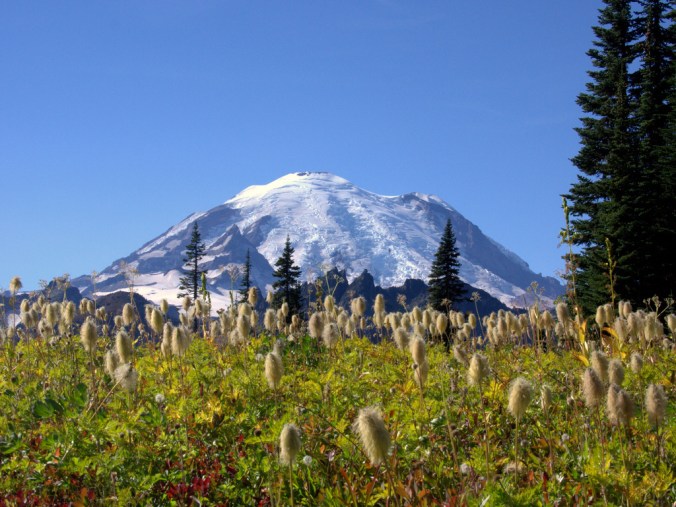
Mount Rainier from Tipsoo Lake

Chinook Pass, Mount Rainier National Park, WA
October 4, 2012
Robert Niese

(Those bushy, Dr. Seuss-like plants scattered throughout the foreground are the fruiting structures of Anemone occidentalis, a common and beautiful montane flower.)

Cymbalaria muralis "Ivy-leaved Toadflax" Plantaginaceae (Scrophulariaceae)

Tacoma, WA
May 2013
Robert Niese

A common garden creeper, introduced from Mediterranean Europe. Very cute and very tiny (~1cm).

This plant has an unusual method of propagation. The flower stalk is initially positively phototropic and moves towards the light—after fertilization it becomes negatively phototropic and moves away from the light. This results in seed being pushed into dark crevices of rock walls, where it is more likely to germinate and where it prefers to grow.

This individual flower has, in fact, been pollinated.

Learn more…

Anna’s Hummingbird (Calypte anna) Trochilidae

University of Washington, Seattle, WA
January 13, 2013
Robert Niese

This is the only species of hummingbird to overwinter here in the Pacific Northwest — and they’ve only been doing it for a few decades. Scientists believe that human-provided winter nourishment (i.e. hummingbird feeders) are the primary food source for these non-migrating individuals during the winter months.

As such, researchers at the University of Puget Sound are studying these two distinct populations of birds to determine if they might be diverging — genetically and morphologically. With the help of museum specimens dating back to the early 20th century, we are finding that resident populations of hummers here in the PNW are slightly different than their migratory counterparts.
Blechnum spicant “Deer Fern” Polypodiaceae (Blechnacaeae)

Olympic National Park, WA
June 1, 2013
Robert Niese

This fern is mostly found west of the Cascades, but occasionally in Northern Idaho. I was surprised to learn that it has never been recorded in Montana. Blechnum ferns are known for conspicuously dimorphic fertile and infertile fronds. Tall fronds with skinny leaflets are typically spore-bearing like this one here.

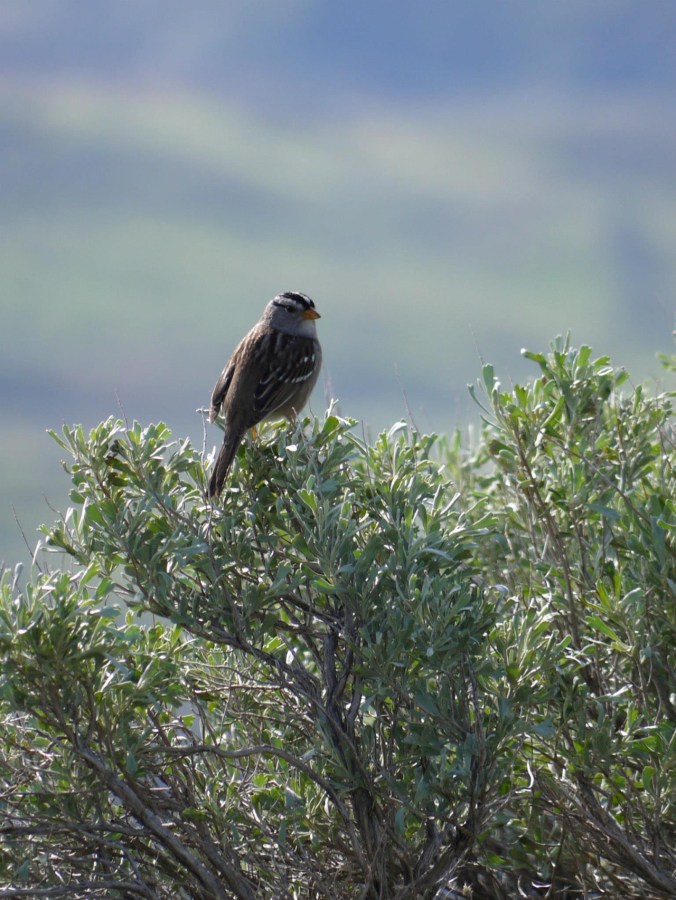
White-crowned Sparrow (Zonotrichia leucophrys) Emberizidae

Burch Mountain, Wenatchee National Forest, WA
April 27, 2013
Robert Niese

White-crowned Sparrows are an abundant migrant (sometimes resident) of the PNW with a very easy-to-identify song. If you’re just starting out learning to identify bird song, try your luck with the local sparrows first.

Graphocephala fennahiRhododendron Leafhopper” Cicadellidae

Tacoma, WA
August 2013
Robert Niese

Apparently, these sharpshooters are native to the south eastern Appalachians, but have since traveled the world in ornamental Rhododendrons. 

American Bittern (Botaurus lentiginosus) Ardeidae

Nisqually National Wildlife Refuge, WA
October 27, 2012
Robert Niese

The American Bittern is famous for its unbelievable camouflage skills, but is slightly less well-known for its equally astounding vocal abilities. If you’ve never heard a Bittern singing, you should check it out here. It’s absolutely nothing like anything that you’ve ever heard before, I guarantee it. 

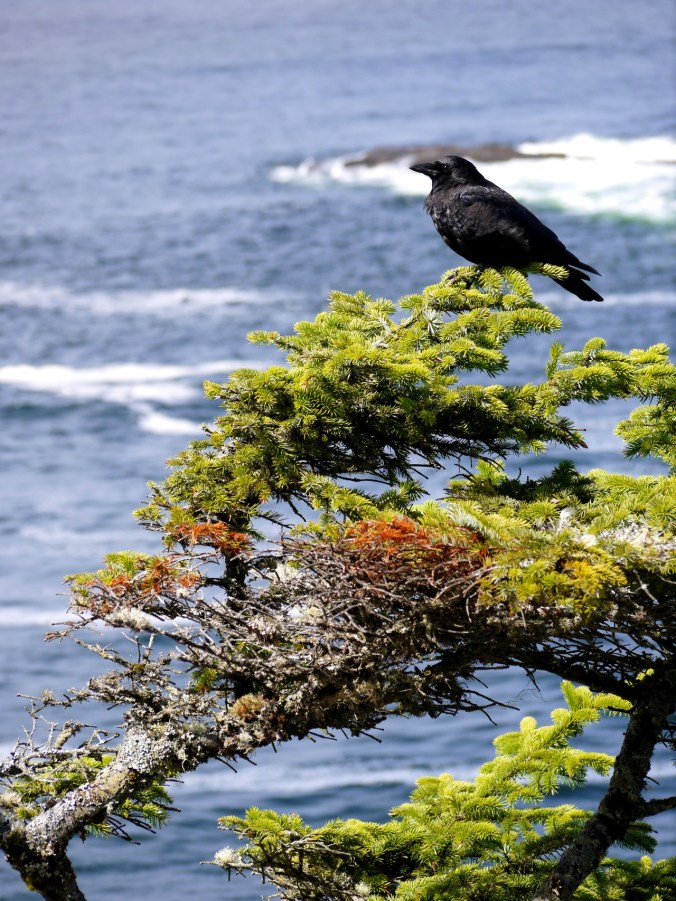
Northwestern/American Crow (Corvus caurinus/brachyrhynchos) Corvidae

Cape Flattery, WA
August 19, 2014
Robert Niese

While, as a scientist, I seriously doubt the validity of the “Northwestern” distinction for our PNW crows, if there were ever a crow that could be called a “Northwest Crow” it would have to be one at Cape Flattery (the northwestern-most point in the contiguous US). Northwestern Crows are, however, likely a subspecies of the American Crow and can only be identified based on their range of occurrence, which undoubtedly overlap for most regions.