
Berberis repens “Creeping Oregon Grape” Berberidaceae
Salmon-Challis National Forest, ID
March 19, 2015
Robert Niese
It’s a little early for Oregon Grape to be blooming! This species is our only Berberis native to the dry pinelands of the Northwest.
Berberis repens “Creeping Oregon Grape” Berberidaceae
Salmon-Challis National Forest, ID
March 19, 2015
Robert Niese
It’s a little early for Oregon Grape to be blooming! This species is our only Berberis native to the dry pinelands of the Northwest.

Populus tremuloides “Quaking Aspen” Salicaceae
Council Grove State Park, MT
March 16, 2015
Robert Niese
We have several species of willows, aspens (well, one aspen), and poplars in the PNW that produce these adorable fuzzy flowers in the early spring. These compact “pussy-foot” catkins are very typical of willows (Salix), but Quaking Aspen produces a very similar inflorescence. The easiest way to tell the two apart is to look at the buds. In Aspen, you’ll see lots of overlapping bud scales while in willows, the buds are smooth and consist of a single, wrap-around scale.
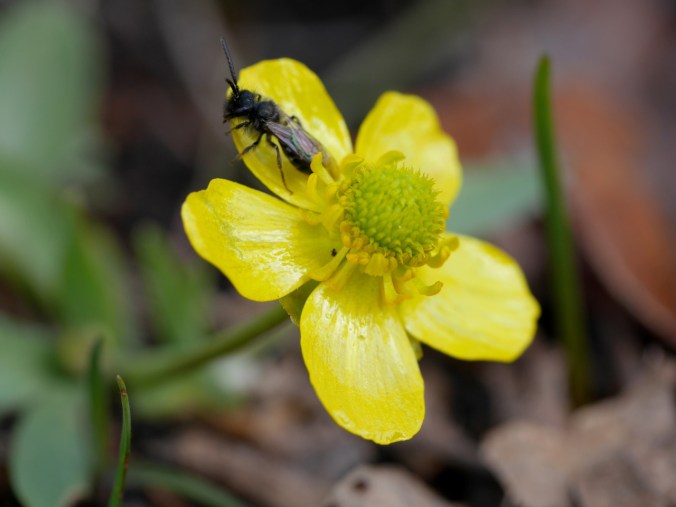
Andrena “Mining Bee” Andrenidae
on Ranunculus glaberrimus “Sagebrush Buttercup” Ranunculaceae
Council Grove State Park, MT
March 16, 2015
Robert Niese
Andrena is one of the world’s largest genera of bees. There are probably only a few people in all of North America who possess the specialized knowledge necessary to make a reliable species identification. Andrena bees are remarkably cold tolerant and are some of the first small bee species to frequent flowers in the spring, although this little guy was clearly struggling with the chilly morning air.
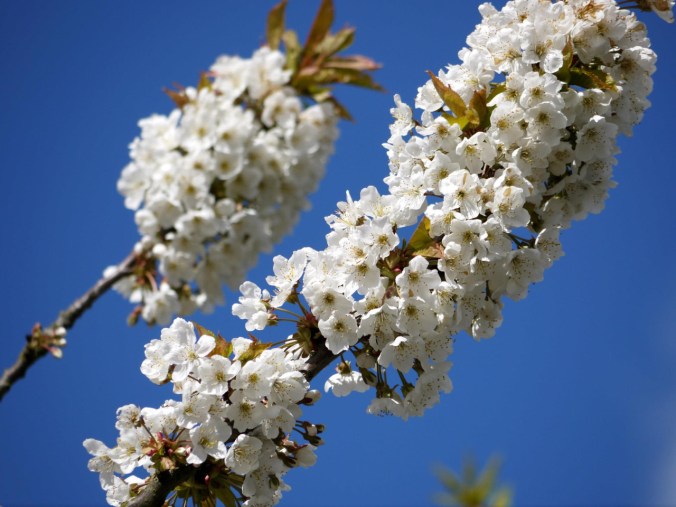
Prunus sp. “Cherry” Rosaceae
Tacoma, WA
April 14, 2013
Robert Niese

Apis mellifera “European Honeybee” Apidae
on Ranunculus glaberrimus “Sagebrush Buttercup” Ranunculaceae
Council Grove State Park, MT
March 16, 2015
Robert Niese
It’s warming up here in Missoula and spring may have sprung early! The first Ranunculus glaberrimus flowers bloomed around town in early February which is several weeks earlier than previous years. Today was even warm enough to bring out a few species of bees like this European Honeybee.
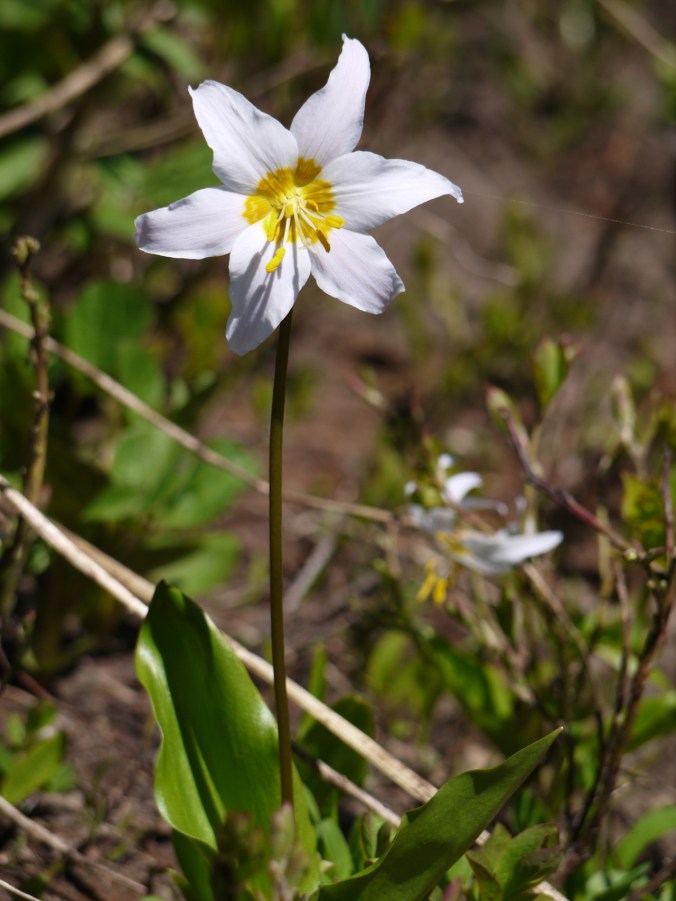
Erythronium montanum “Avalanche Lily” Liliaceae
Mount Rainier National Park, WA
August 4, 2012
Robert Niese
Avalanche Lilies are some of the first montane flowers to bloom in the PNW. As soon as the snow begins to melt, these guys are sprouting and preparing for the brief alpine summer. E. montanum is endemic to the Pacific Northwest and is only found in alpine and subalpine regions of the Cascade and Olympic mountain ranges.
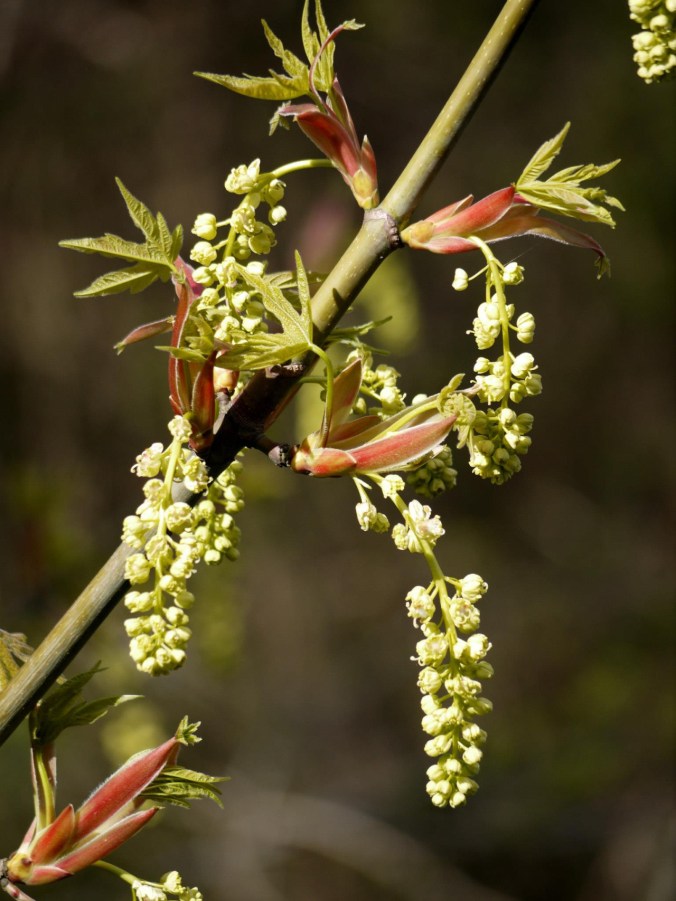
Acer macrophyllum “Bigleaf Maple” Aceraceae
Tacoma, WA
April 14, 2013
Robert Niese
The blooming of the Bigleaf Maples coincides with the arrival of many small insectivorous bird species to the Pacific Northwest. Birds such as the Orange-crowned Warbler, Pacific-slope Flycatcher, and Warbling Vireo rely on the insects attracted to these flowers in the springtime.
 Northwest Naturalist