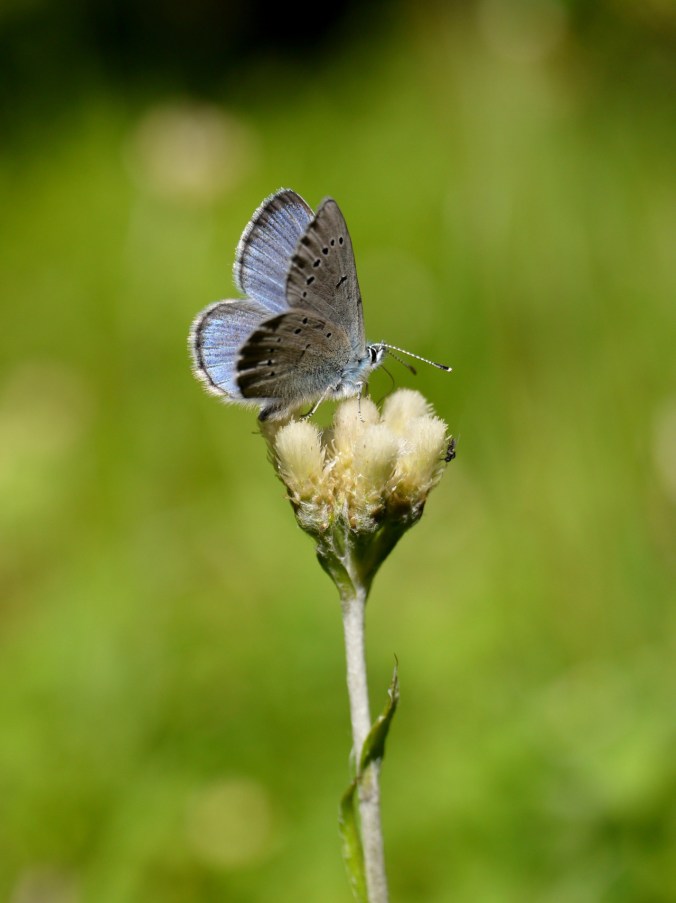
Glaucopsyche lygdamus “Silvery Blue” Lycaenidae

Glacier National Park, MT
June 21, 2014
Robert Niese

As with many members of the Lycaenidae family (blues, coppers, and hairstreaks), the caterpillars of this species are tended by ants which provide the vulnerable larvae with protection in exchange for sugary “honeydew” which the caterpillars excrete from their backs. Check it out.

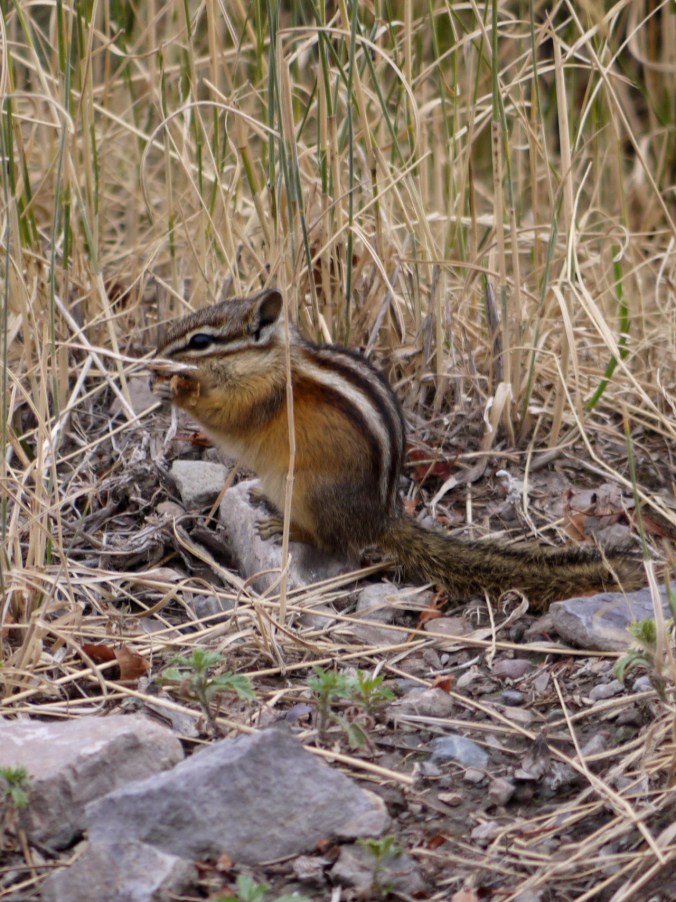
Tamias amoenus “Yellow-pine Chipmunk” Rodentia

National Bison Range, MT
September 21, 2013
Robert Niese

Chipmunks can be hard to identify from afar, so knowing what habitat types certain species prefer can really narrow-down your options. Here in western Montana, three species regularly co-occur (Red-tailed, Yellow-pine, and Least). Red-tailed Chipmunks tend to prefer moist coniferous forests like those in Glacier National Park, while Yellow-pine Chipmunks tend to prefer drier, Ponderosa/Doug-Fir forest edges. Least Chipmunks are found everywhere in between including alpine, sagebrush, coniferous forests, and meadows.

Antheraea polyphemus “Polyphemus Moth” Saturniidae (male)

Missoula, MT
June 11, 2014
Robert Niese

Surprisingly, I found this enormous moth (15 cm wingspan!) in a parking lot on my way into work on the University of Montana campus.

Caloplaca (biatorina?) "Orange Rock Firedot Lichen" 

National Bison Range, MT
June 8, 2014
Robert Niese

Caloplaca lichens are a relatively abundant, easily recognizable group of lichens here in the PNW. Most orange, crustose lichens growing on rocks in our area belong to this genus. Unfortunately, the genus is impossibly large and making species identifications may require a close analysis of spore morphology.

Sphecodes (arvensiformis) “Cuckoo Sweat Bee” Halictidae
on Lomatium “Biscuit Root” Apiaceae

Missoula, MT
May 13, 2014
Robert Niese

Sphecodes bees are cleptoparasitic, cuckoo-like bees that lay their eggs in the nests of other sweat bees.

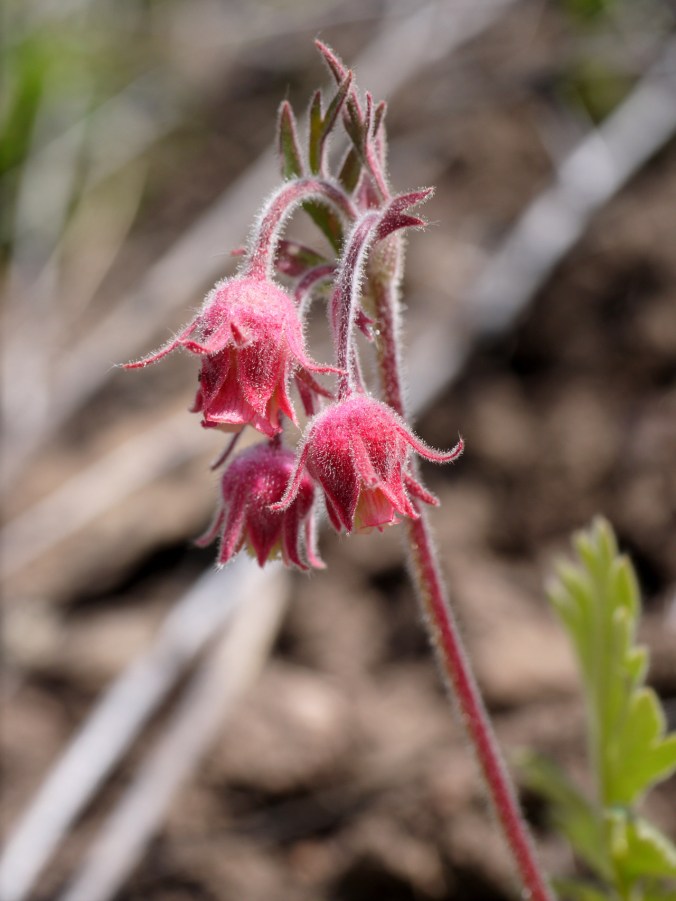
Geum triflorum “Old Man’s Whiskers” Rosaceae

Missoula, MT
May 13, 2014
Robert Niese

This widespread member of the rose family is best known for its fruiting stage in which each flower transforms into a dense bunch of wispy, feather-like seeds earning it common names such as “Old Man’s Whiskers” and “Prairie Smoke." 

Salticus scenicus “Zebra Jumping Spider” Salticidae (female)

Missoula, MT
June 26, 2014
Robert Niese

This abundant, charismatic jumping spider was introduced to the US from Europe, but can now be found throughout most of the North American continent.

Ectoedemia sericopeza “Norway Maple Seedminer” Nepticulidae

Missoula, MT
September 25, 2014
Robert Niese

These teensy-tiny moths are rarely over 2mm in length and are among some of the smallest lepidopterans in the world. Their larvae, which are equally infinitesimal, feed exclusively on (and within!) the tissues of the Norway Maple (Acer platanoides), an introduced species which lines most of our streets here in Missoula.