Apis mellifera “European Honeybee” Apidae 
on Ranunculus glaberrimus “Sagebrush Buttercup” Ranunculaceae

Council Grove State Park, MT
March 16, 2015
Robert Niese

It’s warming up here in Missoula and spring may have sprung early! The first Ranunculus glaberrimus flowers bloomed around town in early February which is several weeks earlier than previous years. Today was even warm enough to bring out a few species of bees like this European Honeybee.

Aulacomnium androgynum “Little Grove Moss” Bryales

Missoula, MT
May 13, 2014
Robert Niese

This teensy-tiny moss species is readily identified by its adorable, round, lolly-pop structures known as gemmae. Each gemma is actually a mass of cells that will scatter on the wind or rain to produce a new moss (asexual reproduction). In total, this plant was barely more than 1cm tall! Look for A. adrogynum among pixie cup lichens (Cladonia) on rotting logs in moist-dry coniferous forests here in the Northwest. (ID courtesy of Mandy Slate)

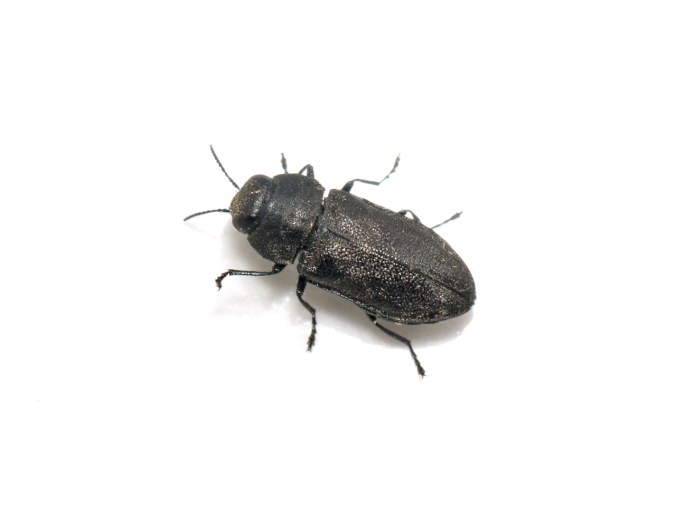
Anthaxia (Melanthaxia) Buprestidae

Glacier National Park, MT
June 23, 2014
Robert Niese

These tiny wood borers (9mm long) are found abundantly in flower heads throughout the summer here in Montana.

Anoplius sp. “Blue-black Spider Wasps” Pompilidae

Missoula, MT
June 29, 2014
Robert Niese

These lovely wasps are vicious spider hunters and have an absolutely gruesome life cycle. Instead of immediately killing their quarry, females paralyze the spider with a sting, and drag it down into a burrow. There, the female will lay eggs inside the spider, where her young will hatch and feed on the poor arachnid from the inside-out. Interestingly, spider wasps are nectivorous and lose their hunger for arachnid flesh at adulthood.

Phyllophaga sp. “May Beetle” Scarabaeidae

Missoula, MT
May 18, 2014
Robert Niese

There are more than 400 species of Phyllophaga in the United States and Canada. Their identification requires an intimate investigation of… ahem… reproductive morphology, which is not something I’m dying to do today.

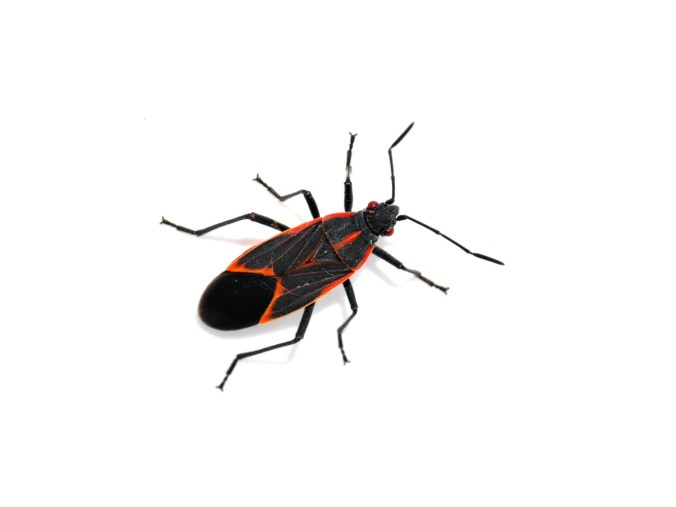
Boisea trivittata “Box Elder Bug” Rhopalidae

Missoula, MT
October 8, 2014
Robert Niese

Box Elder Bugs are Acer specialists, feeding exclusively on the samaras (seeds) of various maple species. Box Elder Bugs tend to create massive congregations in sunny spots to keep warm while feeding and are often considered a nuisance in such large numbers – especially when the days become colder and they seek refuge in my bedroom! But overall, they’re totally harmless.