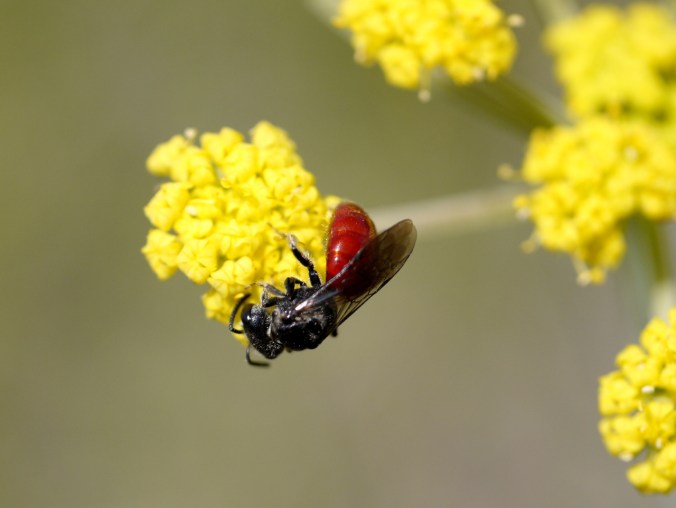
Sphecodes (arvensiformis) “Cuckoo Sweat Bee” Halictidae
on Lomatium “Biscuit Root” Apiaceae
Missoula, MT
May 13, 2014
Robert Niese
Sphecodes bees are cleptoparasitic, cuckoo-like bees that lay their eggs in the nests of other sweat bees.
Sphecodes (arvensiformis) “Cuckoo Sweat Bee” Halictidae
on Lomatium “Biscuit Root” Apiaceae
Missoula, MT
May 13, 2014
Robert Niese
Sphecodes bees are cleptoparasitic, cuckoo-like bees that lay their eggs in the nests of other sweat bees.
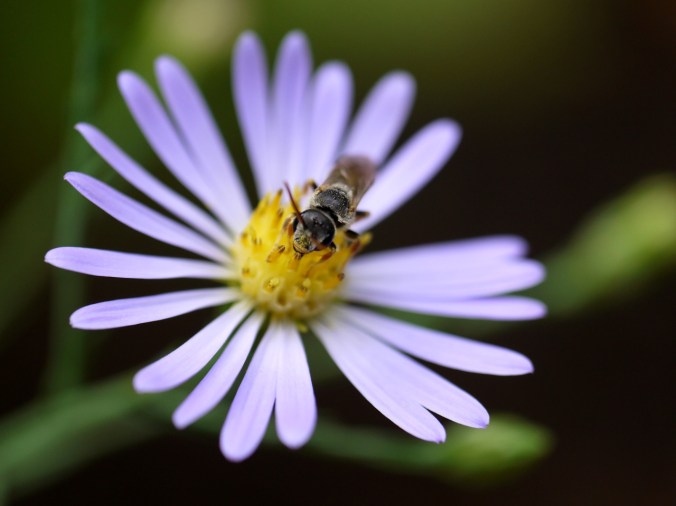
Halictus ligatus “Sweat Bee” Halictidae on Aster (Asteraceae)
Missoula, MT
September 2, 2013
Robert Niese
Sweat Bees in the genus Halictus can be difficult to identify, but fortunately, as compared to other genera in our area (see Lasioglossum), there are relatively few species in the Northwest (10). If you’d like to take a shot at IDing your own photographs, check out this key to our species.
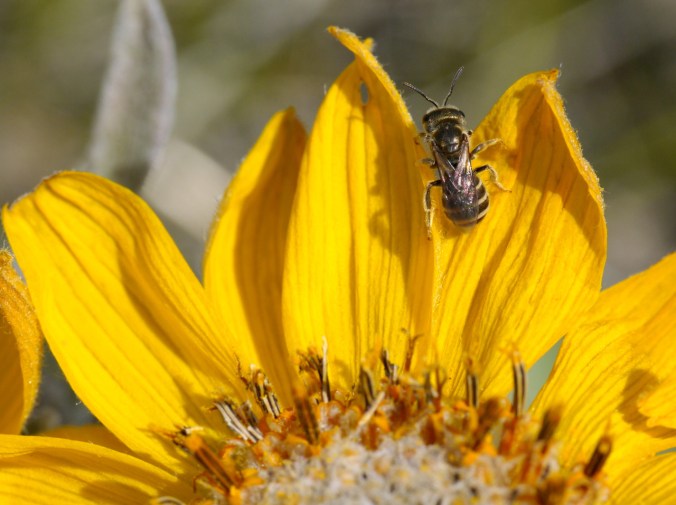
Halictus (Seladonia) tripartitus “Sweat Bee” Halictidae
on Balsamorhiza sagittata “Arrowleaf Balsamroot” Asteraceae
Missoula, MT
May 13, 2014
Robert Niese
Another species of small Sweat Bee in the genus Halictus. If you’re interested in attempting to identify these bees with a dichotomous key (there are only 10 species in the Northwest, so it’s not too difficult!), check this one out here. Once you learn more about these little guys, you start noticing them everywhere!
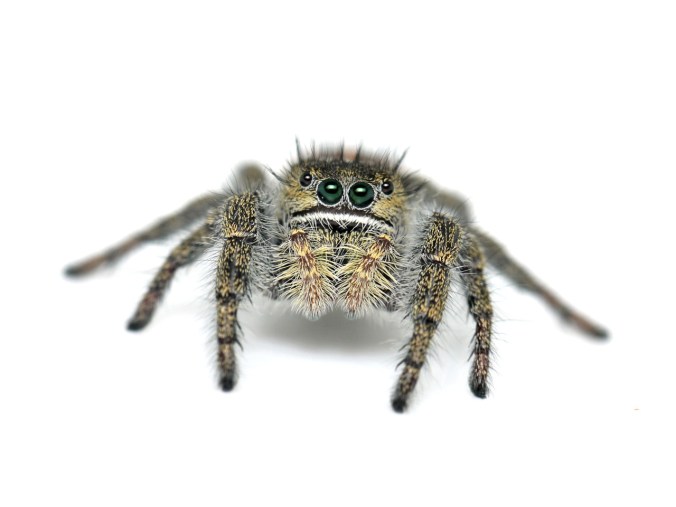
Phidippus “clarus” Salticidae
Missoula, MT
September 17, 2014
Robert Niese
Phidippus jumpers are some of the largest jumping spiders in the world. Here in Montana, we have several red-backed species, all of which are about the size of a nickel. They are excellent house-guests and will rid your home of flies, roaches, and other mid-sized arthropods in a matter of days.

Apis mellifera “European Honeybee” Apidae
on Ranunculus glaberrimus “Sagebrush Buttercup” Ranunculaceae
Council Grove State Park, MT
March 16, 2015
Robert Niese
It’s warming up here in Missoula and spring may have sprung early! The first Ranunculus glaberrimus flowers bloomed around town in early February which is several weeks earlier than previous years. Today was even warm enough to bring out a few species of bees like this European Honeybee.

Polistes aurifer “Golden Paper Wasp” Vespidae
Missoula, MT
May 13, 2014
Robert Niese

Aulacomnium androgynum “Little Grove Moss” Bryales
Missoula, MT
May 13, 2014
Robert Niese
This teensy-tiny moss species is readily identified by its adorable, round, lolly-pop structures known as gemmae. Each gemma is actually a mass of cells that will scatter on the wind or rain to produce a new moss (asexual reproduction). In total, this plant was barely more than 1cm tall! Look for A. adrogynum among pixie cup lichens (Cladonia) on rotting logs in moist-dry coniferous forests here in the Northwest. (ID courtesy of Mandy Slate)

Tragopogon dubius “Western Salsify/Goat’s-beard” Asteraceae
Missoula, MT
October 18, 2013
Robert Niese
This invasive weed is common throughout the eastern pinelands of the PNW and its giant, dandelion-like infructescences are easy to spot, even in late fall. The thick tuberous roots of this salsify, like its cultivated cousin T. porrifolius, are edible and apparently taste like artichoke hearts when prepared properly.

Anoplius sp. “Blue-black Spider Wasps” Pompilidae
Missoula, MT
June 29, 2014
Robert Niese
These lovely wasps are vicious spider hunters and have an absolutely gruesome life cycle. Instead of immediately killing their quarry, females paralyze the spider with a sting, and drag it down into a burrow. There, the female will lay eggs inside the spider, where her young will hatch and feed on the poor arachnid from the inside-out. Interestingly, spider wasps are nectivorous and lose their hunger for arachnid flesh at adulthood.

Phyllophaga sp. “May Beetle” Scarabaeidae
Missoula, MT
May 18, 2014
Robert Niese
There are more than 400 species of Phyllophaga in the United States and Canada. Their identification requires an intimate investigation of… ahem… reproductive morphology, which is not something I’m dying to do today.
 Northwest Naturalist