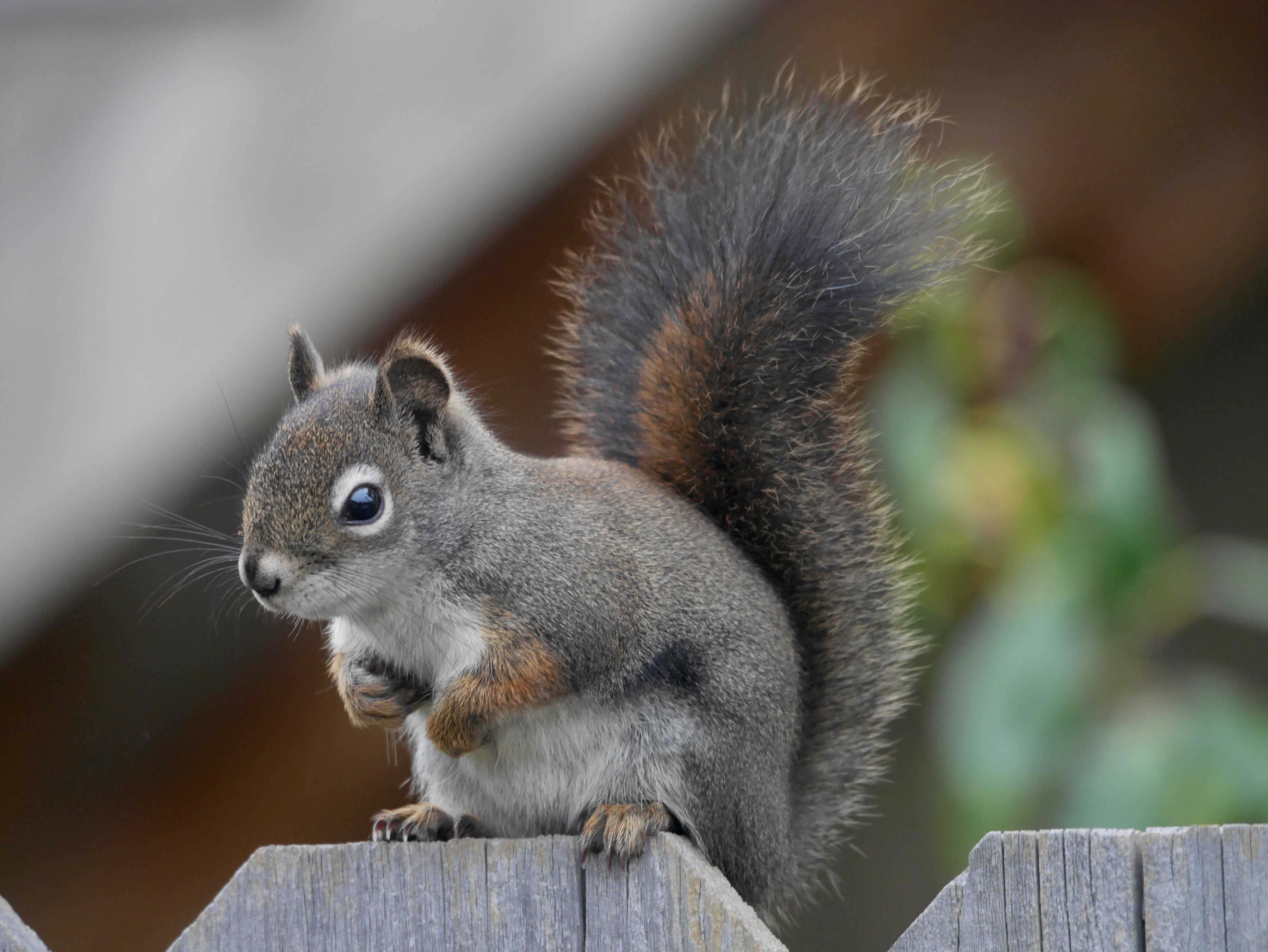
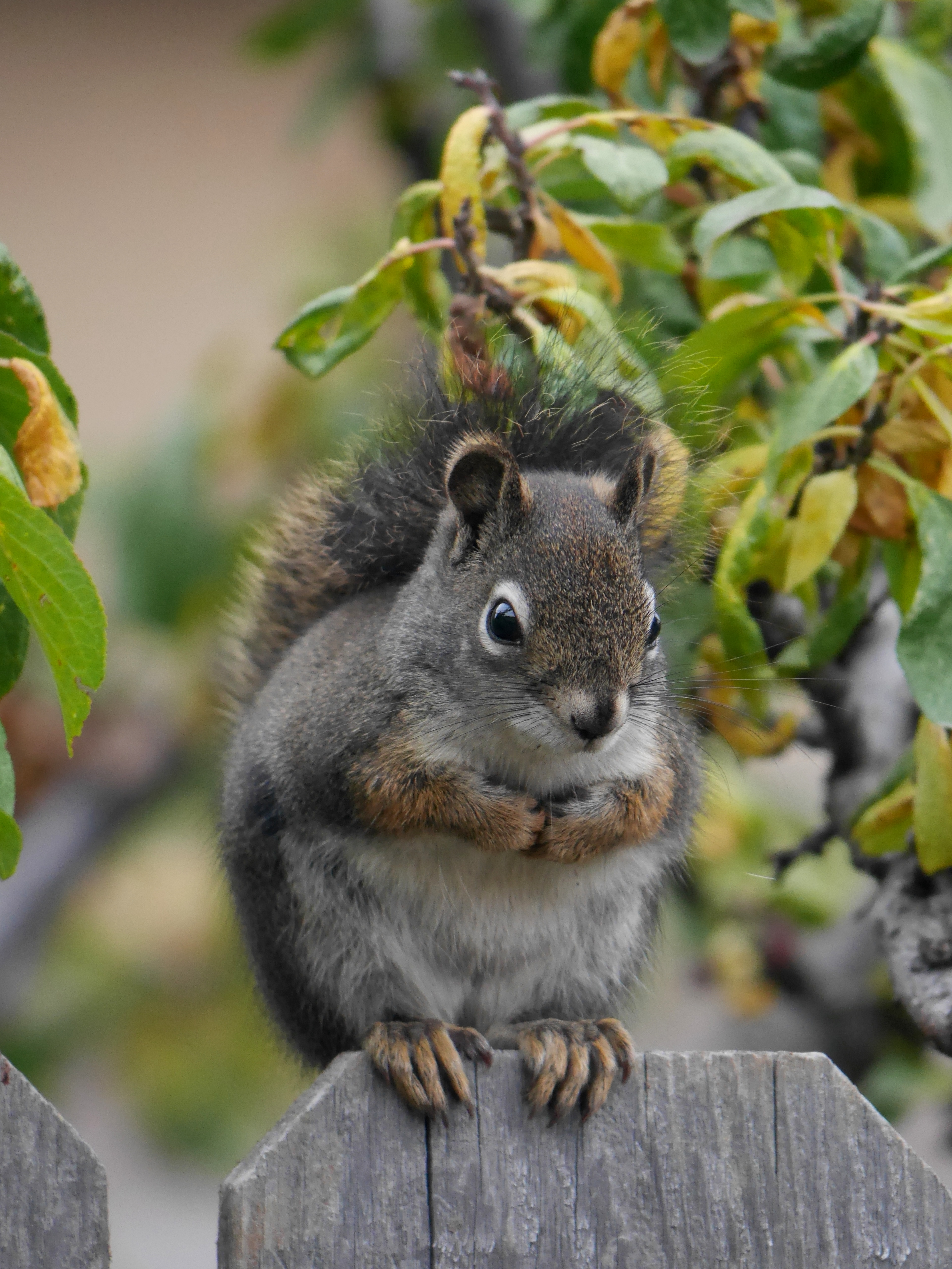
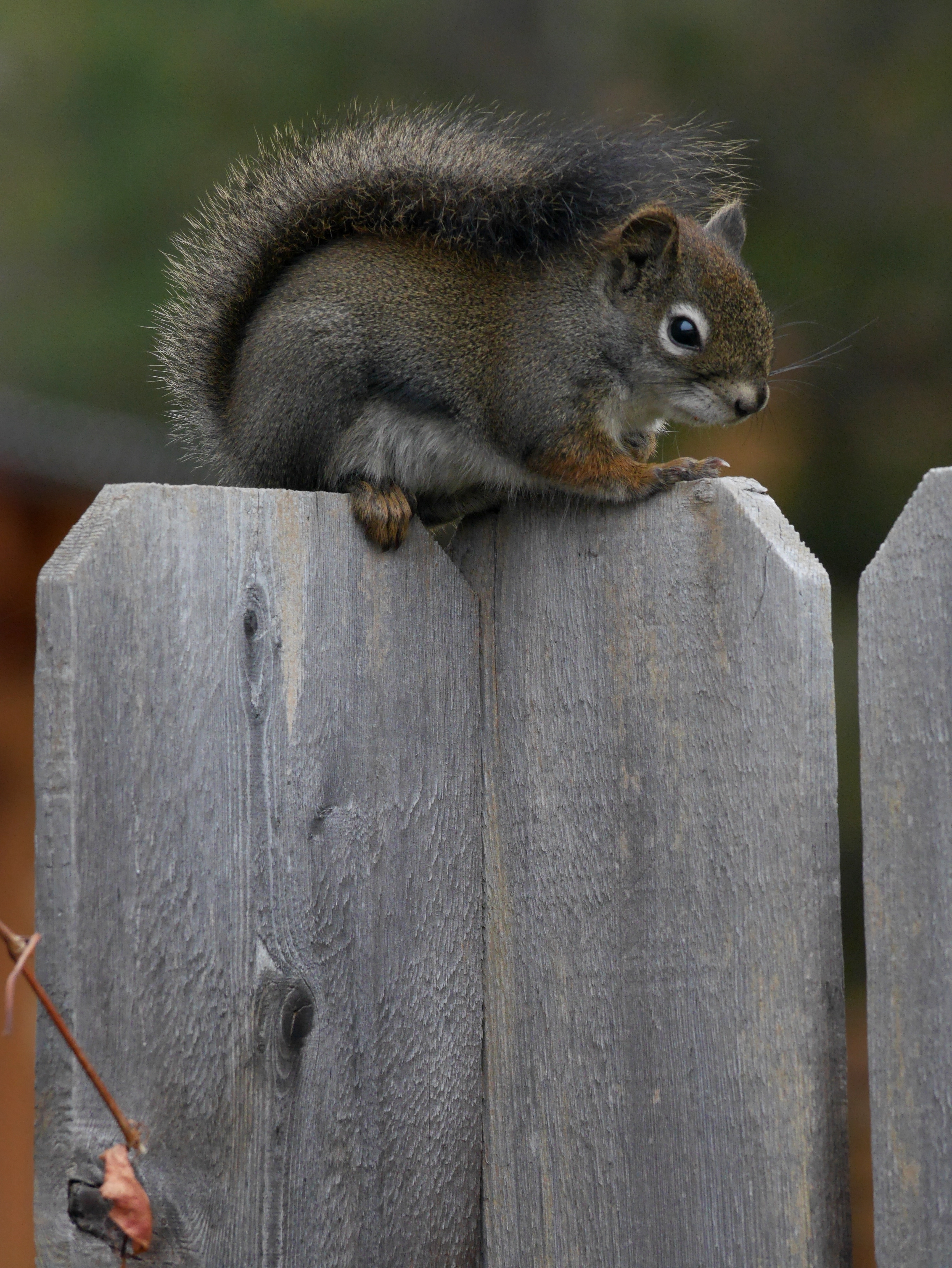
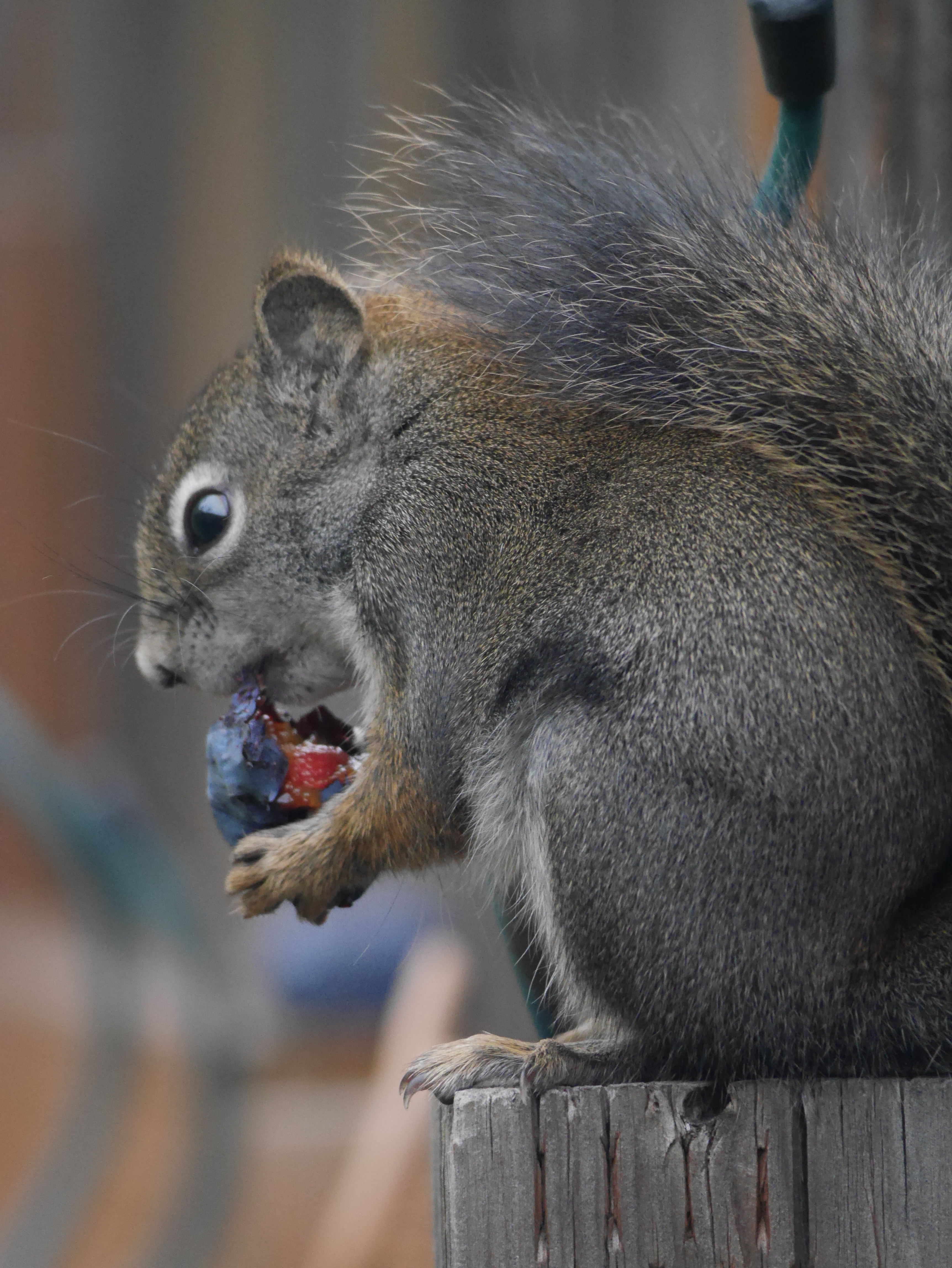
Tamiasciurus hudsonicus “Red Squirrel” Sciuridae

Missoula, MT
October 24, 2015
Robert Niese

Red Squirrels are rarely found in town here in Missoula. They require an ample supply of pine cones unlike their more adaptive relatives, the Eastern Fox Squirrel and the Eastern Gray Squirrel. But in neighborhoods adjacent to our nearby open spaces, these critters can adapt to live alongside people. This little guy was busy munching on an overripe plum when I interrupted him for a photo.
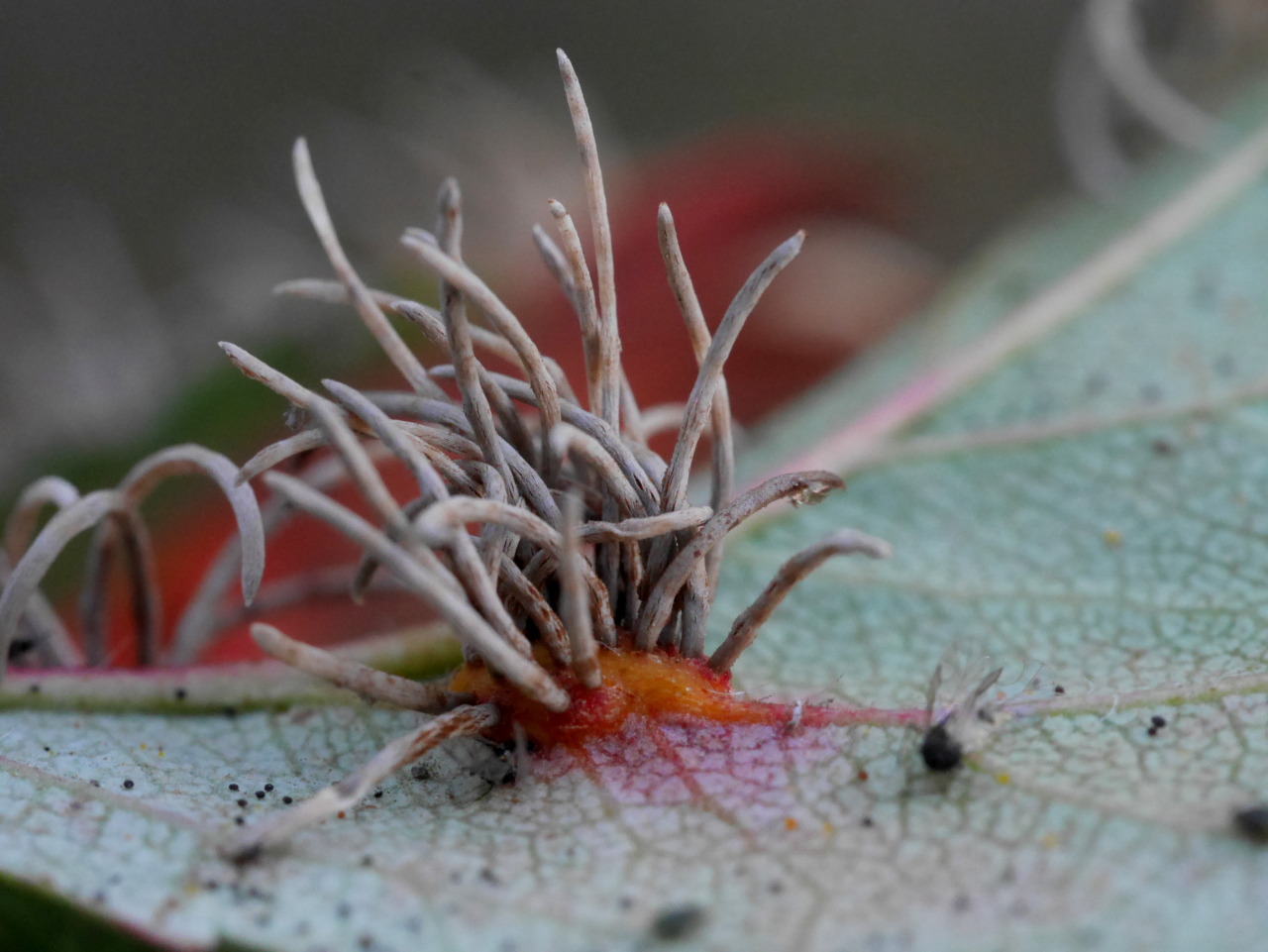
Gymnosporangium globosum “Cedar-Hawthorn Rust” Basidiomycota

Missoula, MT
October 23, 2015
Robert Niese

I first noticed these strange tendrils on the underside of Hawthorn (Crataegus douglasi) at a city park a couple months ago, but only just got around to photographing them. I thought they might be some sort of aphid galls after noticing that the leaves were covered with the insects. But the truth, it turns out, is far more spectacular! This is actually the fall life-stage of a rust fungus that infects Cedars (and Junipers). The fungus overwinters on Cupressaceous conifers, producing a small gall that grows large, orange gelatinous horns after spring rains. These jelly tentacles release spores that then infect the leaves of Rosaceous trees and shrubs such as Crataegus, Malus, and Sorbus. By late summer, fungi on these Rosaceous hosts produce the large porcupine-like clump of tendrils seen here. These tendrils release more spores that continue the cycle anew! I’m in love. What a phenomenal fungus!

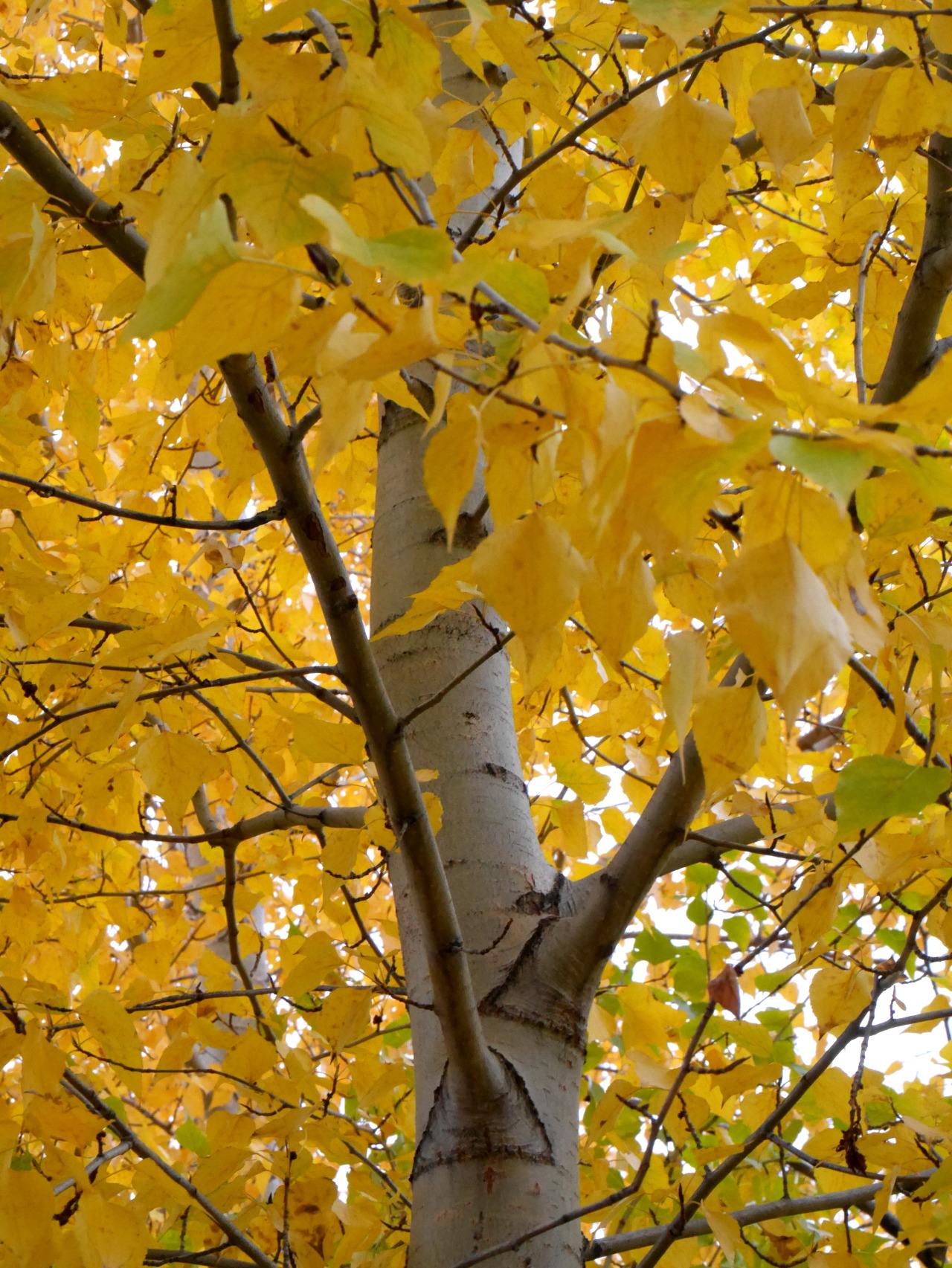
Populus trichocarpa

Populus trichocarpa “Black Cottonwood” Salicaceae

Clark Fork Natural Area, Missoula, MT
October 23, 2014
Robert Niese

The brilliantly yellow trees lining our valley bottoms and riversides here in the Pacific Northwest are predominantly Black Cottonwoods (also known as Western Basalm Poplars). They are famous for their fluffy, cotton-coated seeds which fill our air and waterways throughout the early summer. These seedlings need moist, bare soil to germinate and will rapidly colonize riverbanks exposed by erosion. Seedlings become dominant, fully-grown trees after about 25 years making them ideal for cultivation both in farms for harvest and as ornamentals in neighborhoods. Unfortunately, they also rarely live more than 150 or 200 years, so many neighborhoods in our area (many of which were first constructed in the 1800s) are being forced to remove these dying giants.

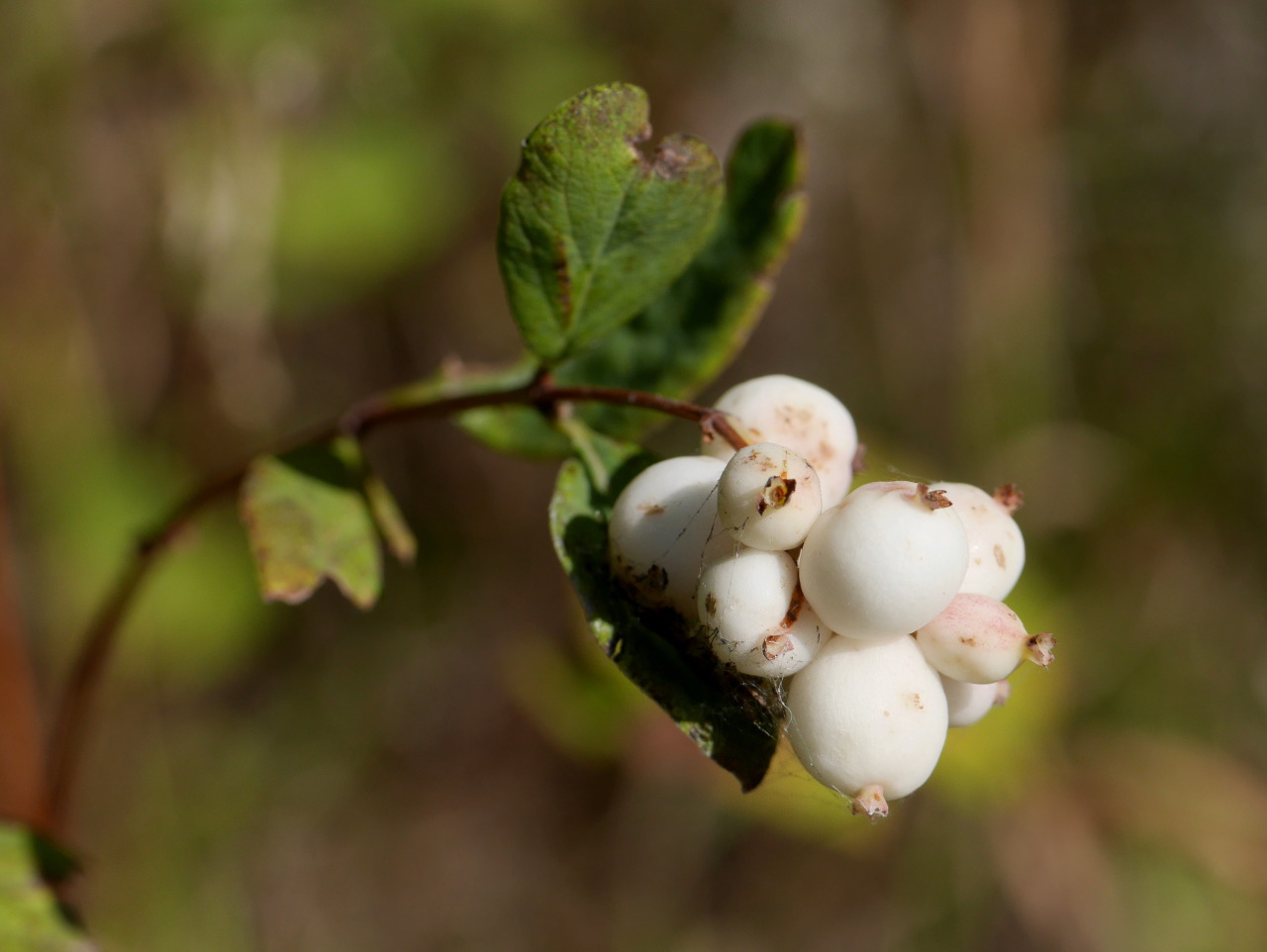
Symphoricarpos albus

Symphoricarpos albus “Snowberry” Caprifoliaceae

Mt. Sentinel, Lolo National Forest, MT
September 12, 2015
Robert Niese

Snowberry is one of our most abundant understory plants here in the eastern PNW. It’s so abundant that I often completely forget about it, and, in spite of cataloging PNW plants and animals for over six years, I have yet to get a photograph of this plant at all its phenological stages. Well, here’s Snowberry in fruit – its most recognizable life stage. These berries are not edible to humans, but are important food sources for winter birds such as grouse and ptarmigans.

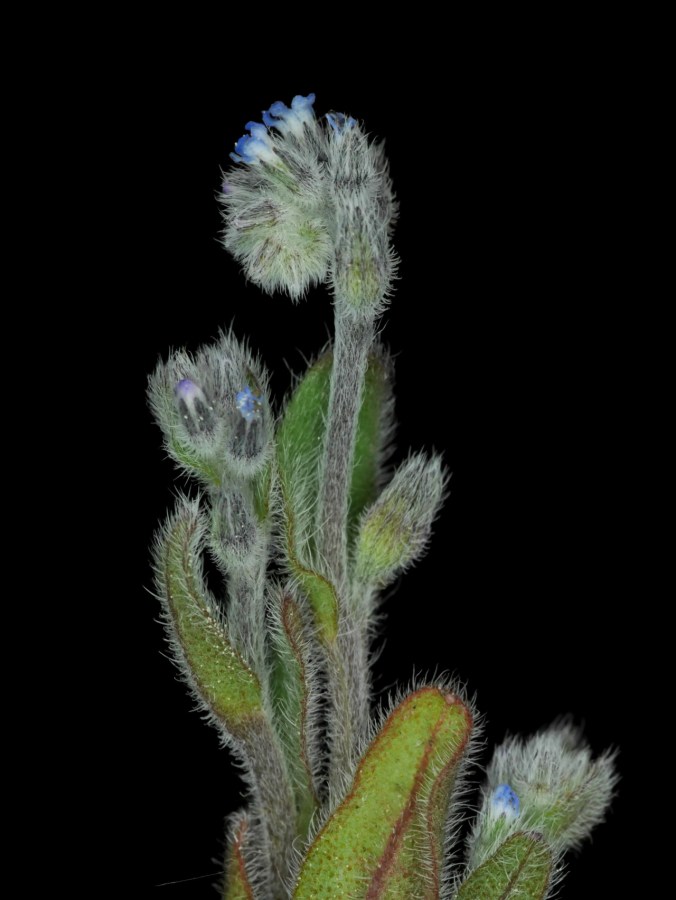
Myosotis stricta (micrantha) “Strict Forget-me-not” Boraginaceae

Missoula, MT
April 23, 2015
Robert Niese

There are several species of Myosotis in our region – four of which have flowers that are less than 5mm in diameter! Of these small-flowered species, M. verna tends to have white flowers, M. laxa has sepal hairs that are not hooked at the tip, and M. discolor produces flowers that are yellow at first, but turn purple with age. M. discolor and M. stricta tend to be our most common tiny, weedy, roadside inhabitants here in the PNW. The flowers on this particular specimen were only 2mm across!

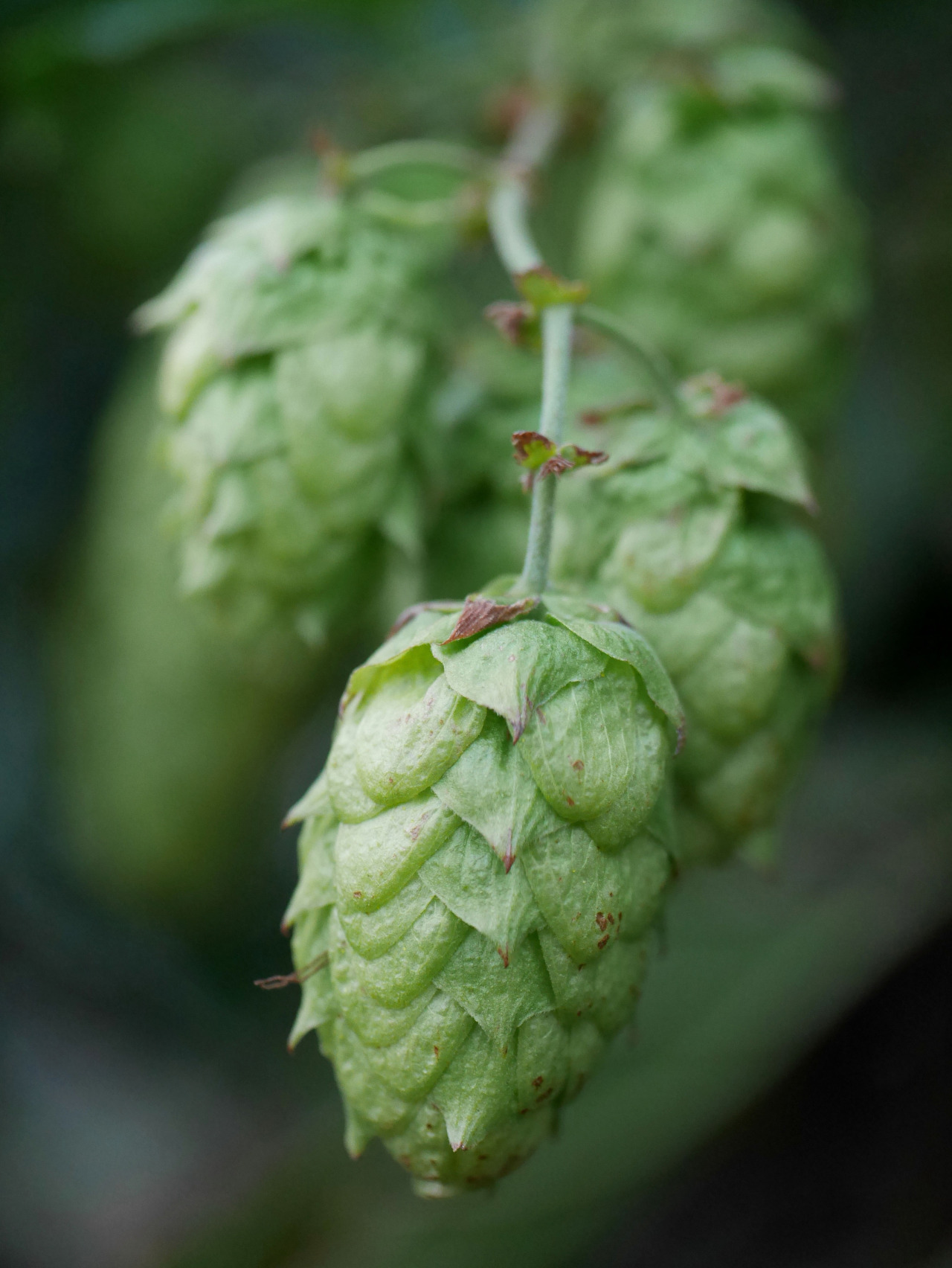
Humulus lupulus “Common Hop” Cannabaceae

Missoula, MT
September 12, 2015
Robert Niese

The Common Hop grows particularly well in the PNW and Washington state alone produces nearly a quarter of the world’s hops. Humulus is a member of a rather odd family of flowering plants, the Cannabaceae, which tend to have drab flowers (often unisexual) that lack petals and rely on wind for pollination. In the Common Hop specifically, the structure that is utilized for beer production (the hop) is actually a modified inflorescence of female flowers hiding beneath leaf-like scales called bracts. Beneath each of those bracts, the female flowers produce a the diversity of compounds which, through selective breeding efforts across the centuries, impart bitterness and complex aromas to the beer.

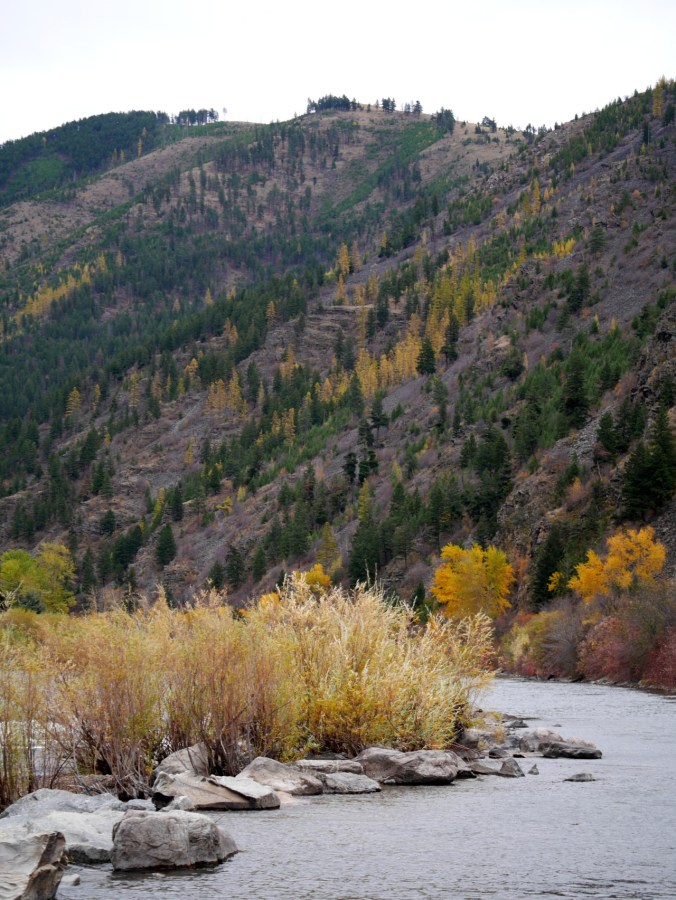
Fall colors along the Clark Fork River

Missoula, MT
October 23, 2014
Robert Niese

I’m off for while to take my Comprehensive Exams for my Ph.D. Wish me luck! If you don’t hear from me by October, I probably failed and became a hermit. 

Now, get outside and enjoy your the fall!

Cyphocleonus achates “Knapweed Root Weevil” Curculionidae

Missoula, MT
August 13, 2015
Robert Niese

These weevils are native to Europe, but were introduced in the 1980s as a potential biological control agent for various species of knapweed. Various studies have shown that they are actually quite good at reducing the biomass of Spotted Knapweed, and have been successful in various locations in Montana, Minnesota, Oregon, Nevada, British Columbia, and recently, Michigan.

Mentha arvensis “Wild Mint” Lamiaceae

Missoula, MT
July 19, 2015
Robert Niese

Mint is one of the most abundant, easily recognizable plants growing along the banks of Missoula’s rivers this summer – perfect for those on-the-fly, riverside mojitos! Look for its square stems, axillary flowers, and minty aroma!

Ceutorhynchus erysimi “Shepherd’s Purse Weevil” Curculionidae

Missoula, MT
June 19, 2015
Robert Niese

These adorable weevils were introduced along with the invasive weed, Shepherd’s Purse (Capsella bursa-pastoris; Brassicaceae) from Europe. They have iridescent green-blue elytra and rarely reach a size of more than 2mm. They’re my new favorite introduced species.