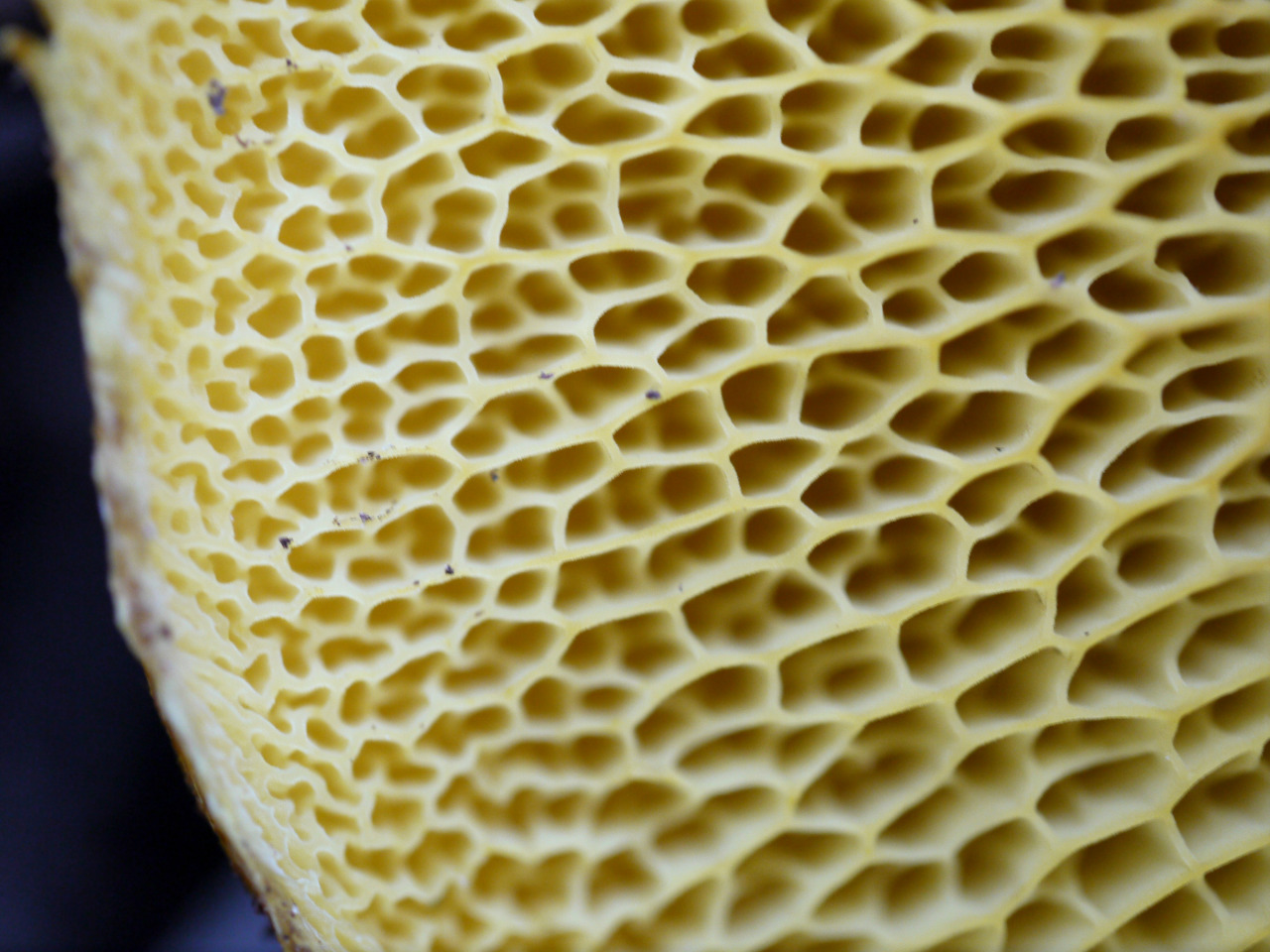
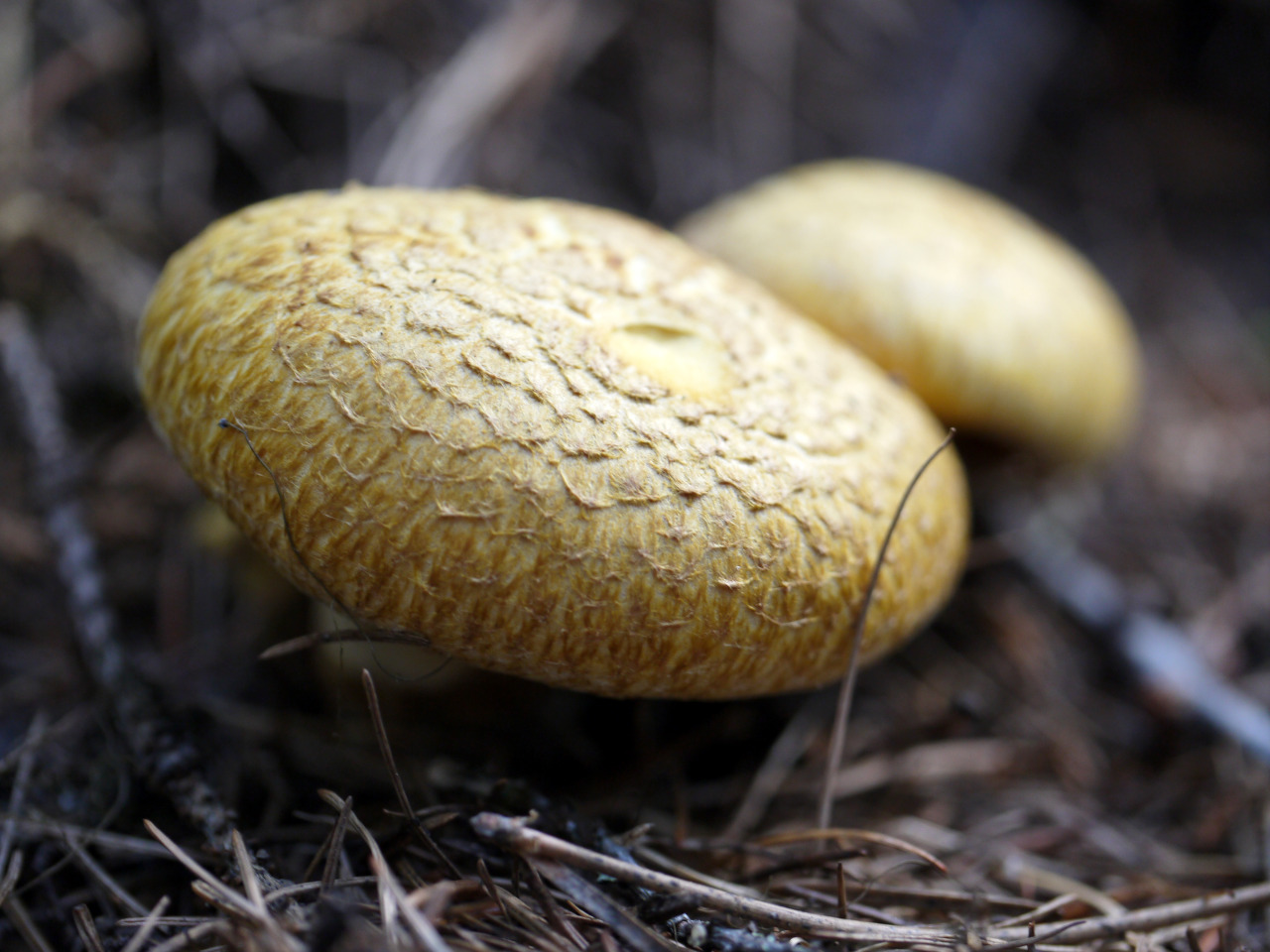
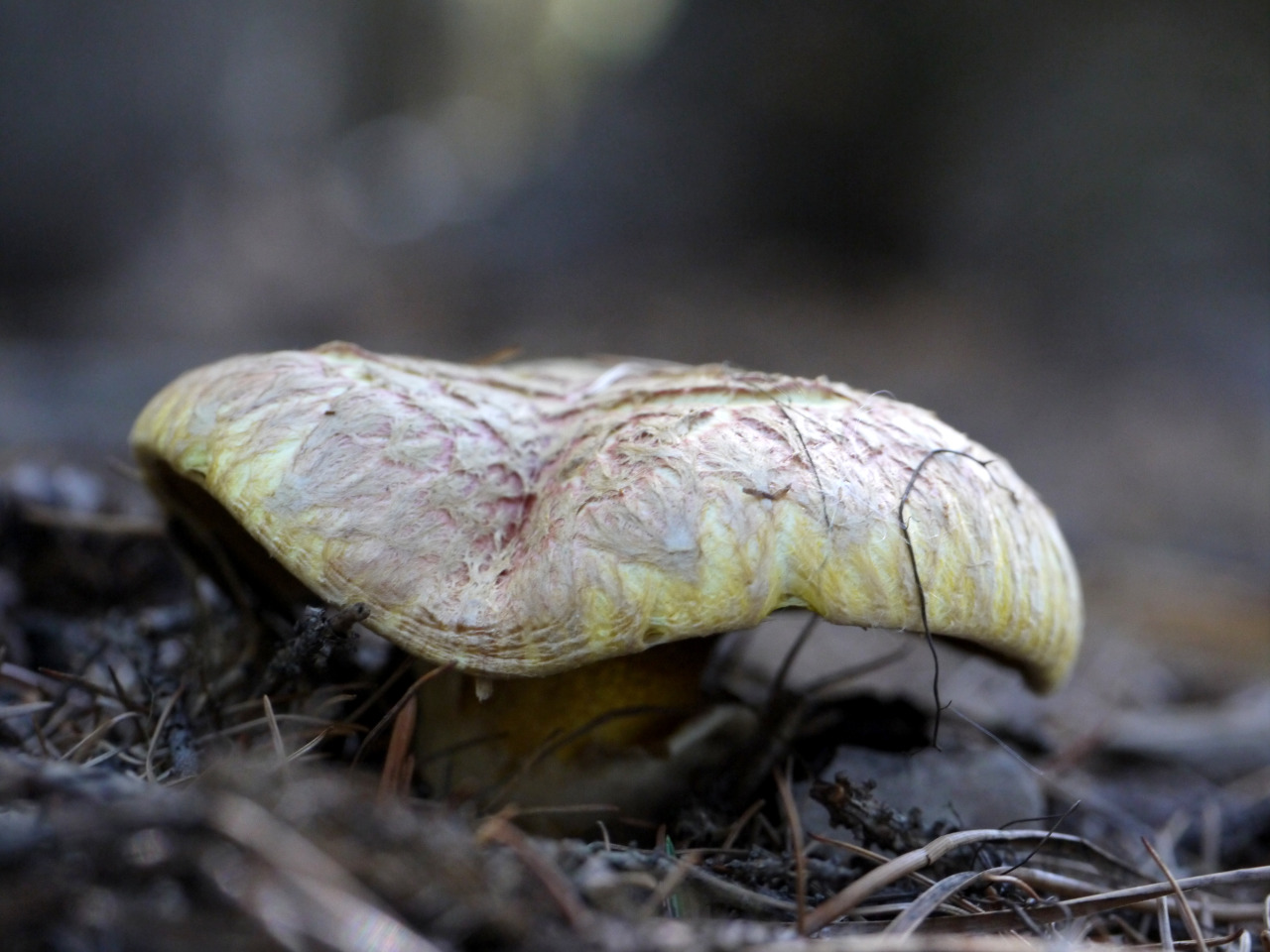
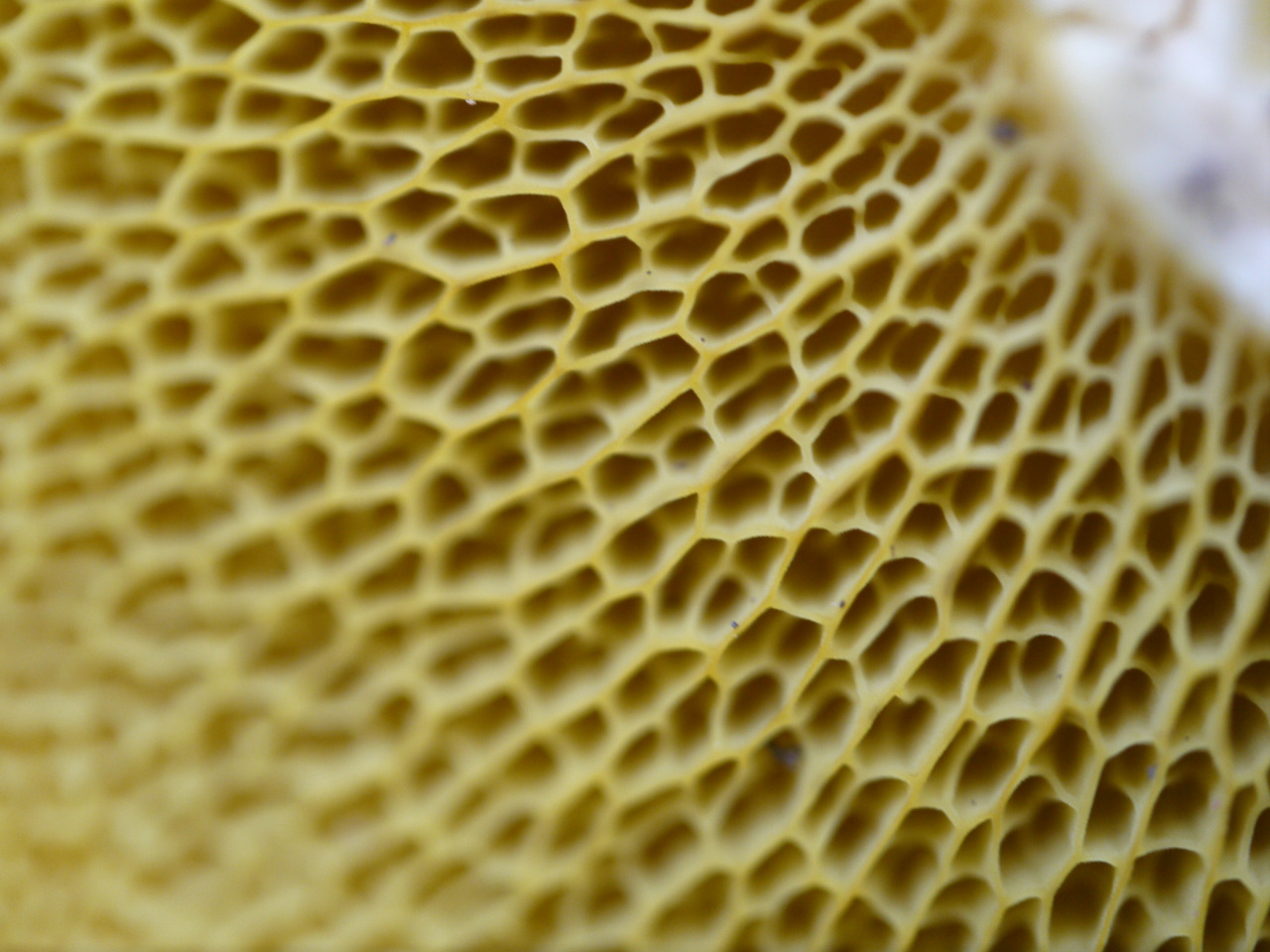
Suillus ochraceoroseus pores, by Robert Niese

Suillus ochraceoroseus “Rosy-ochre Suillus Bolete” Basidiomycota

Seeley Lake, MT
September 13, 2014
Robert Niese

I’m only just getting around to identifying the half dozen species of boletes I encountered while camping in Larch forests around Seeley Lake last summer. These fungi are all edible (although not always palatable and often infested with fly larvae) and comparatively easy to ID correctly. This genus is most readily recognized by its angular pores that radiate out from the stipe like cells on a leaf. Nearly all members of this genus are ectomycorrhizal symbionts with conifers here in the PNW. This species in particular is almost always found under Larch trees (Larix) in the late summer and early fall. Its cap is dry and scaly and tends to be rosy in the middle and orange-yellow (ochre) towards the edge. Apparently this species is best when dried, but is not often eaten because of its acrid or bitter taste.
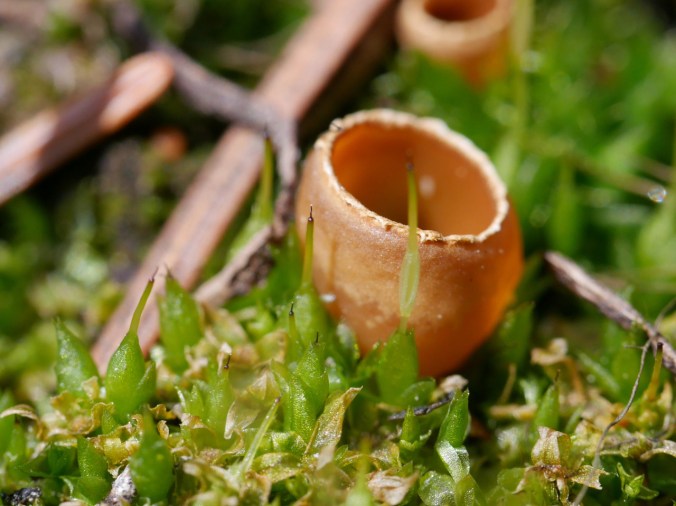
Geopyxis carbonaria “Goblet Fungus” Ascomycota

Lolo National Forest, Bitterroot Mountains, MT
March 18, 2015
Robert Niese

These adorable cup fungi are inordinately abundant in areas following fires. We counted more than a hundred in a single square meter on a hillside that had burned in 2013.

Pseudoplectania nigrella “black cup fungus” Ascomycota

Lolo National Forest, Bitterroot Mountains, MT
March 18, 2015
Robert Niese

These cup fungi are very early bloomers here in the PNW. Some members of this genus will even pop up out of the snow before the plants have even begun to stir. These fungi are quite common, but, along with their small size and inconspicuous coloration, they are easily missed by all but the most observant hikers.

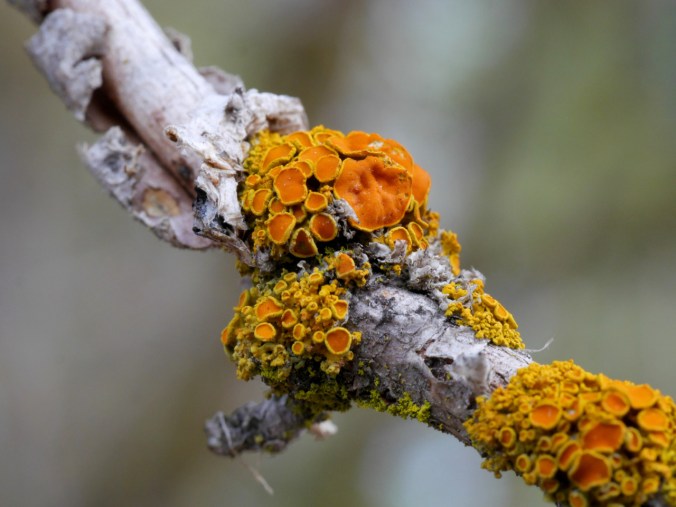
Xanthoria polycarpa “Pincushion Xanthoria”

Council Grove State Park, MT
March 16, 2015
Robert Niese

This lichen is relatively common on the old twigs of Populus and Pinus in open, nutrient-enriched areas (e.g. cow pastures) of the PNW. On angiosperm twigs, they tend to grow in a small pincushion-like form no more than 25mm across.

Scleroderma citrinum “Scaly Earthball” Basidiomycota

Seeley Lake, MT
September 13, 2014
Robert Niese

Earthballs are relatively common puffball-like fungi that form specialized relationships with the roots of many conifers here in the PNW such as Douglas Fir and Ponderosa Pine. Recent research suggests that these fungi may help young trees colonize abandoned mining sites that have been contaminated with heavy metals such as copper and arsenic.

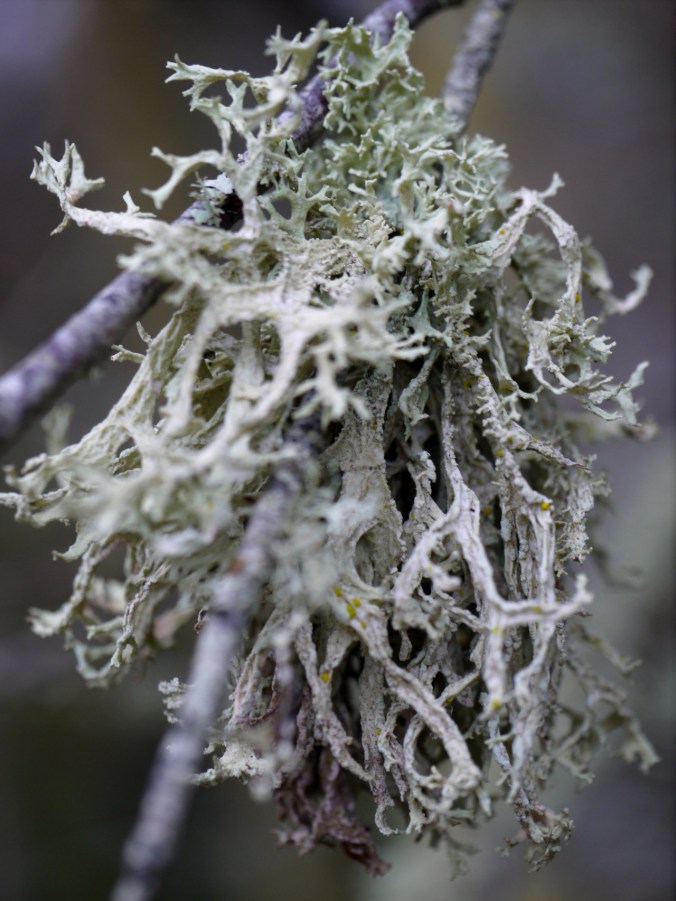
Ramalina subleptocarpha “Strap Lichen" 

Fort Casey State Park, WA
December 17, 2013
Robert Niese

Strap lichens in the genus Ramalina are relatively abundant and easy to recognize. Most grow on tree bark and have bushy bodies (i.e. a fruticose thallus)

with lots of long, flattened branches. This particular individual is densely covered in soredia (reproductive structures) giving it a coarse, bumpy appearance. This suggests that this individual is severely stressed by local air pollution.

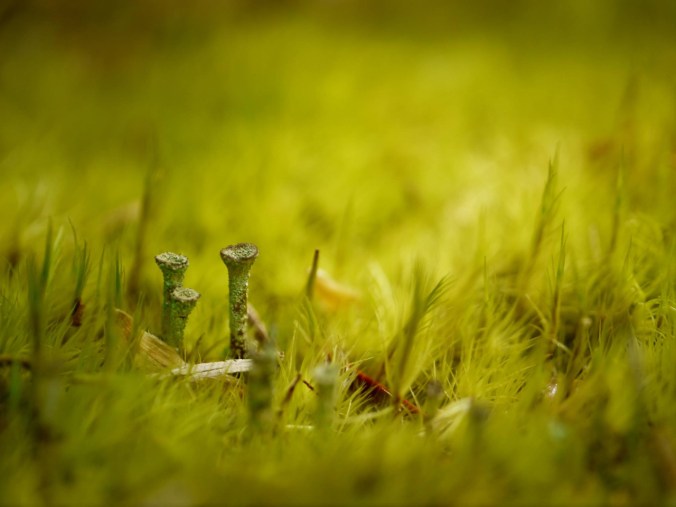
Cladonia sp. “Pixie Cup Lichen”

Olympic National Park, WA
June 6, 2013
Robert Niese

This easily recognizable lichen genus is one of my favorites. The tall cup-like structures for which the group is named are actually modified structures that release spores. Other members of the genus, such as Cladonia cristatella, the British Soldier Lichens, produce a bright red cap on each tall stem instead of a shallow cup.

Caloplaca (biatorina?) "Orange Rock Firedot Lichen" 

National Bison Range, MT
June 8, 2014
Robert Niese

Caloplaca lichens are a relatively abundant, easily recognizable group of lichens here in the PNW. Most orange, crustose lichens growing on rocks in our area belong to this genus. Unfortunately, the genus is impossibly large and making species identifications may require a close analysis of spore morphology.

Rhizocarpon geographicum “Map Lichen" 

Mount Rainier National Park, WA
August 9, 2013
Robert Niese

Map Lichen is an easily recognizable montane species of crustose lichen that can be found throughout the Pacific Northwest. Look for its characteristic yellow thallus with black apothecia (the black dots surrounded by yellow). Individual lichens are bordered by a thick black line (seen clearly in the center left of this image) which makes them look somewhat like delineated countries on a map (hence the name).