Collinsia parviflora “Blue-eyed Mary” Plantaginaceae (Scrophulariaceae)

Lolo National Forest, Bitterroot Mountains, MT
April 18, 2015
Robert Niese

The Smallflowered Blue-eyed Mary is a common PNW plant, but its diminuitive growth habit makes it easy to miss. The flowers of this plant are rarely more than a few millimeters across and they rarely grow more than 10cm off the ground. Here in Montana, they begin blooming as soon as the snow melts in March and will continue through July.

Arctostaphylos uva-ursi “Bearberry/Kinnikinnick” Ericaceae

Lolo National Forest, Bitterroot Mountains, MT
April 18, 2015
Robert Niese

Bearberry is a ubiquitous, vining Ericad here in the pinelands of the eastern PNW. The dried leaves of this plant are very popular in traditional Native American smoking mixtures. The dried leaves are also used in teas to treat mild urinary tract problems.

Berberis repens “Creeping Oregon Grape” Berberidaceae

Salmon-Challis National Forest, ID
March 19, 2015
Robert Niese

It’s a little early for Oregon Grape to be blooming! This species is our only Berberis native to the dry pinelands of the Northwest.

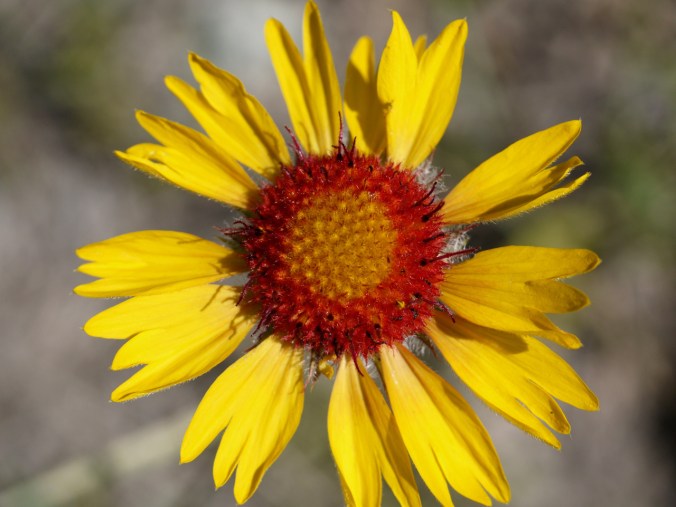
Gaillardia aristata “Blanketflower” Asteraceae

National Bison Range, MT
June 8, 2014
Robert Niese

Blanketflowers are a common native wildflower throughout the dry, open areas of the Pacific Northwest east of the Cascades. You can also find it as a cultivated plant in gardens around town.

Populus tremuloides “Quaking Aspen” Salicaceae

Council Grove State Park, MT
March 16, 2015
Robert Niese

We have several species of willows, aspens (well, one aspen), and poplars in the PNW that produce these adorable fuzzy flowers in the early spring. These compact “pussy-foot” catkins are very typical of willows (Salix), but Quaking Aspen produces a very similar inflorescence. The easiest way to tell the two apart is to look at the buds. In Aspen, you’ll see lots of overlapping bud scales while in willows, the buds are smooth and consist of a single, wrap-around scale.

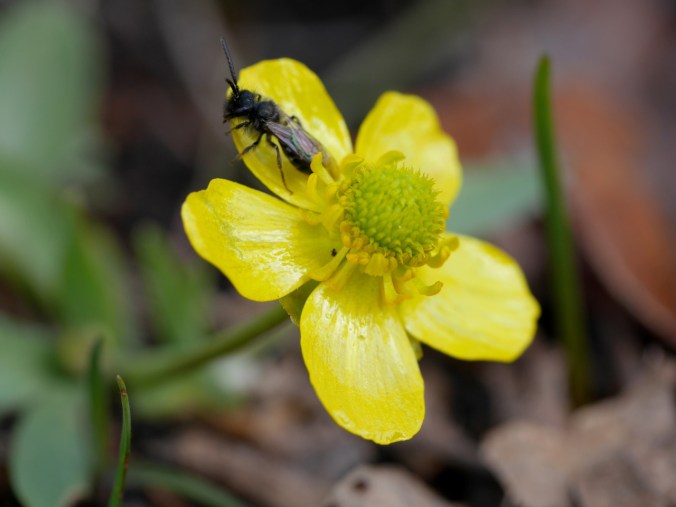
Andrena “Mining Bee” Andrenidae
on Ranunculus glaberrimus “Sagebrush Buttercup” Ranunculaceae

Council Grove State Park, MT
March 16, 2015
Robert Niese

Andrena is one of the world’s largest genera of bees. There are probably only a few people in all of North America who possess the specialized knowledge necessary to make a reliable species identification. Andrena bees are remarkably cold tolerant and are some of the first small bee species to frequent flowers in the spring, although this little guy was clearly struggling with the chilly morning air.

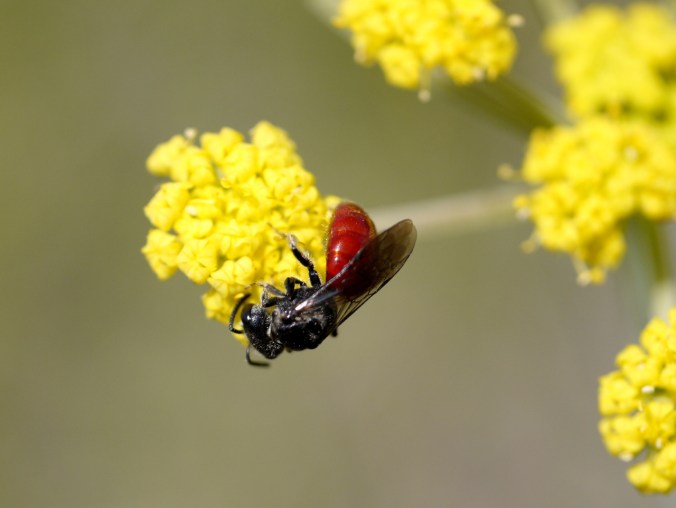
Sphecodes (arvensiformis) “Cuckoo Sweat Bee” Halictidae
on Lomatium “Biscuit Root” Apiaceae

Missoula, MT
May 13, 2014
Robert Niese

Sphecodes bees are cleptoparasitic, cuckoo-like bees that lay their eggs in the nests of other sweat bees.

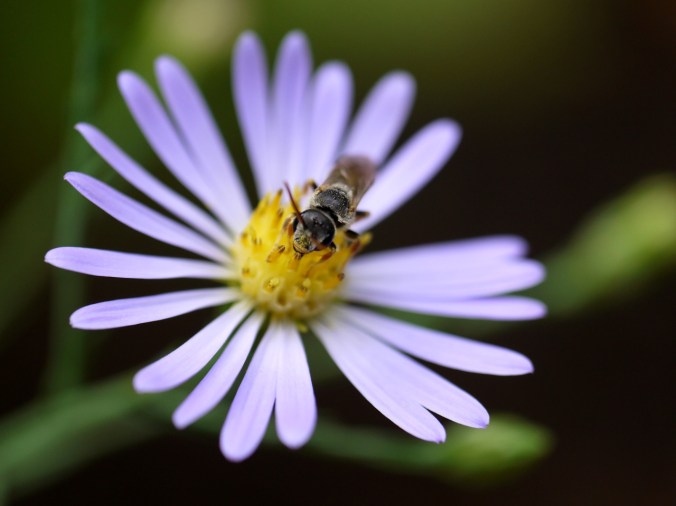
Halictus ligatus “Sweat Bee” Halictidae on Aster (Asteraceae)

Missoula, MT
September 2, 2013
Robert Niese

Sweat Bees in the genus Halictus can be difficult to identify, but fortunately, as compared to other genera in our area (see Lasioglossum), there are relatively few species in the Northwest (10). If you’d like to take a shot at IDing your own photographs, check out this key to our species.

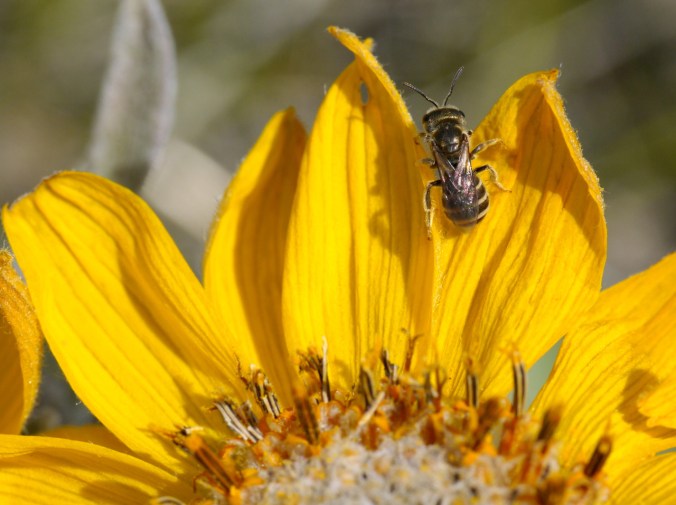
Halictus (Seladonia) tripartitus “Sweat Bee” Halictidae
on Balsamorhiza sagittata “Arrowleaf Balsamroot” Asteraceae

Missoula, MT
May 13, 2014
Robert Niese

Another species of small Sweat Bee in the genus Halictus. If you’re interested in attempting to identify these bees with a dichotomous key (there are only 10 species in the Northwest, so it’s not too difficult!), check this one out here. Once you learn more about these little guys, you start noticing them everywhere!

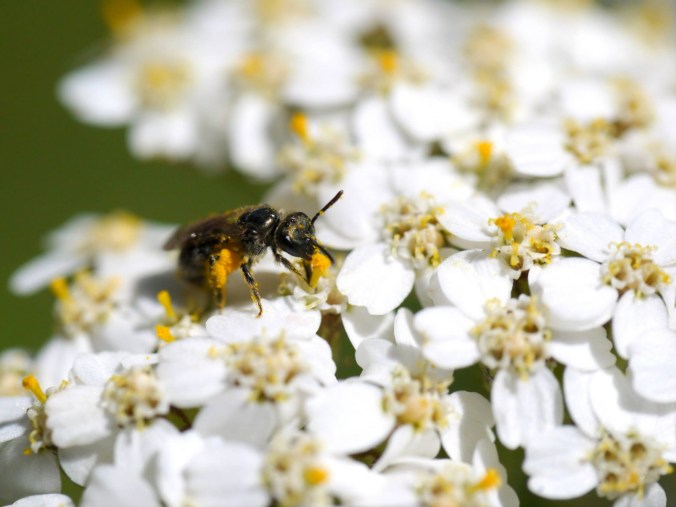
Lasioglossum (Subgenus Dialictus) “Sweat Bee” Halictidae
on Achillea millefolium “Yarrow” Asteraceae

Tacoma, WA
July 6, 2013
Robert Niese

These bees are notoriously difficult to identify. There are more than 290 species in the US and Canada and approximately 1700 species worldwide. Most Sweat Bees (family Halictidae) in our area fall into this mega-Genus. Look for them anywhere and anytime there are flowers blooming. You’re bound to see at least a half dozen species of Halictids on any given summer day!