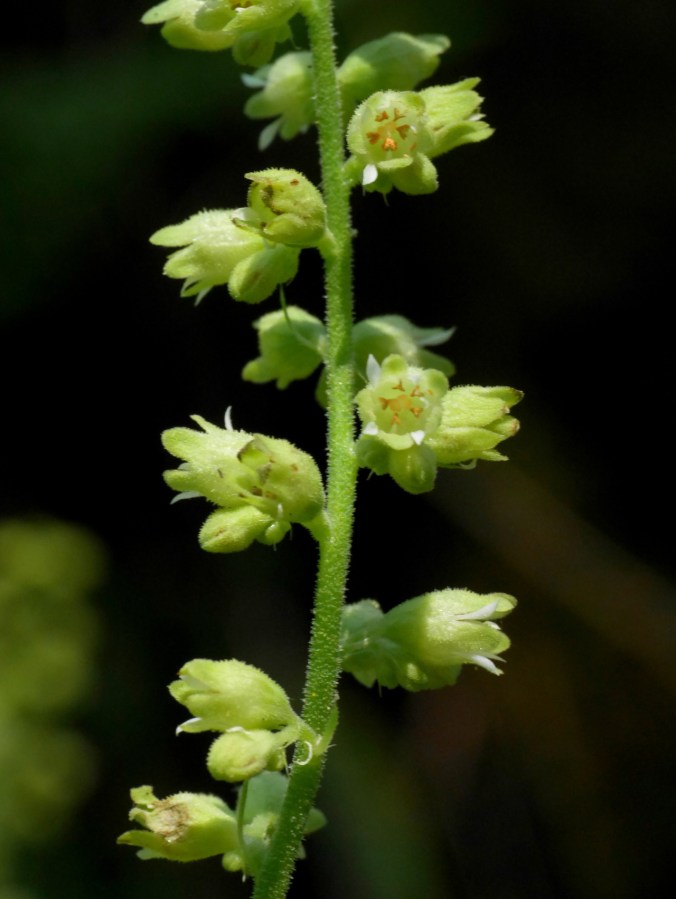
Heuchera grossulariifolia “Gooseberry Alumroot” Saxifragaceae

Weir Hot Springs, Clearwater National Forest, ID
June 8, 2015
Robert Niese

These lovely Saxifrags are endemic to the PNW (southwest Montana to the southern Cascades) where they can be found on well-drained, somewhat shady slopes and cliff-faces. In many parts of its range, two distinct populations of H. grossulariifolia occur side-by-side, and may be evolving into separate species. Due to an accidental duplication of its genome, tetraploid populations of H. grossulariifolia bloom earlier and grow larger than their diploid counterparts, and hybrids between the two populations have low fertility. This suggests that the two populations may be genetically isolated enough to become separate species in the future.
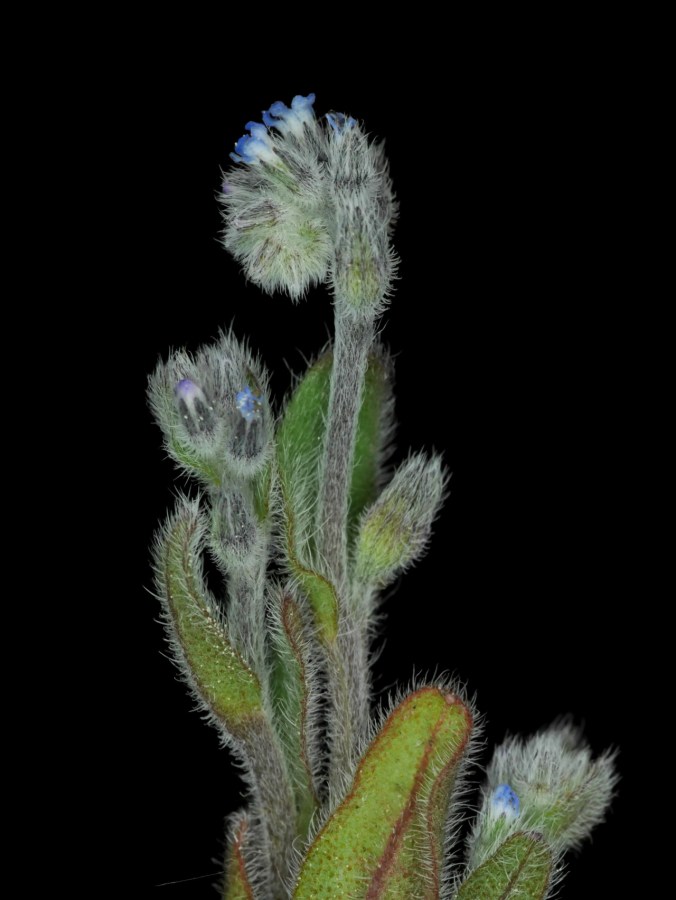
Myosotis stricta (micrantha) “Strict Forget-me-not” Boraginaceae

Missoula, MT
April 23, 2015
Robert Niese

There are several species of Myosotis in our region – four of which have flowers that are less than 5mm in diameter! Of these small-flowered species, M. verna tends to have white flowers, M. laxa has sepal hairs that are not hooked at the tip, and M. discolor produces flowers that are yellow at first, but turn purple with age. M. discolor and M. stricta tend to be our most common tiny, weedy, roadside inhabitants here in the PNW. The flowers on this particular specimen were only 2mm across!

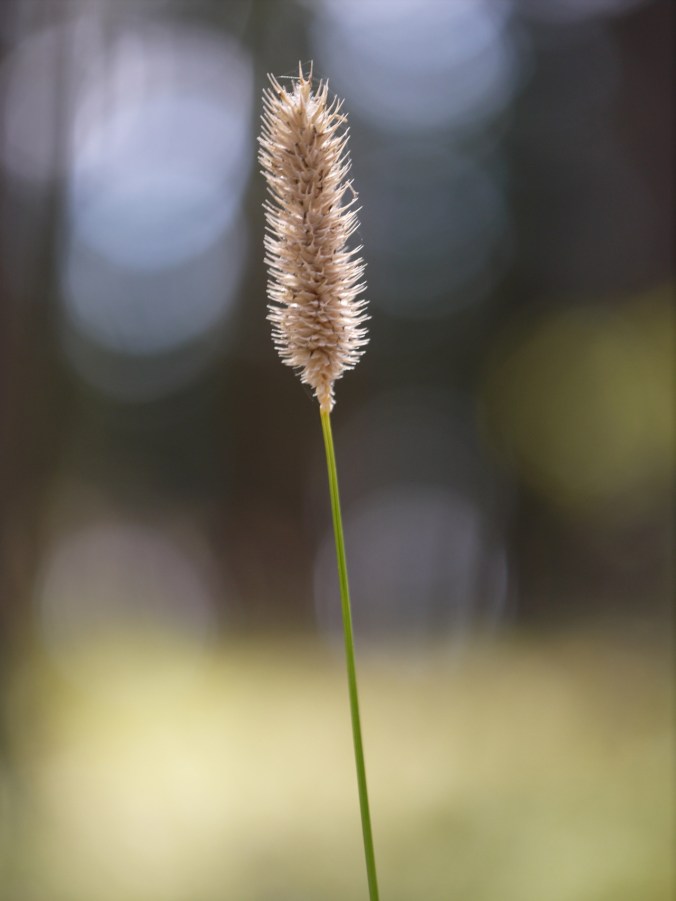
Phleum pratense “Timothy” Poaceae

Seeley Lake, MT
September 13, 2014
Robert Niese

Timothy grass has been introduced throughout most of North America and is commonly found along roads and trails here in western Montana. It flowers late in the summer and by fall its inflorescence dries out and it begins looking quite sedge-like. It is easily distinguished from other similar grasses by its double-pointed, horn-like spikelets.

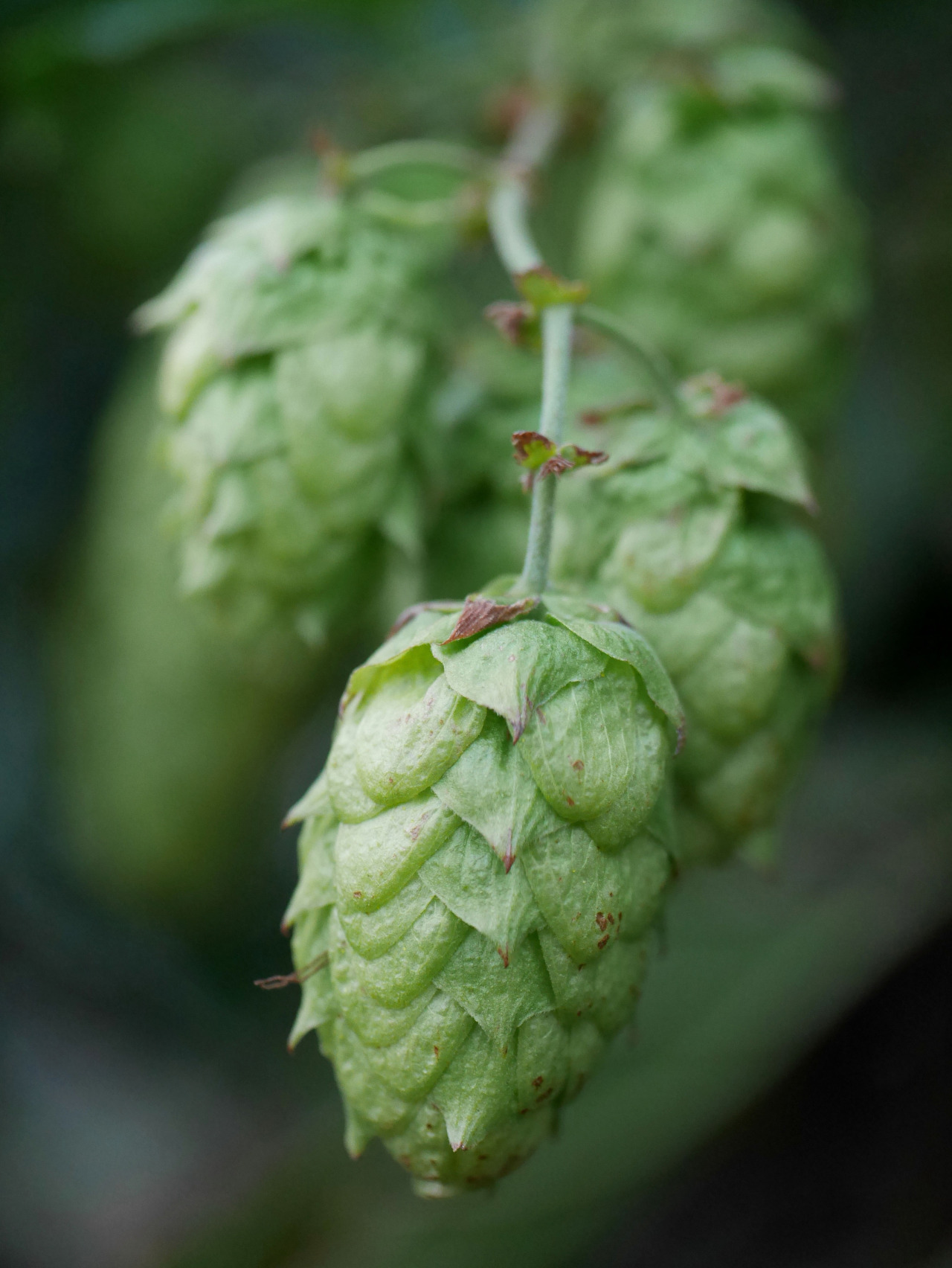
Humulus lupulus “Common Hop” Cannabaceae

Missoula, MT
September 12, 2015
Robert Niese

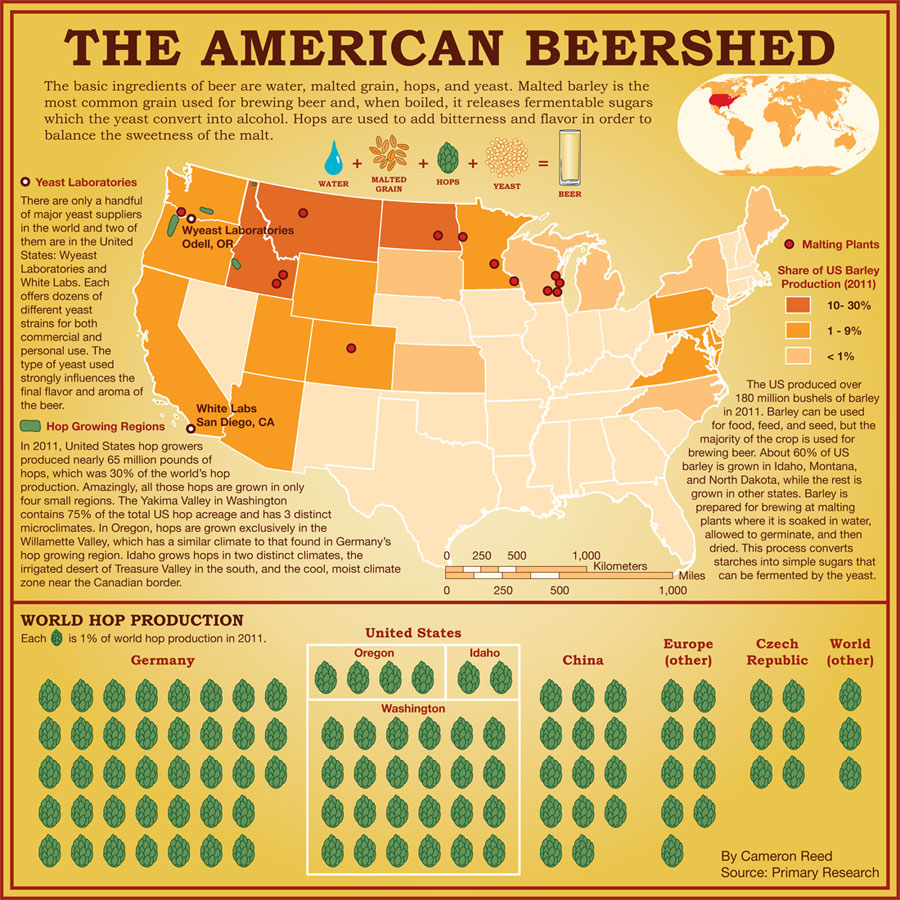
The Common Hop grows particularly well in the PNW and Washington state alone produces nearly a quarter of the world’s hops. Humulus is a member of a rather odd family of flowering plants, the Cannabaceae, which tend to have drab flowers (often unisexual) that lack petals and rely on wind for pollination. In the Common Hop specifically, the structure that is utilized for beer production (the hop) is actually a modified inflorescence of female flowers hiding beneath leaf-like scales called bracts. Beneath each of those bracts, the female flowers produce a the diversity of compounds which, through selective breeding efforts across the centuries, impart bitterness and complex aromas to the beer.

Listera caurina “Northwestern Twayblade” Orchidaceae

Great Burn, Lolo National Forest, MT
July 10, 2015
Robert Niese


These tiny orchids are extremely common in moist forests throughout the PNW, but their minute flowers (only 6mm across!) and uniform green coloration make them easy to miss. Recent genetic research has placed all members of the genus Listera into the old world genus Neottia which used to contain a single, achlorophyllous species, but I’m really more of a lumper than a splitter, so I won’t be changing my taxonomy for a while!

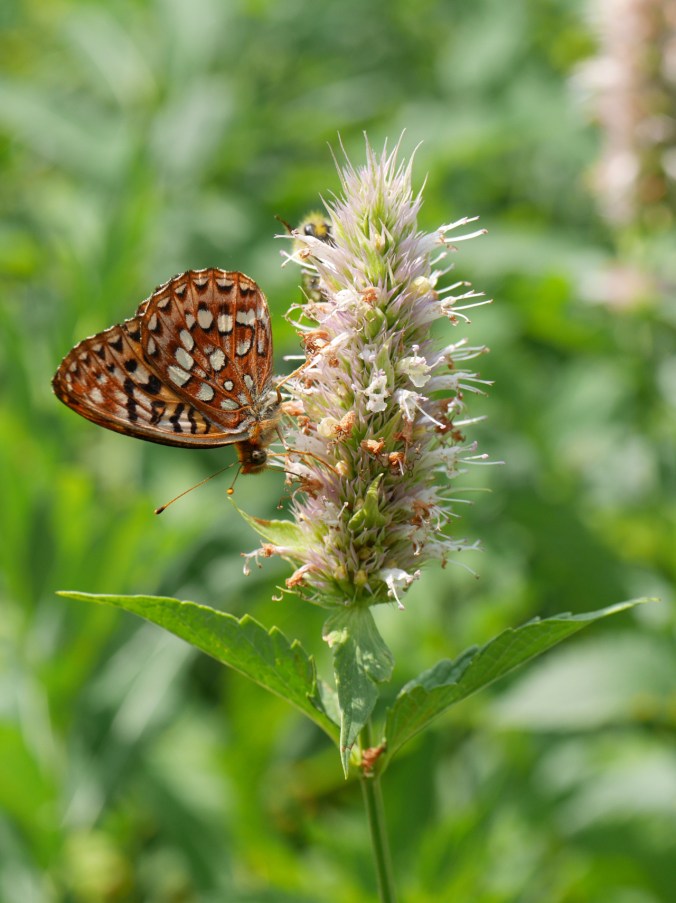
Speyeria hydaspe “Hydaspe Fritillary” Nymphalidae
on Agastache urticifolia “Nettle-leaf Giant Hyssop” Lamiaceae

Great Burn, Lolo National Forest, MT
July 10, 2015
Robert Niese

Fritillaries are a common, large butterfly here in the PNW east of the Cascades. There are several species that are regularly found in our area. Learn more about them here. This particular fritillary is feeding on the nectar of a very interesting and quite common local plant. Its Latin name, Agastache, is Greek for “many spikes” and, as you might guess, its inflorescence looks like a giant spike ball. Like many other members of the mint family, giant hyssop is commonly used in herbal teas and poultices for a variety of medicinal purposes. In particular, the leaves can be used to induce sweating and as a vasodilator. This particular species is quite abundant in the PNW east of the Cascades and is a favorite food source for many ungulates like deer, elk, cows, and moose.

Aconitum columbianum “Columbian Monkshood” Ranunculaceae

Great Burn, Lolo National Forest, MT
July 10, 2015
Robert Niese


Also known as Wolf’s Bane, Aconite, and Queen of all Poisons, members of the monkshood genus are world famous for the toxins they produce. The name Aconitum is believed to come from a Greek phrase that means “without struggle,” which is, of course, a reference to its swift lethality. Throughout the millennia, aconite has been utilized in countless murders, including the murder of Ptolemy XIV by his sister, Cleopatra. The poisons produced by this plant are so potent that simply brushing up against them can reportedly cause death. Here in the PNW, some native peoples once coated their spears and arrows in monkshood poisons to paralyze large game such as bears, wolves, and even whales.

Mimulus lewisii “Purple Monkeyflower” Phrymaceae (Scrophulariaceae)

Great Burn, Lolo National Forest, MT
July 10, 2015
Robert Niese

This species of monkeyflower was named after the naturalist and explorer, Meriwether Lewis (of Lewis and Clark), who discovered it in Montana, at the headwaters of the Missouri River. Although Lewis was not formally trained as a botanist, he collected and described hundreds of plant species, many of which were completely new to science at the time. Specimens of this particular plant, however, were lost in a flood and never made it back to Washington DC where they would have been cataloged, named, and formally described by Frederick Pursh. Instead, using only Lewis’s descriptions in his journal, Pursh was able to define this plant as a new species!

Spiraea densiflora (splendens) “Subalpine Spiraea” Rosaceae

Great Burn, Lolo National Forest, MT
July 10, 2015
Robert Niese


This species of Spiraea is a popular garden plant thanks to beautiful, fragrant pom-pom inflorescences. In the wild, it commonly inhabits moist, rocky slopes throughout the PNW. If you’d like to propagate your own, check out these instructions for collecting and germinating seeds.

Mentha arvensis “Wild Mint” Lamiaceae

Missoula, MT
July 19, 2015
Robert Niese

Mint is one of the most abundant, easily recognizable plants growing along the banks of Missoula’s rivers this summer – perfect for those on-the-fly, riverside mojitos! Look for its square stems, axillary flowers, and minty aroma!