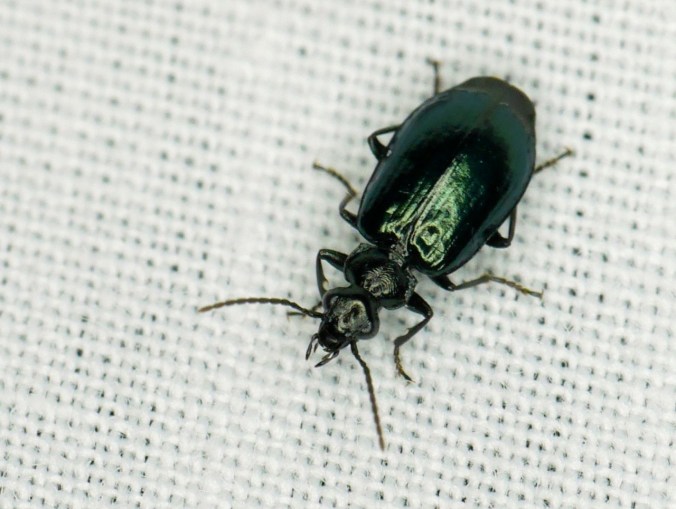
Lebia viridis (cyanipennis) “Western Colorful Foliage Beetle” Carabidae

Clinton, MT
July 25, 2015
Robert Niese

This awesome carnivorous beetle joined us at the sheets during our Mothlighting event for National Moth Week with the Missoula Butterfly House. These colorful Carabids didn’t come to the light looking for sex though. They were on the hunt! This guy was speedily chasing after gnats and other small insects that we had attracted to our lights. In my opinion, watching these tiny predators was just as exciting as any lion hunt in Africa!

Mothlighting for National Moth Week with the Missoula Butterfly House

Clinton, MT
July 25, 2015
Robert Niese

July is a glorious time here in Montana. Not only do the insects come out in massive numbers, but it’s also the best time for fishing, star-gazing, botanizing, and huckleberry hunting. Next time you’re in Montana for July, be sure to drop me a line! I’d love to show off all the awesome Nature this region has to offer!

Cyphocleonus achates “Knapweed Root Weevil” Curculionidae

Missoula, MT
August 13, 2015
Robert Niese

These weevils are native to Europe, but were introduced in the 1980s as a potential biological control agent for various species of knapweed. Various studies have shown that they are actually quite good at reducing the biomass of Spotted Knapweed, and have been successful in various locations in Montana, Minnesota, Oregon, Nevada, British Columbia, and recently, Michigan.

Aconitum columbianum “Columbian Monkshood” Ranunculaceae

Great Burn, Lolo National Forest, MT
July 10, 2015
Robert Niese


Also known as Wolf’s Bane, Aconite, and Queen of all Poisons, members of the monkshood genus are world famous for the toxins they produce. The name Aconitum is believed to come from a Greek phrase that means “without struggle,” which is, of course, a reference to its swift lethality. Throughout the millennia, aconite has been utilized in countless murders, including the murder of Ptolemy XIV by his sister, Cleopatra. The poisons produced by this plant are so potent that simply brushing up against them can reportedly cause death. Here in the PNW, some native peoples once coated their spears and arrows in monkshood poisons to paralyze large game such as bears, wolves, and even whales.

Caenurgina erechtea “Forage Looper” Erebidae

Clinton, MT
July 25, 2015
Robert Niese

Here’s another moth we spotted during our Mothlighting event for National Moth Week with the Missoula Butterfly House. This individual didn’t come to light, however. It came to our sugar lick! A sticky goopy paste of sugar, bananas, molasses, and beer can attract some unique nighttime visitors that you wouldn’t normally see at a light! This Forage Looper was far more interested in a sugary snack, than an insect orgy at a blacklight. And check out that camouflage! So neat!

Drepana arcuata “Arched Hooktip Moth” Drepanidae

Clinton, MT
July 25, 2015
Robert Niese


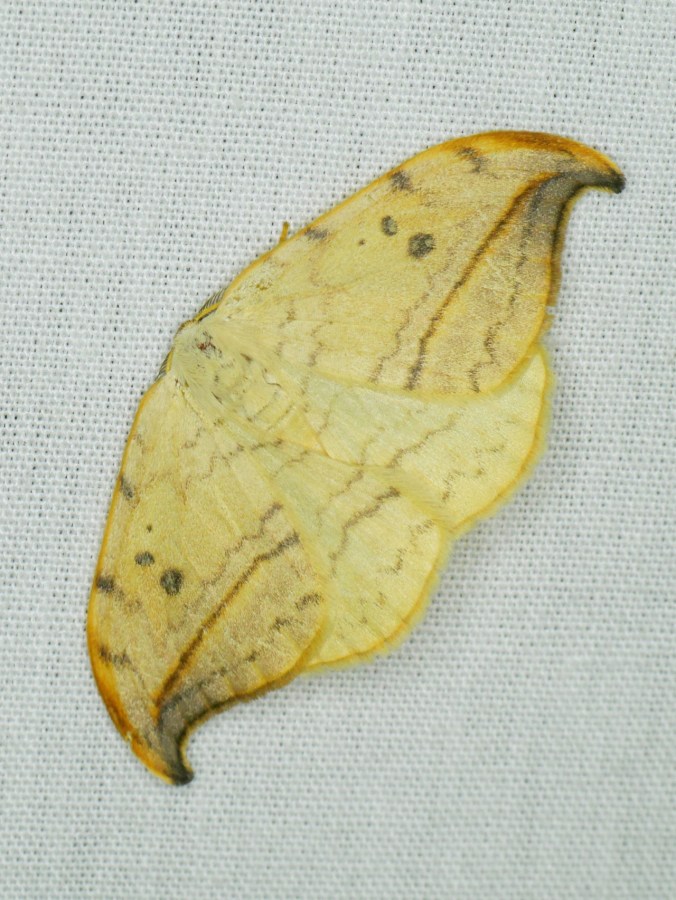
Here’s another moth we spotted during our Mothlighting event for

National Moth Week with the Missoula Butterfly House. These moths are positively unmistakable! In our area there are no other moths that pull-off the “I’m a dead leaf” look quite as well as the Hooktips. The PNW is home to two species of Hooktip moths – D. arcuata and D. bilineata (which, as its name suggests, has two lines instead of one). As larva, Hooktip moths feed on the leaves of Alder and Birch trees where they hide inside folded leaves.

Mimulus lewisii “Purple Monkeyflower” Phrymaceae (Scrophulariaceae)

Great Burn, Lolo National Forest, MT
July 10, 2015
Robert Niese

This species of monkeyflower was named after the naturalist and explorer, Meriwether Lewis (of Lewis and Clark), who discovered it in Montana, at the headwaters of the Missouri River. Although Lewis was not formally trained as a botanist, he collected and described hundreds of plant species, many of which were completely new to science at the time. Specimens of this particular plant, however, were lost in a flood and never made it back to Washington DC where they would have been cataloged, named, and formally described by Frederick Pursh. Instead, using only Lewis’s descriptions in his journal, Pursh was able to define this plant as a new species!

Apache degeeri “Derbid planthopper” Derbidae

Clinton, MT
July 25, 2015
Robert Niese

This little creature looks like something from another planet! Derbid planthoppers are one of entomology’s lesser studied groups of organisms. This particular genus has two members, A. degeeri and A. californicum, and is only found in North America (unlike most planthoppers which tend to be more highly represented in the tropics). This species occurs throughout North America, but tends to be more abundant in the east, while A. californicum is endemic to California. The larvae of these bugs are believed to feed off the hyphae (like roots) of fungi, while adults feed on the sap of trees like Beach, Oak, Maple, and Hickory.

Spiraea densiflora (splendens) “Subalpine Spiraea” Rosaceae

Great Burn, Lolo National Forest, MT
July 10, 2015
Robert Niese


This species of Spiraea is a popular garden plant thanks to beautiful, fragrant pom-pom inflorescences. In the wild, it commonly inhabits moist, rocky slopes throughout the PNW. If you’d like to propagate your own, check out these instructions for collecting and germinating seeds.

Malacosoma californica “Western Tent Caterpillar Moth” Lasiocampidae

Clinton, MT
July 25, 2015
Robert Niese

Tent caterpillar moths were some of our most abundant visitors during our Mothlighting event for National Moth Week with the Missoula Butterfly House. They are positively adorable as adults, wouldn’t you agree? In our area, we tend to have mostly Western Tent Caterpillars, but we do also get Forest Tent Caterpillars (M. disstria). Caterpillars of M. disstria tend to have broader blue dorsal bands, keyhole-shaped white dorsal spots, and whiter tufts of lateral hairs than M. californica, which, in our area, tend to have more yellow than blue

(however, farther east they tend to lack yellow entirely)

and tend to have dash-shaped white dorsal spots. Adults are far more difficult to distinguish, but in general, M. californica tends to have two lighter-colored lateral bands on its forewings in addition to dark bands, while M disstria tends to lack these bands and only has dark bands. But from the underside, they all just look like teddy bears.