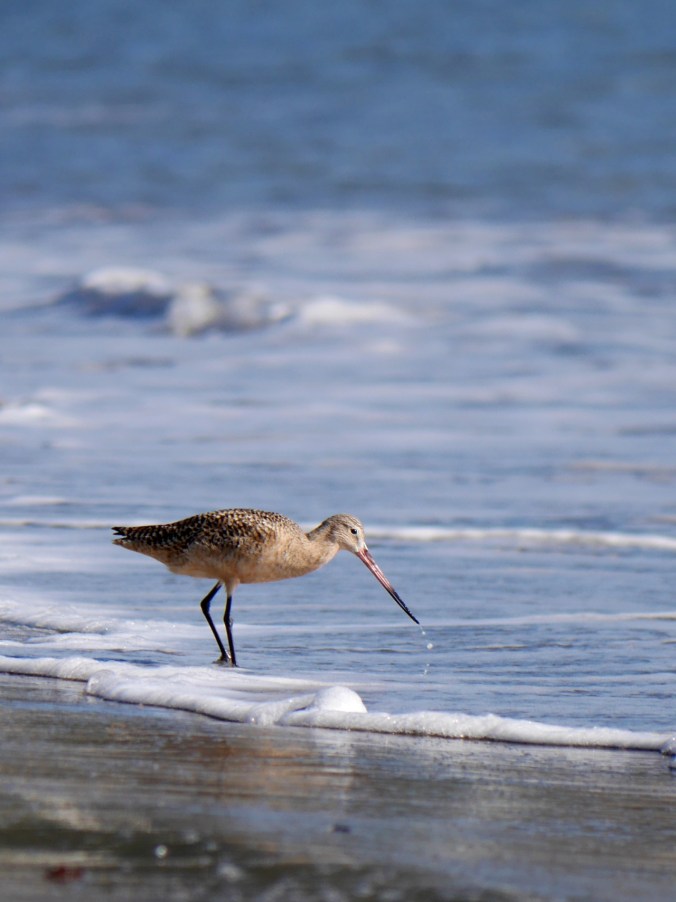
Marbled Godwit (Limosa fedoa) Scolopacidae
Santa Cruz, CA
January 3, 2015
Robert Niese
These shorebirds spend their winters here on the Pacific coast and fly inland to the Great Plains to breed in the summer.
Marbled Godwit (Limosa fedoa) Scolopacidae
Santa Cruz, CA
January 3, 2015
Robert Niese
These shorebirds spend their winters here on the Pacific coast and fly inland to the Great Plains to breed in the summer.
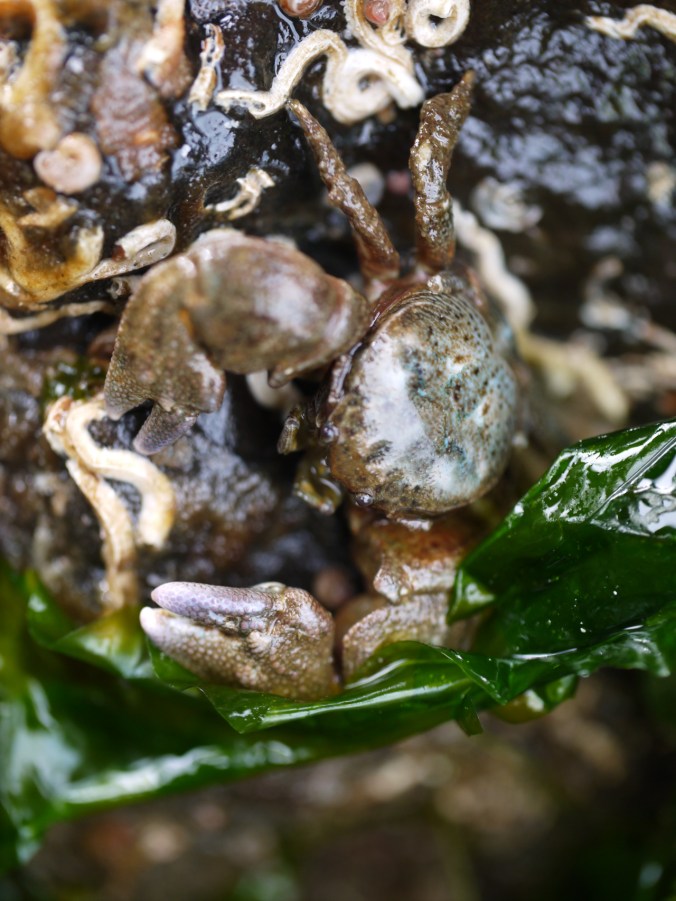
Pachycheles rudis “Thick-clawed Porcelain Crab” Decapoda
Fox Island, WA
June 23, 2013
Robert Niese
Porcelain crabs are not actually “true crabs” and are a remarkable example of convergent evolution in the Decopod order. In fact, crab-like forms have evolved so many times within the crustacean clade that evolutionary biologists have given this type of convergent evolution its own name: carcinization. Porcelain crabs are more closely related to hermit crabs and squat lobsters than they are to a typical Cancer crab.
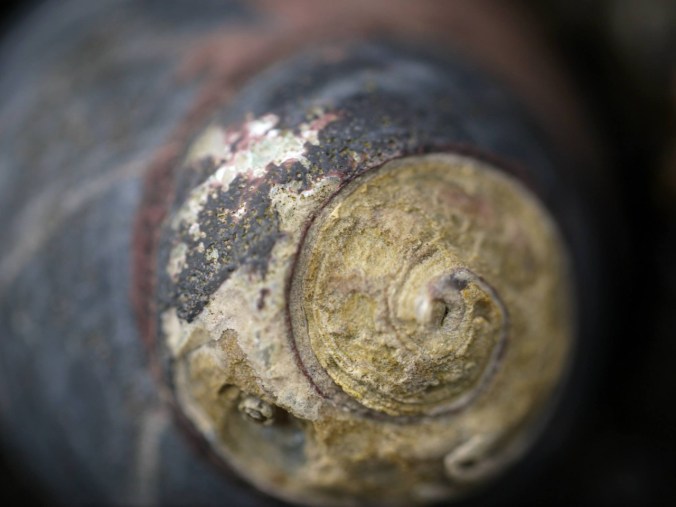
Tegula funebralis “Black Turban” Gastropoda
Olympic National Park, WA
June 1, 2013
Robert Niese
One of the most abundant molluscs on the open coast, and apparently one of the tastiest.
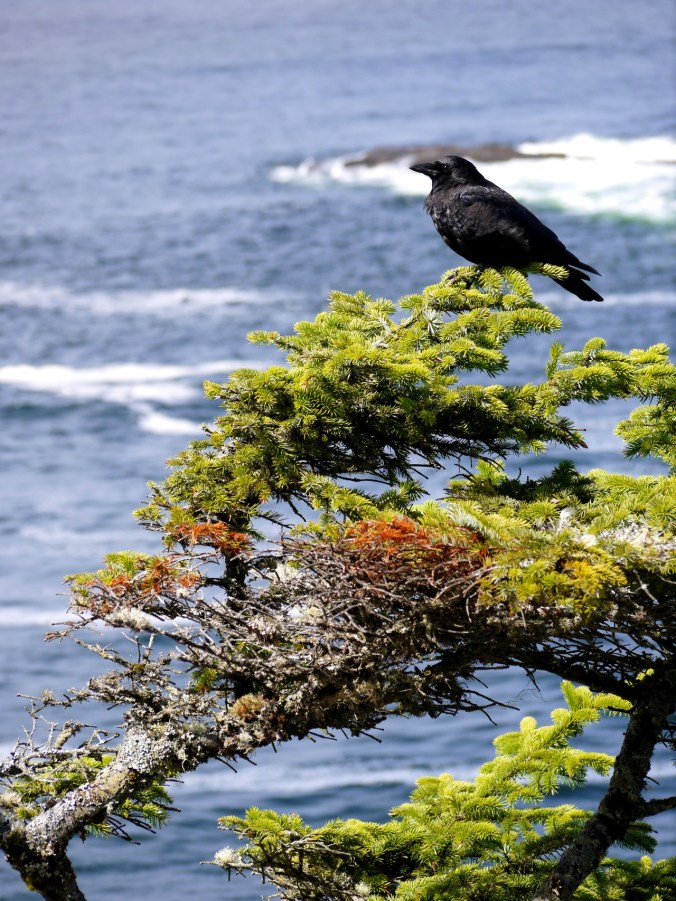
Northwestern/American Crow (Corvus caurinus/brachyrhynchos) Corvidae
Cape Flattery, WA
August 19, 2014
Robert Niese
While, as a scientist, I seriously doubt the validity of the “Northwestern” distinction for our PNW crows, if there were ever a crow that could be called a “Northwest Crow” it would have to be one at Cape Flattery (the northwestern-most point in the contiguous US). Northwestern Crows are, however, likely a subspecies of the American Crow and can only be identified based on their range of occurrence, which undoubtedly overlap for most regions.
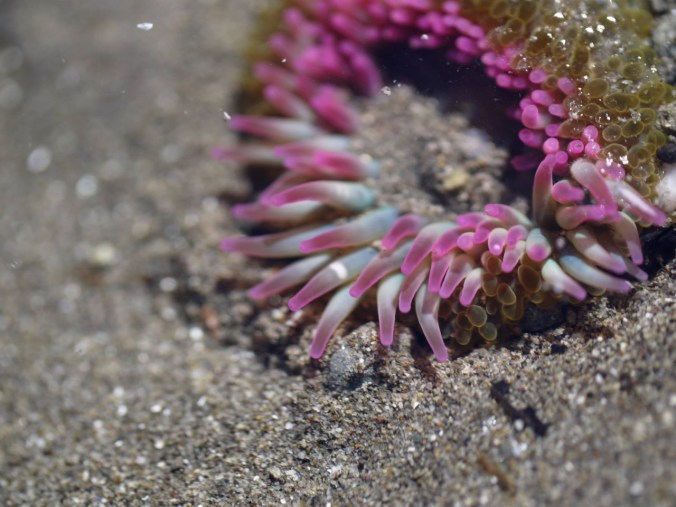
Anthopleura elegantissima “Aggregating Anemone” Anthozoa
Olympic National Park, WA
June 1, 2013
Robert Niese
A very common intertidal resident here in the Puget Sound and on the open coast. If it’s big and green, it’s Anthopleura xanthogrammica. If it’s white and has very fine tentacles (usually subtidal, not intertidal) then it’s Metridium. Now you can identify 90% of the anemones you find in your backyard!
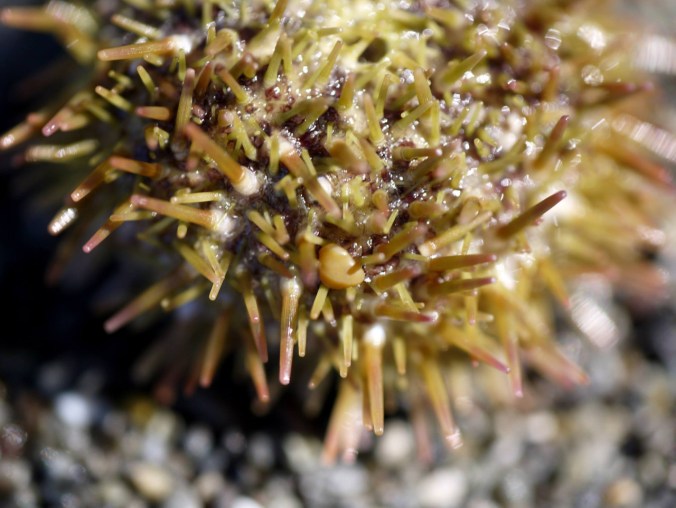
Strongylocentrotus droebachiensis “Green Urchin” Echinoidea
Olympic National Park, WA
June 2, 2013
Robert Niese
Strongylocentrotus droebachiensis has one of the longest binomial Latin names of any organism in the world. It is also one of the most abundant and widely distributed urchins on Earth. Here in Washington, S. droebachiensis is at the southernmost extent of its range.

Pentidotea (Idotea) wosnesenskii “Kelp Isopod” Isopoda
Olympic National Park, WA
June 1, 2013
Robert Niese
This is an abundant intertidal crustacean that feasts on algae growing among mussel and barnacle beds throughout northern Pacific rocky coastlines. They range in color from purple to red to brown to green, depending on their current algae diet.
 Northwest Naturalist