Stemonitis sp. “Brown Plasmodial Slime Mold” Myxogastria

Tacoma, WA
July 8, 2013
Robert Niese

Slime molds are colonial unicellular organisms that are distantly related to animals and fungi. They are active predators of bacteria, protists, and fungi, and are most often observed in their fruiting phase (as seen above). These beautiful fruiting structures (check out these crazy colors!) then release spores which get distributed by the wind or small animals.

Limenitis lorquini “Lorquin’s Admiral” Nymphalidae

Mount Rainier National Park, WA
August 12, 2013
Robert Niese

These butterflies will aggressively defend their feeding sites throughout the summer, chasing off rival males as well as other intruding insects and even hummingbirds.

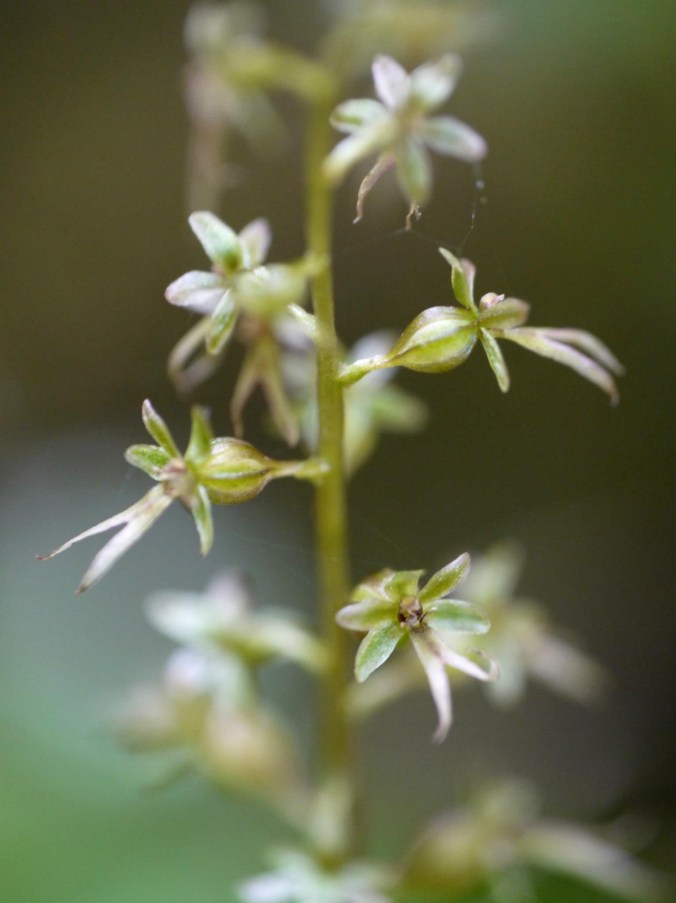
Listera cordata “Heart-leaf Twayblade” Orchidaceae

Olympic National Park, WA
June 3, 2013
Robert Niese

This tiny orchid has a circumboreal distribution and is most often found in the moist forest understory hiding among the mosses. Twayblade orchids are fairly common in the Pacific Northwest but are usually overlooked due to their size (rarely more than a few inches tall) and unremarkable coloration. We have five species of Twayblade in the PNW – one of which is endangered.

Pacific Wren (Troglodytes pacificus) Troglodytidae

Olympic National Park, WA
June 6, 2013
Robert Niese

Pacific Wrens are some of the most accomplished vocalists in the animal kingdom. Displaying birds have been known to sing more than 60 notes per second for 120 seconds without breathing! They’re also one of North America’s loudest animals. Have a listen.

Anoplius sp. “Blue-black Spider Wasps” Pompilidae

Missoula, MT
June 29, 2014
Robert Niese

These lovely wasps are vicious spider hunters and have an absolutely gruesome life cycle. Instead of immediately killing their quarry, females paralyze the spider with a sting, and drag it down into a burrow. There, the female will lay eggs inside the spider, where her young will hatch and feed on the poor arachnid from the inside-out. Interestingly, spider wasps are nectivorous and lose their hunger for arachnid flesh at adulthood.

Enoclerus sphegeus “Red-bellied Clerid” Cleridae

Olympic National Park, Washington
June 2, 2013
Robert Niese

These little beetles have the unique habit of leaping off their trees and showing their bright red abdomens when threatened by predators (or my camera lens).

Rubus spectabilis “Salmonberry” Rosaceae

Tacoma, WA
May 2013
Robert Niese

These are definitely some of my favorite PNW fruits. You can easily identify a Salmonberry bush by its unique 3-part leaves. Look for the bottom two leaflets that are shaped like the wings of a butterfly!

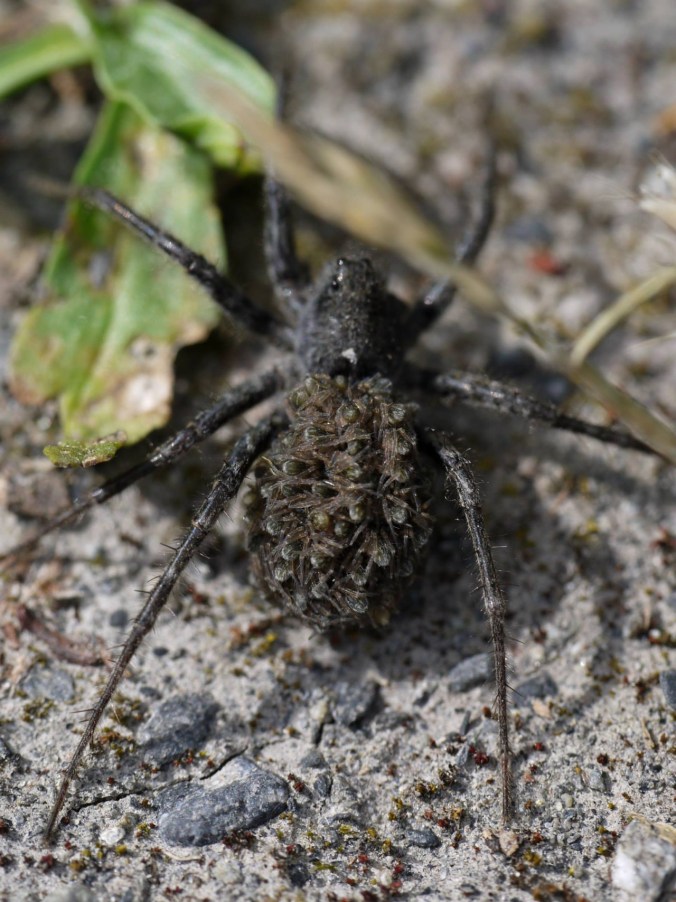
Pardosa sp. “Thin-legged Wolf Spider” Lycosidae, with young

Olympic National Park, WA
June 8, 2013
Robert Niese

Female wolf spiders spin an egg sac and attach it to their spinnerets, carrying around their

precious cargo until the spiderlings hatch and crawl onto her back. There, the babies will stay until they’re old enough to venture out into the world on their own.

Phyllophaga sp. “May Beetle” Scarabaeidae

Missoula, MT
May 18, 2014
Robert Niese

There are more than 400 species of Phyllophaga in the United States and Canada. Their identification requires an intimate investigation of… ahem… reproductive morphology, which is not something I’m dying to do today.