Balsamorhiza sagittata “Arrowleaf Balsamroot” Asteraceae

Blackfoot River Recreation Corridor (BLM), MT
April 23, 2015
Robert Niese

Arrowleaf Balsamroot was first collected by Meriwether Lewis (of the Lewis and Clark Expedition) when he was exploring the northern Rockies in 1806. These particular specimens appear to have been munched by some deer (notice that the left side is missing some flowers).
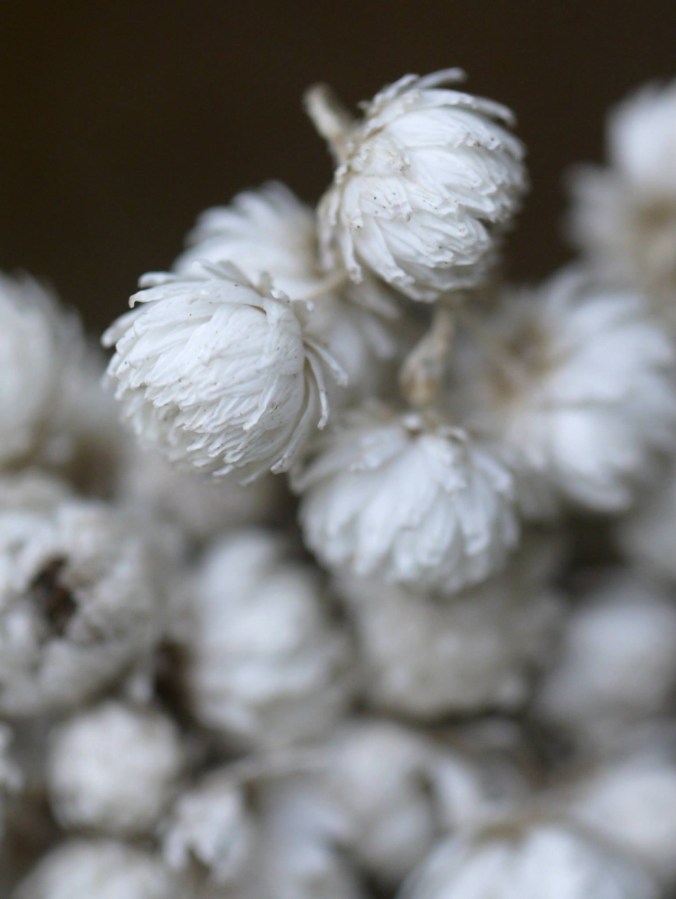
Anaphalis margaritacea “Pearly Everlasting” Asteraceae

Fort Casey State Park, WA
December 17, 2013
Robert Niese

Pearly Everlasting, so named for its persistent white inflorescences that hang around well into winter, is a lovely wildflower native to most of North America. It is often seen in the fall/winter bouquets sold by Pike’s Place Market’s famous flower vendors in Seattle. The dried inflorescences and leaves have also been used as an incense, especially around baby cribs.

Phlox gracilis (Microsteris gracilis) “Midget Phlox” Polemoniaceae

Missoula, MT
April 23, 2015
Robert Niese

This diminutive flower is an abundant resident of grassy prairies, roadsides, and open forests throughout the Pacific Northwest. Its weedy nature and minuscule, 2-5mm broad flowers make it easy to overlook, but, upon closer inspection, it is a positively adorable native plant. In some locations, the tiny petals have deep lobes and fuchsia markings. Some hillsides here in Missoula have this pale lavender variety as well as a single-flowered, hot pink form.

somuchscience:

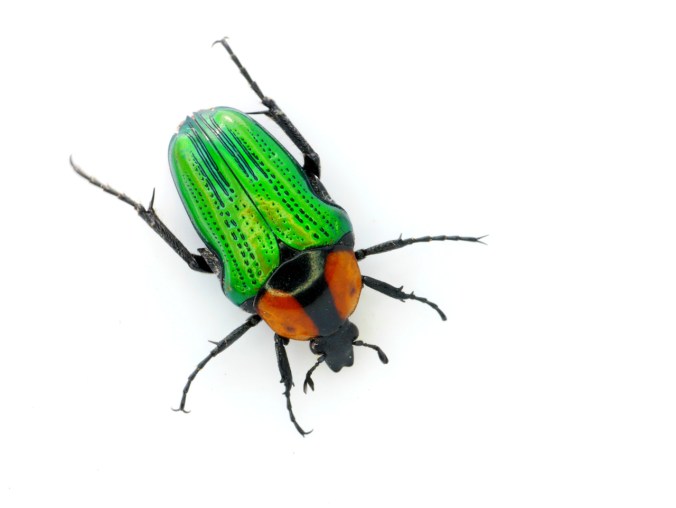
Leucocelis sp. “Flower Chafer” (Cetoniinae) Scarabeidae

Serengeti National Park, Tanzania
January 17, 2015
Robert Niese

This adorable little flower chafer is a relative of the famously massive Goliath Beetle.

Update! This appears to be a flower chafer in the genus Leucocelis. Likely Leucocelis niansana. Thanks for the ID help!

This is definitely not the Pacific Northwest, but in case you’d like more natural history photos and articles, check out my work over at SoMuchScience!

Balsamorhiza sagittata “Arrowleaf Balsamroot” Asteraceae

Blackfoot River Recreation Corridor (BLM), MT
April 23, 2015
Robert Niese

Balsamroot is one of the most characteristic plants of eastern PNW habitats. While the coastal Northwest’s lush rainforests are truly a sight to behold, nothing is quite as striking as springtime hillsides covered with Balsamroot and Lupine while dramatic, snow-capped peaks loom in the background. Fun fact: Arrowleaf Balsamroot was first collected by Meriwether Lewis (of the Lewis and Clark Expedition) when he was exploring the northern Rockies in 1806.

Pulsatilla patens (Anemone patens) “Prairie Crocus” Ranunculaceae

Blackfoot River Recreation Corridor (BLM), MT
April 23, 2015
Robert Niese

These beautiful spring flowers are most abundant in the early spring and often bloom around Passover earning them the common name “Pasque Flower” (pasque is an old Latin word for Easter). The prairie crocus is in decline throughout its range, but is protected as a threatened species in Washington where it is restricted to only a few locations in the Okanogan-Wenatchee National Forest.

Lomatium dissectum “Fernleaf Biscuitroot” Apiaceae

Blackfoot River Recreation Corridor (BLM), MT
April 23, 2015
Robert Niese

Biscuitroot is famous for its starchy, edible roots. This particular species is the largest in the PNW and has roots that are often utilized in medicinal remedies to treat viral infections and respiratory disorders.

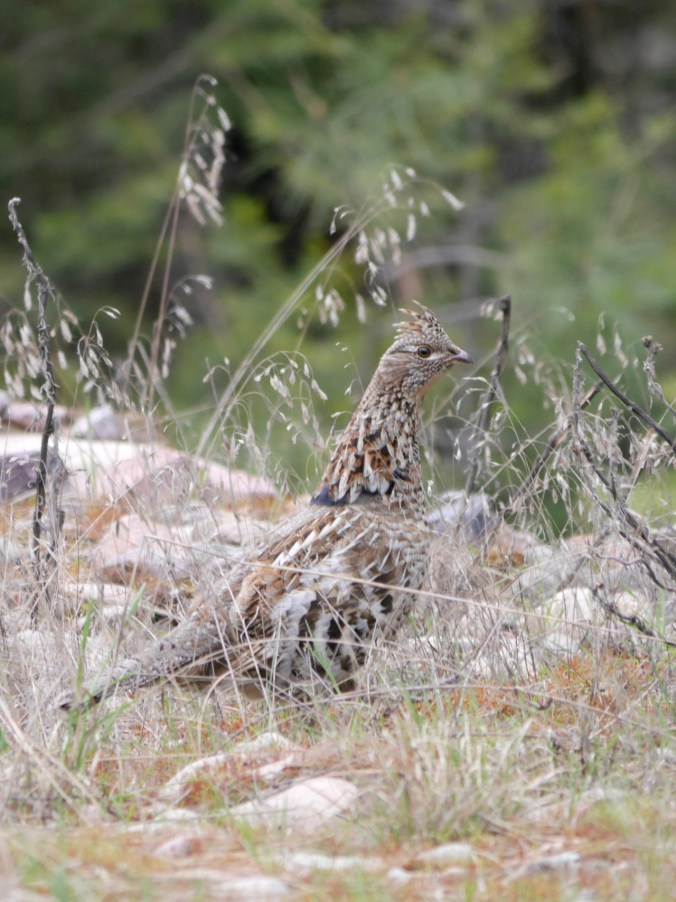
Ruffed Grouse (Bonasa umbellus) Phasianidae

Blackfoot River Recreation Corridor (BLM), MT
April 24, 2015
Robert Niese

It’s that time of year when the forests are rippling with the sounds of Ruffed Grouse displays. Around March and April, these displays are practically non-stop and in a really nice, quiet section of forest you can hear males advertising their territories miles away. Suprisingly, although this was one of the first North American birds to capture the interest of European ornithologists in the 17th century, we still do not know how the Ruffed Grouse produces its prodigious boom performances. Officially, the Birds of North America claims these sounds are “miniature sonic booms” which, if it were true, would quite literally be breaking the laws of physics!

Erythronium grandiflorum “Glacier Lily” Liliaceae

Blackfoot River Recreation Corridor (BLM), MT
April 23, 2015
Robert Niese

The Glacier Lily is endemic to western North America and is a close relative of E. montanum, another common montane fawn lily. Unlike E. montanum, the yellow Glacier Lily is not as particular about its habitat and is regularly found in the understory of nearly all our Ponderosa Pine forests in the springtime.

Collinsia parviflora “Blue-eyed Mary” Plantaginaceae (Scrophulariaceae)

Missoula, MT
April 23, 2015
Robert Niese

The Smallflowered Blue-eyed Mary is a common PNW plant, but its diminuitive growth habit makes it easy to miss. The flowers of this plant are rarely more than a few millimeters across and they hardly grow more than 10cm off the ground. Lately, I’ve been experimenting with photographing several small-flowered plants with my new macro light-ring in the botany lab (they’ve got black lab benches that provide a nice background). I’m quite satisfied with the results!