Lomatium dissectum “Fernleaf Biscuitroot” Apiaceae

Blackfoot River Recreation Corridor (BLM), MT
April 23, 2015
Robert Niese

Biscuitroot is famous for its starchy, edible roots. This particular species is the largest in the PNW and has roots that are often utilized in medicinal remedies to treat viral infections and respiratory disorders.

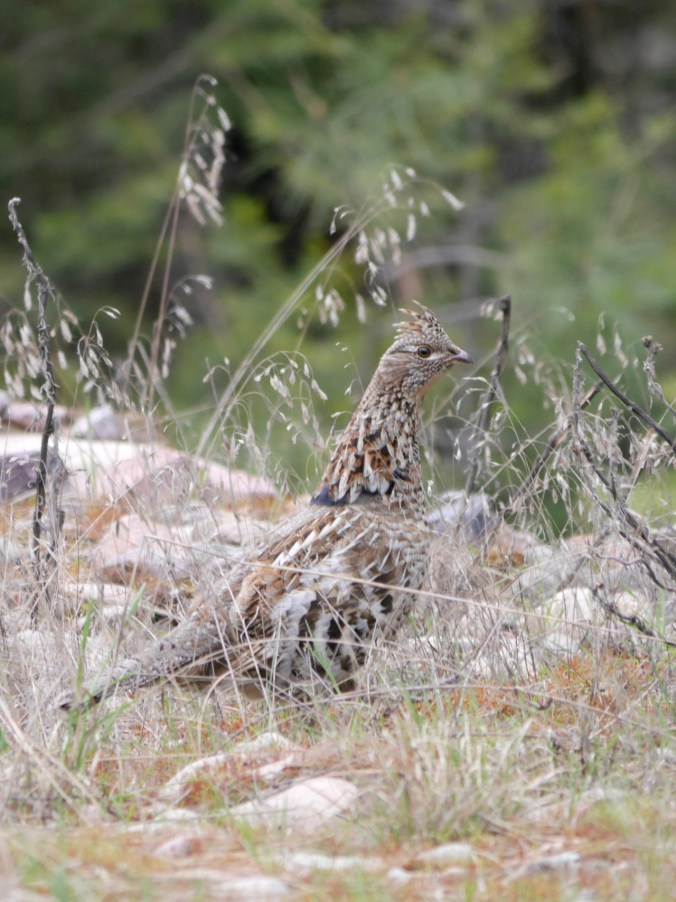
Ruffed Grouse (Bonasa umbellus) Phasianidae

Blackfoot River Recreation Corridor (BLM), MT
April 24, 2015
Robert Niese

It’s that time of year when the forests are rippling with the sounds of Ruffed Grouse displays. Around March and April, these displays are practically non-stop and in a really nice, quiet section of forest you can hear males advertising their territories miles away. Suprisingly, although this was one of the first North American birds to capture the interest of European ornithologists in the 17th century, we still do not know how the Ruffed Grouse produces its prodigious boom performances. Officially, the Birds of North America claims these sounds are “miniature sonic booms” which, if it were true, would quite literally be breaking the laws of physics!

Erythronium grandiflorum “Glacier Lily” Liliaceae

Blackfoot River Recreation Corridor (BLM), MT
April 23, 2015
Robert Niese

The Glacier Lily is endemic to western North America and is a close relative of E. montanum, another common montane fawn lily. Unlike E. montanum, the yellow Glacier Lily is not as particular about its habitat and is regularly found in the understory of nearly all our Ponderosa Pine forests in the springtime.

Collinsia parviflora “Blue-eyed Mary” Plantaginaceae (Scrophulariaceae)

Missoula, MT
April 23, 2015
Robert Niese

The Smallflowered Blue-eyed Mary is a common PNW plant, but its diminuitive growth habit makes it easy to miss. The flowers of this plant are rarely more than a few millimeters across and they hardly grow more than 10cm off the ground. Lately, I’ve been experimenting with photographing several small-flowered plants with my new macro light-ring in the botany lab (they’ve got black lab benches that provide a nice background). I’m quite satisfied with the results!

Dodecatheon pulchellum “Prairie Shooting Star” Primulaceae

Blackfoot River Recreation Corridor (BLM), MT
April 23, 2014
Robert Niese

Our two most common Shooting Stars in the Missoula area are D. conjugens and D. pulchellum. They are nearly identical and can even occur side-by-side on shrub-steppe hillsides. Check out the links above for information on how to tell them apart!

Dodecatheon pulchellum “Prairie Shooting Star” Primulaceae

Blackfoot River Recreation Corridor (BLM), MT
April 23, 2014
Robert Niese

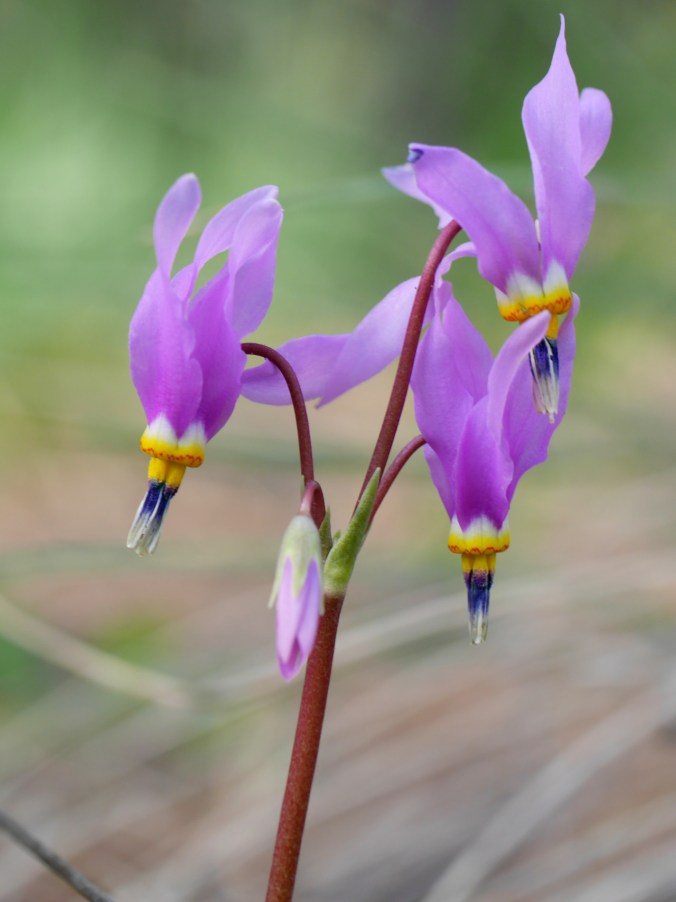
Our two most common Shooting Stars in the Missoula area are D. conjugens and D. pulchellum. They are nearly identical and can even occur side-by-side on shrub-steppe hillsides, but a careful examination of the wrinkles at the base of the anthers and the shape of the stigma can usually assist in identification. D. pulchellum tends to have a slightly enlarged stigma and has anthers with wrinkles that run vertically. Conversely, D. conjugens has a narrow, almost imperceptible stigma and has wrinkles on its anthers that run horizontally. This individual has some nice vertical wrinkles and an obvious stigma.

Dodecatheon conjugens “Desert Shooting Star” Primulaceae

Lolo National Forest, Bitterroot Mountains, MT
March 18, 2015
Robert Niese

Our two most common Shooting Stars in the Missoula area are D. conjugens and D. pulchellum. They are nearly identical and can even occur side-by-side on shrub-steppe hillsides, but a careful examination of the wrinkles at the base of the anthers and the shape of the stigma can usually assist in identification. D. pulchellum tends to have a slightly enlarged stigma and has anthers with wrinkles that run vertically. Conversely, D. conjugens has a narrow, almost imperceptible stigma and has wrinkles on its anthers that run horizontally. This individual has some nice horizontal wrinkles and a very small stigma. After editing this picture, I noticed that there is also a louse or springtail hanging out on the style, presumably waiting for a pollinator to stop by so it can hitch a ride to another flower.

Geopyxis carbonaria “Goblet Fungus” Ascomycota

Lolo National Forest, Bitterroot Mountains, MT
March 18, 2015
Robert Niese

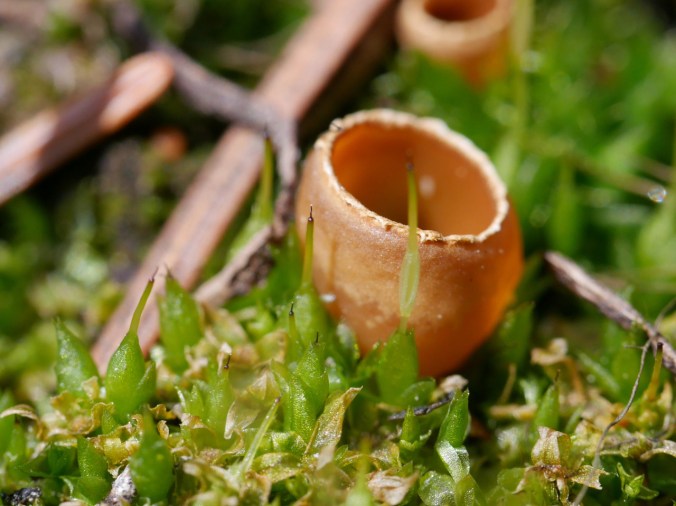
These adorable cup fungi are inordinately abundant in areas following fires. We counted more than a hundred in a single square meter on a hillside that had burned in 2013.

Trillium ovatum “Wakerobin/Western Trillium” Liliaceae

Lolo National Forest, Bitterroot Mountains, MT
March 18, 2015
Robert Niese

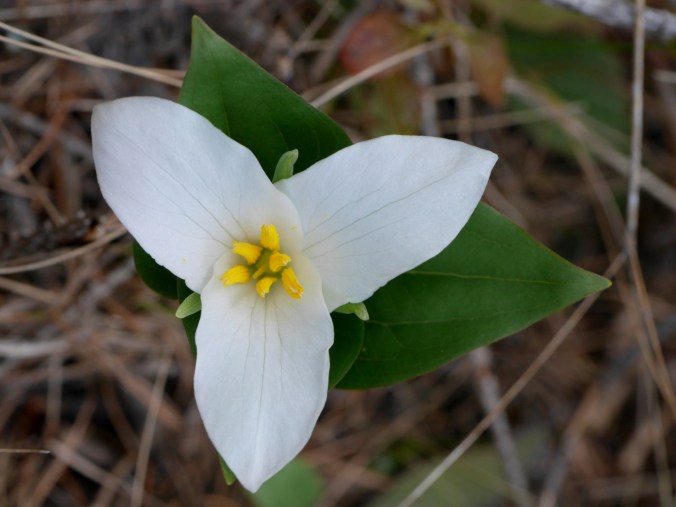
Trillium is, by far and away, my favorite spring arrival to our PNW forests. They like moist areas around rivers and streams, especially those that have a nice mossy carpet to keep the soil damp throughout the year.

Antheraea polyphemus “Polyphemus Moth” Saturniidae (male)

Missoula, MT
June 11, 2014
Robert Niese

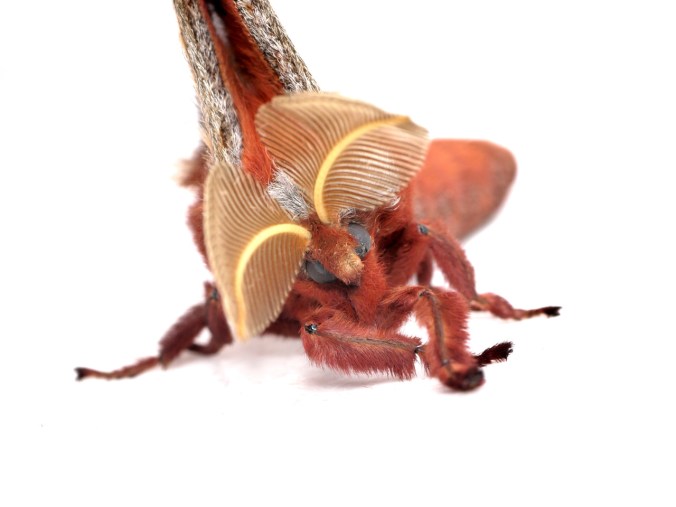
Surprisingly, I found this enormous moth (15 cm wingspan!) in a parking lot on my way into work on the University of Montana campus.