Prunus virginiana “Chokecherry” Rosaceae

Drinking Horse Mountain, Bozeman, MT
June 3, 2015
Robert Niese

Chokecherry is a native species of cherry that is abundant on the drier, east-facing mountain slopes of the PNW. It was a staple food for many tribes in our area and is still regularly harvested by many native peoples. Each small fruit has a pit in the center (like a cherry) which can make its preparation difficult. Check out Abe Lloyd’s blog for details and recipes for things like Chokecherry fruit-leather, jam, and wine.

Castilleja hispida “Harsh Paintbrush” Orobanchaceae

Lolo National Forest, Bitterroot Mountains, MT
May 10, 2015
Robert Niese

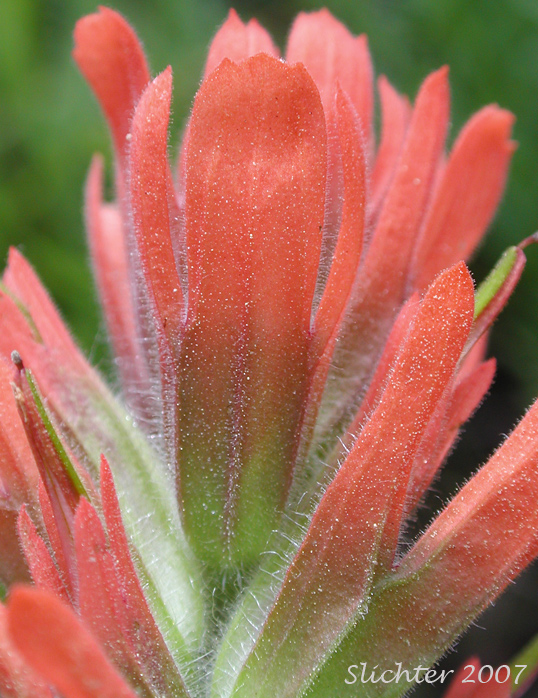
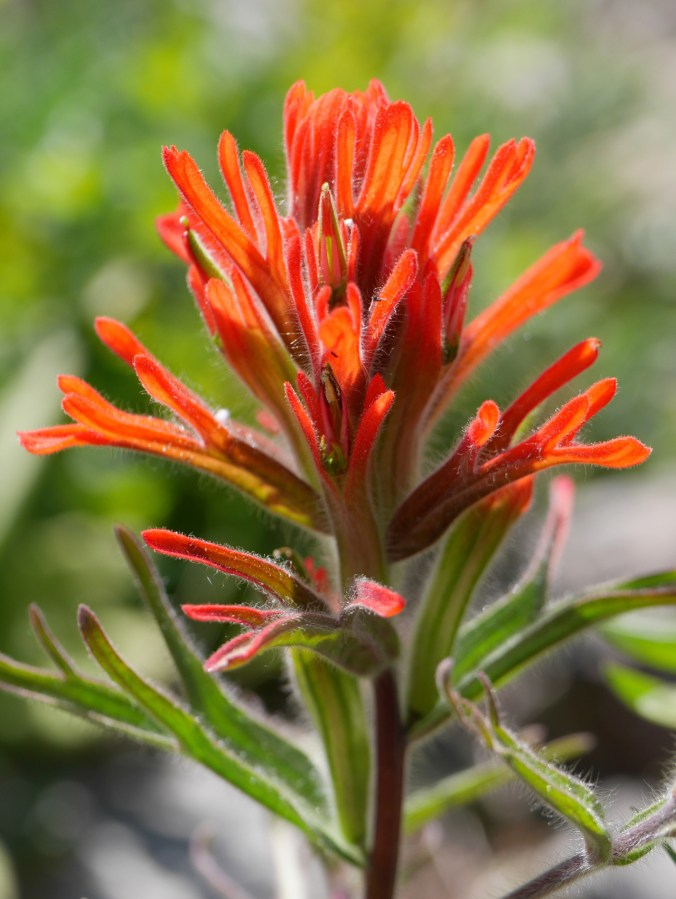
There are three or four species of paintbrushes with red bracts in the Pacific Northwest. The two most common are the Harsh Paintbrush (C. hispida) and the Common Crimson Paintbrush (C. miniata). C. hispida has a dense coat of long, hispid hairs (which look lovely when back-lit!) and will always have lobed leaves on the upper third of their stems. Conversely C. miniata is often less hairy and will have unlobed leaves on the entire stem (sometimes with small lobes on the upper-most portion). The two can also be differentiated by their calyces which are pointed in C. miniata and blunt in C. hispida.
Fun Fact: All paintbrush species are parasites, growing on the roots of other plants to survive.

Anemone multifida var. multifida “Cut-leaf Anemone” Ranunculaceae

Drinking Horse Mountain, Bozeman, MT
June 3 2015
Robert Niese

This anemone is found sporadically throughout the northwest – from the Olympic Peninsula and coastal BC to the Cascades and various eastern mountain ranges – but it is uncommon throughout its range and varies drastically from population to population. Its subspecies designations are thought by many to be inaccurate and based on traits that simply vary with environmental conditions, even within populations.

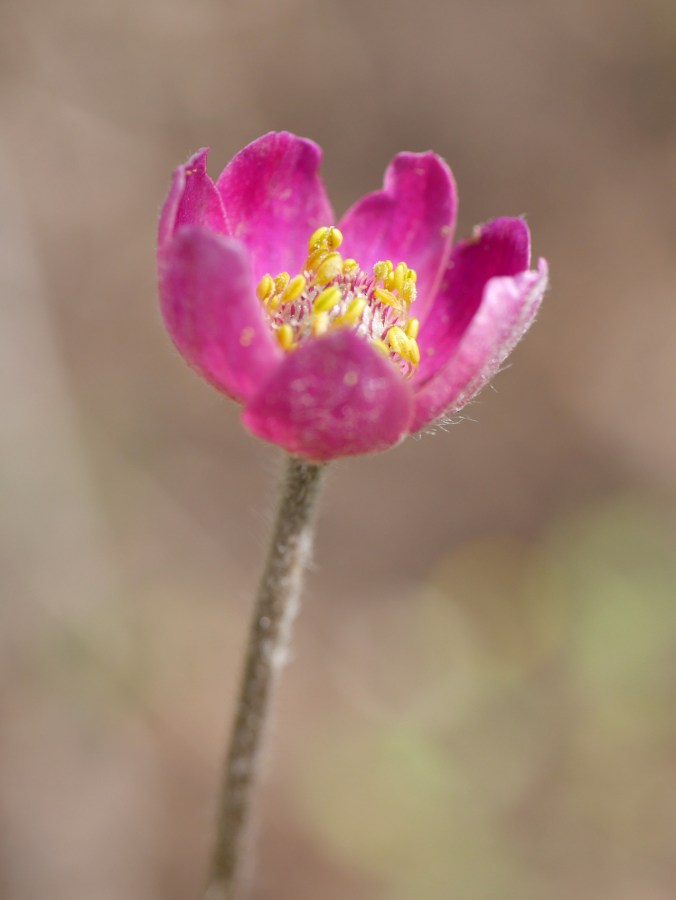
Anemone piperi “Piper’s Anemone” Ranunculaceae

Lolo National Forest, Bitterroot Mountains, MT
May 10, 2015
Robert Niese

Piper’s Anemone doesn’t look much like other common PNW anemones. It tends to have glabrous, trifoliate bracts that look exactly like leaves, while other anemones would have highly dissected, not-very-leafy bracts such as these here. And instead of having five white petaloid sepals it can have up to eight, as you can see in this photo. Apparently, the genetic and developmental mechanisms that determine which floral parts will be sepals, petals, or stamens are easily changed, allowing flowers with loads of stamens (like roses, buttercups, cherry blossoms, anemones, larkspurs, etc.) to produce a few extra petals instead. This is how we get the ornamental varieties of many Ranunculaceae and Rosaceae flowers (their wild versions should have five petals). Piper’s Anemone is a PNW endemic and is uncommonly found in moist coniferous forests from the Blue Mountains of northeastern Oregon and southwestern Washington, through central Idaho, west to the Bitterroot Mountains of Montana.

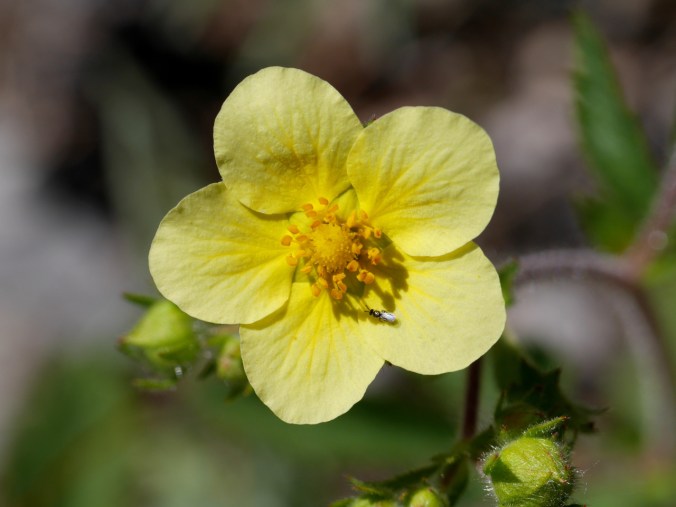
Potentilla gracilis “Slender Cinquefoil” Rosaceae

Lolo National Forest, Bitterroot Mountains, MT
May 10, 2015
Robert Niese

Cinquefoils are named for their 5-parted leaves, although many members of Potentilla lack these characteristic leaf shapes. Potentilla fruits are aggregate fruits like raspberries and blackberries and, while completely edible, they are said to taste horrid.

Dichelonyx valida “May Beetle” Scarabaeidae

Lolo National Forest, Bitterroot Mountains, MT
April 19, 2015
Robert Niese

These charismatic, iridescent Scarab beetles are relatively common throughout the Pacific Northwest in the spring. The adults forage on the leaves of many species of conifers and deciduous trees. While the taxonomy for these species is still quite a mess, our region has two distinct species groups. Members of the D. valida group have a large ridge down the center of their pronotum while members of the D. backi group lack a ridge.

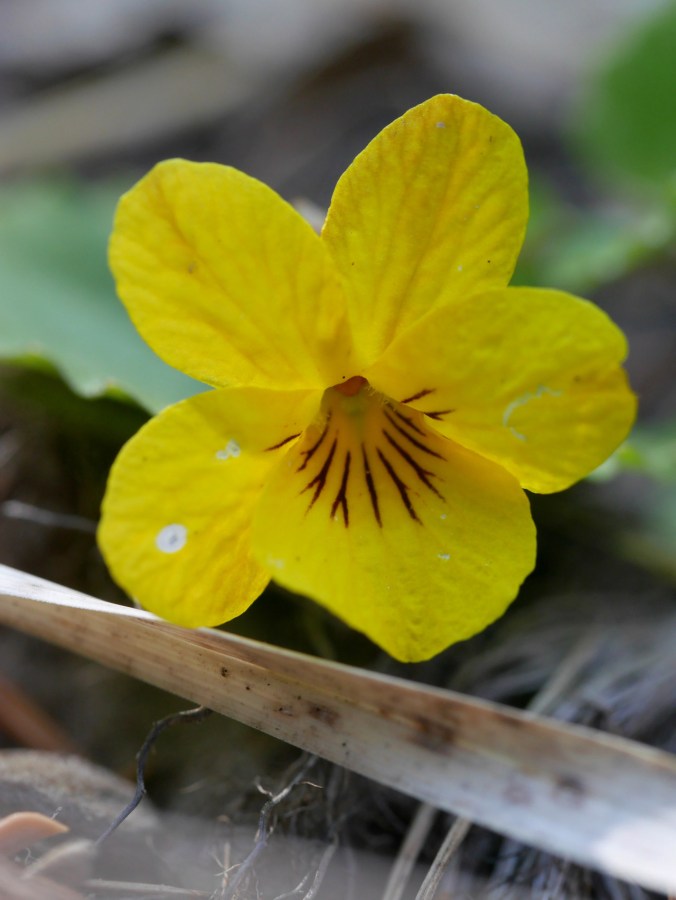
Viola orbiculata “Darkwoods Violet” Violaceae

Lolo National Forest, Bitterroot Mountains, MT
May 10, 2015
Robert Niese

There are only two species of Violets with leaves that persist through the winter in the PNW; the Darkwoods Violet and the Evergreen Violet (V. sempervirens). West of the Cascades moist forests are rife with V. sempervirens (a PNW endemic) while V. orbiculata is primarily found farther east (but can also be found in the west, typically in montane zones). Both have yellow flowers and similarly-shaped leaves and were once thought to be the same species.

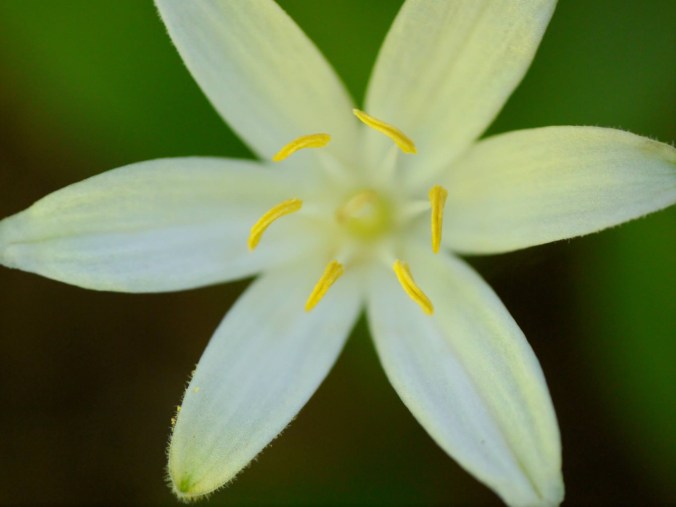
Clintonia uniflora “Queen’s Cup” Liliaceae

Olympic National Park, WA
June 5, 2013
Robert Niese

In spring, these plants bear a single white flower and regularly pop up in fields throughout the moist PNW understory. In the fall, the flowers will turn into blue berries which are mildly poisonous to humans, but are a favorite food of the Ruffed Grouse.

Marchantia polymorpha “Common Liverwort” Marchantiaceae

Lolo National Forest, Bitterroot Mountains, MT
May 10, 2015
Robert Niese

Liverworts are ancient plants that likely resemble their very first ancestors that colonized land 450 million years ago. Liverworts have male and female fruiting bodies (antheridia and archegonia, respectively) that produce either sperm or eggs. These cute little flat-topped umbrellas are the antheridia and are producing sperm. The next time it rains, these sperm will find their way to a fingery-topped umbrella (the archegonia) to fertilize eggs and produce a new plant. These particular liverworts were abundant in the dense understory of a recently burned site along with the Goblet Fungus, Geopyxis carbonaria.