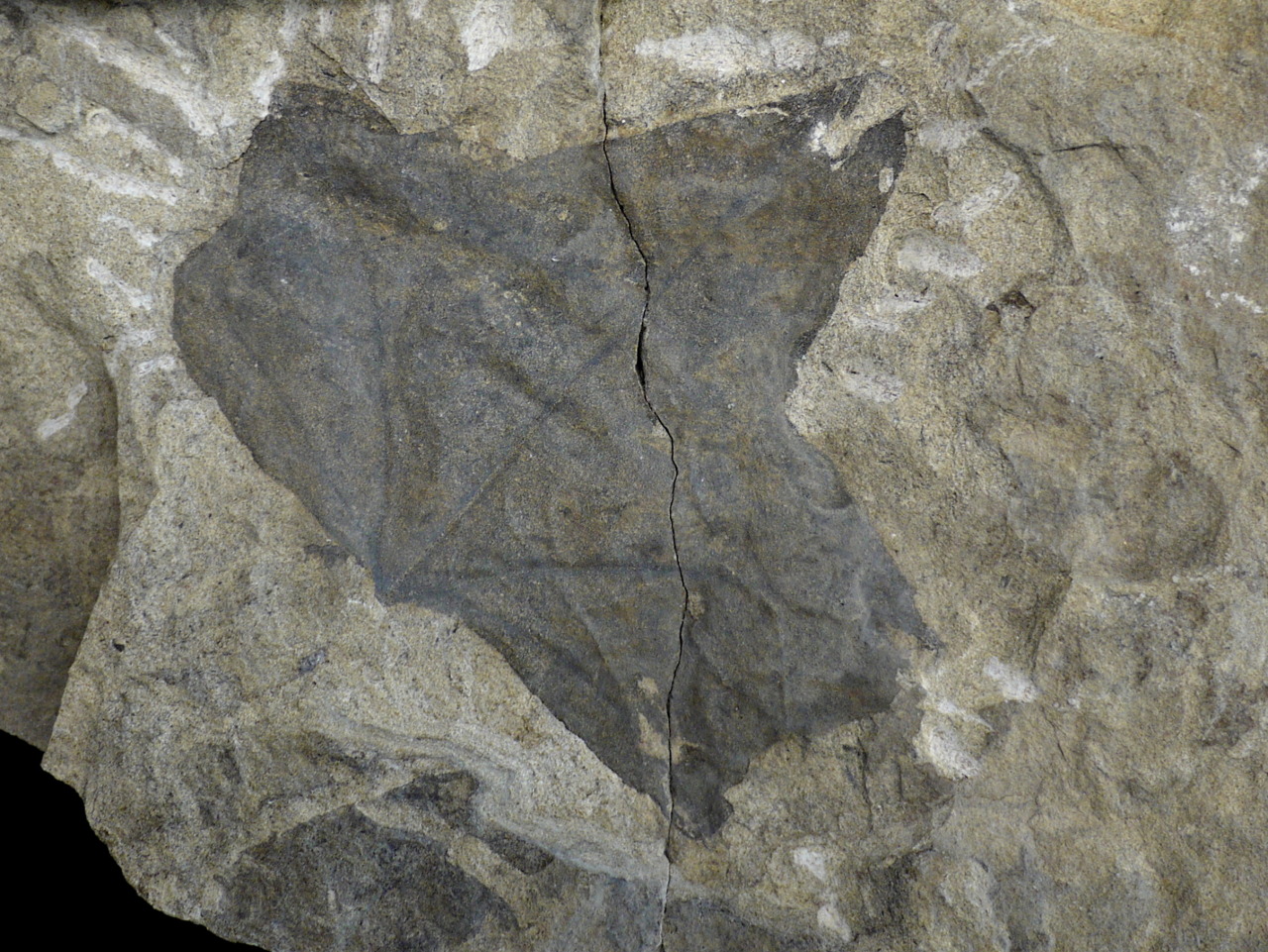
Fossil Maple Leaf, Winthrop Formation

Winthrop, WA
Mid-Cretaceous (110 mya)
Robert Niese

In honor of National Fossil Day, here’s a neat fossil from the Winthrop Formation in north-central Washington. This species looks very similar to modern day maple species, but has yet to be formally identified. This particular fossil formation is rife with beautiful plant specimens. By studying the morphology of these fossil leaves, we can estimate the mean annual temperature of the region 110 million years ago. Using this method, scientists estimate that mid-Cretaceous Washington was almost 12 degrees (˚C) warmer than it is today. (Specimen courtesy of the University of Puget Sound, Geology Department)
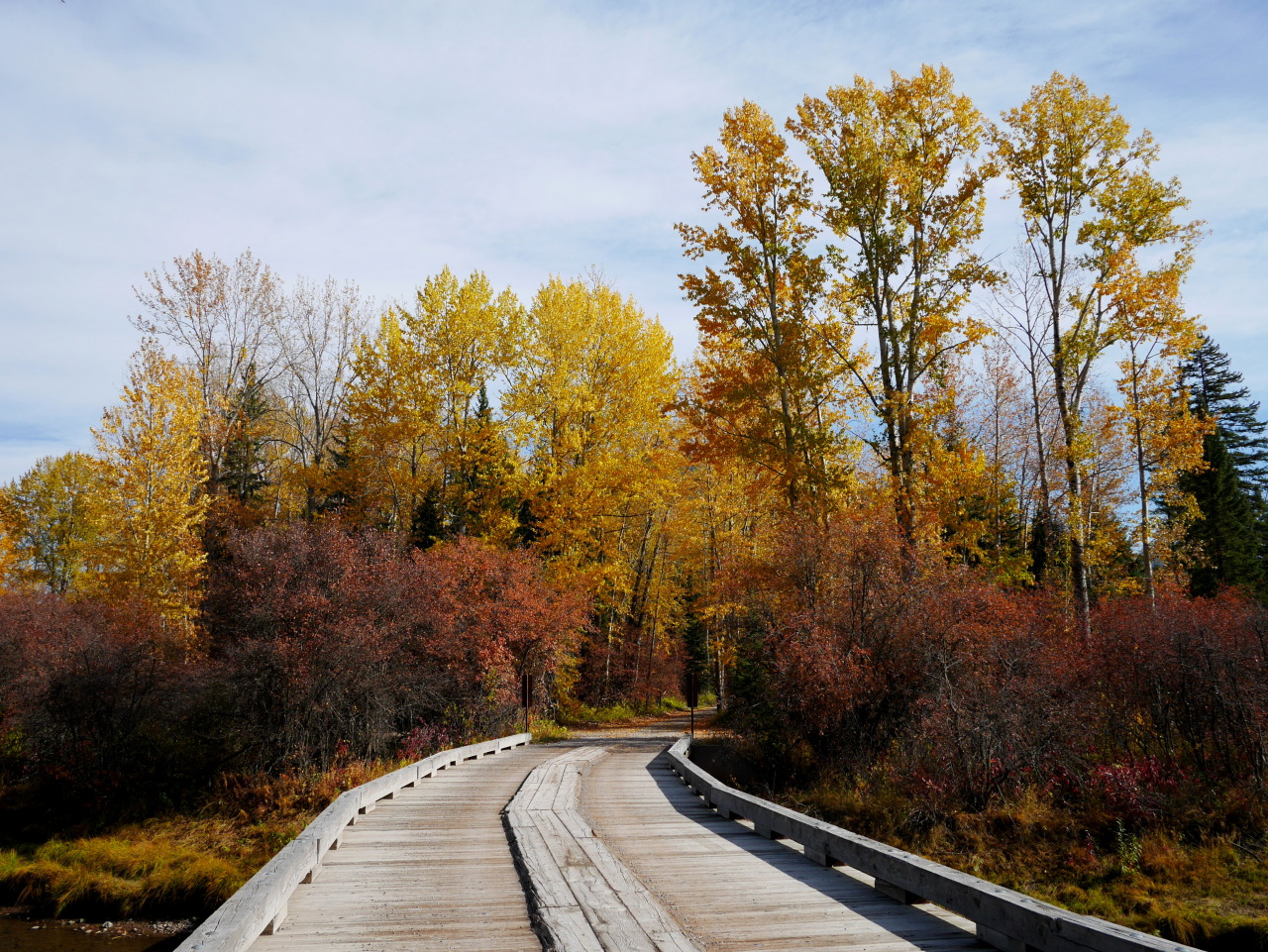
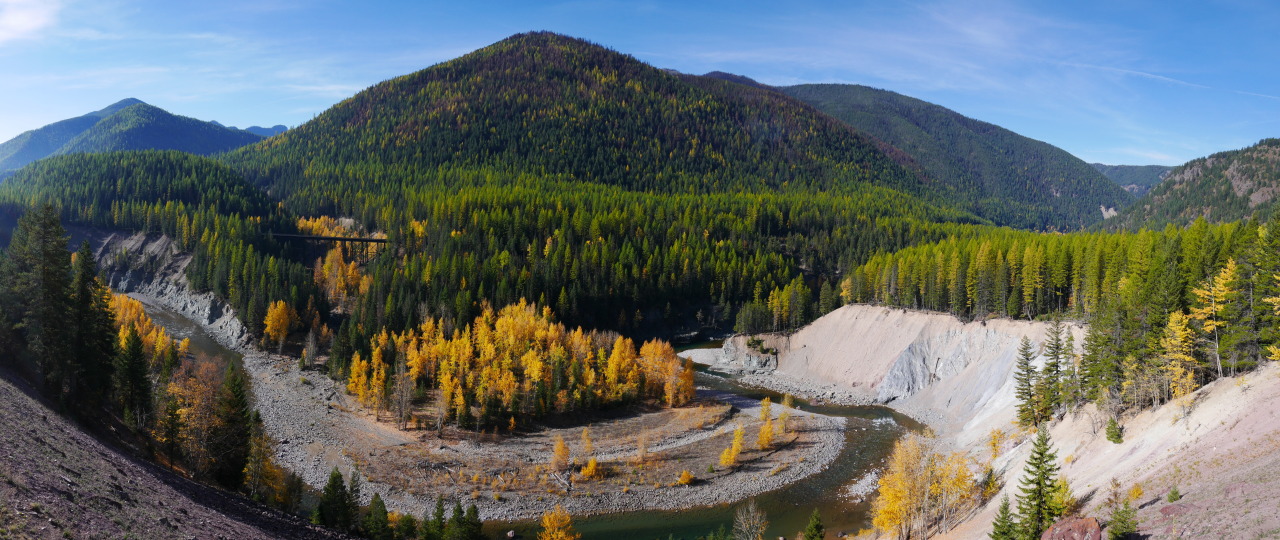
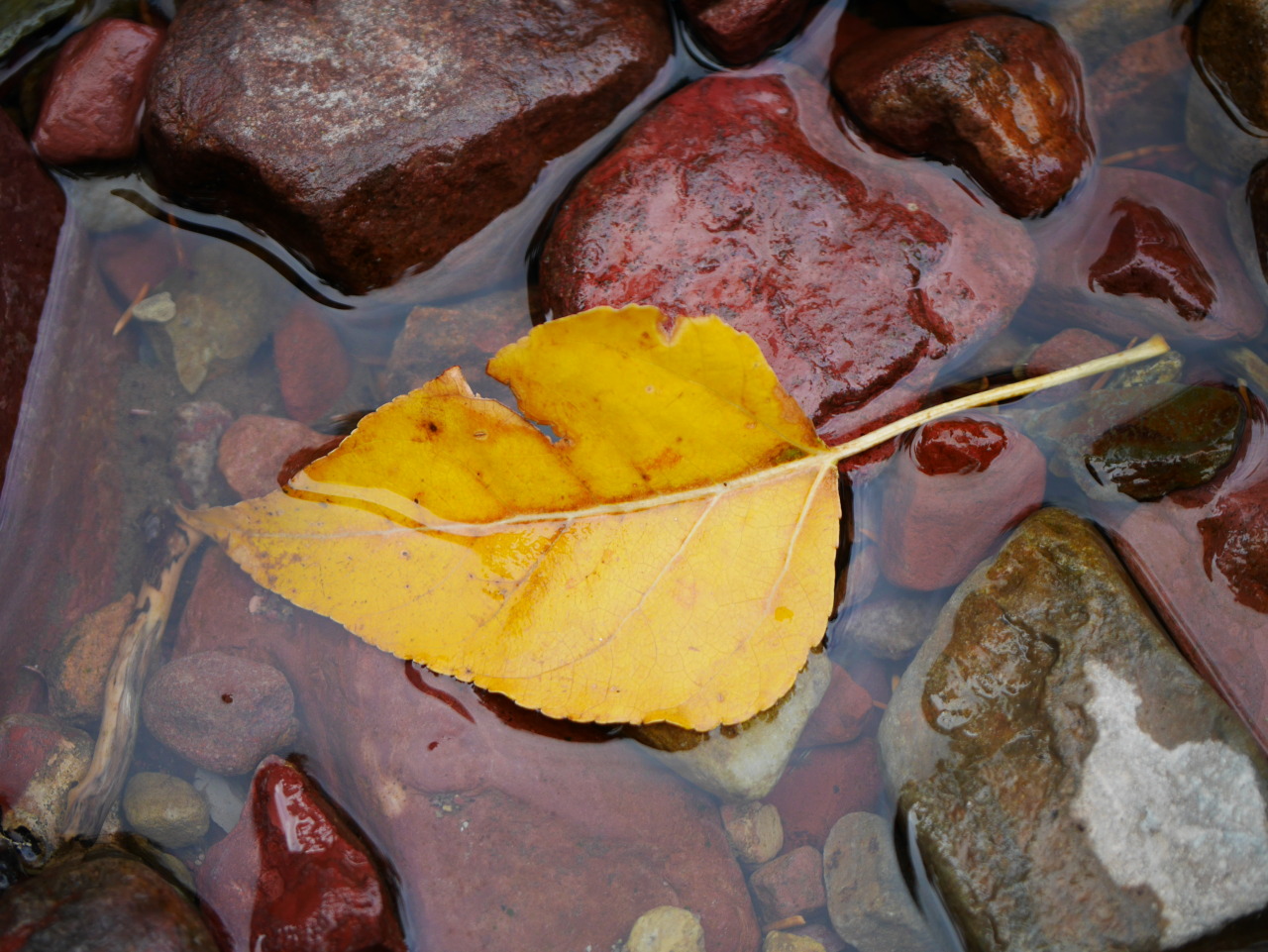
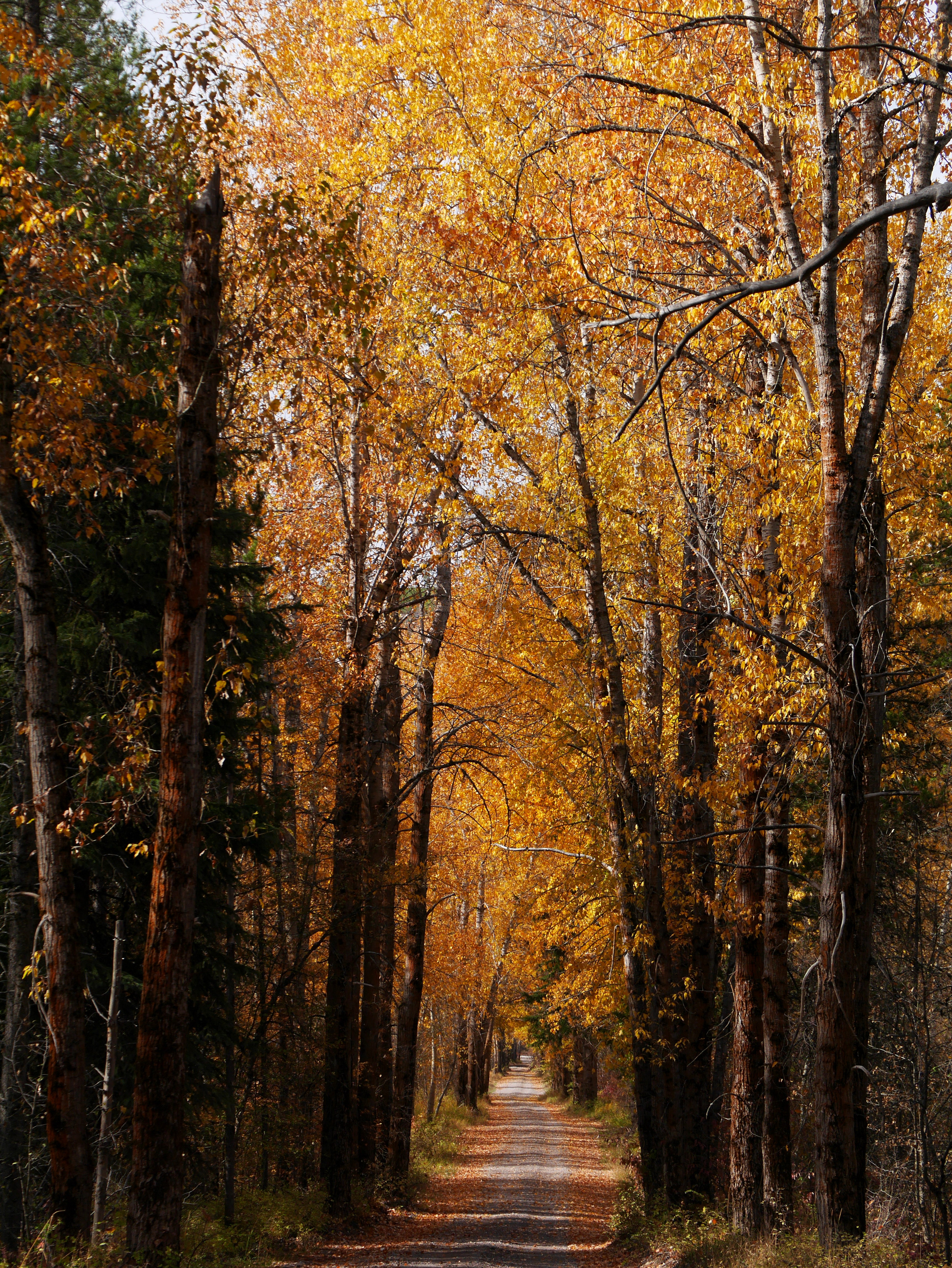
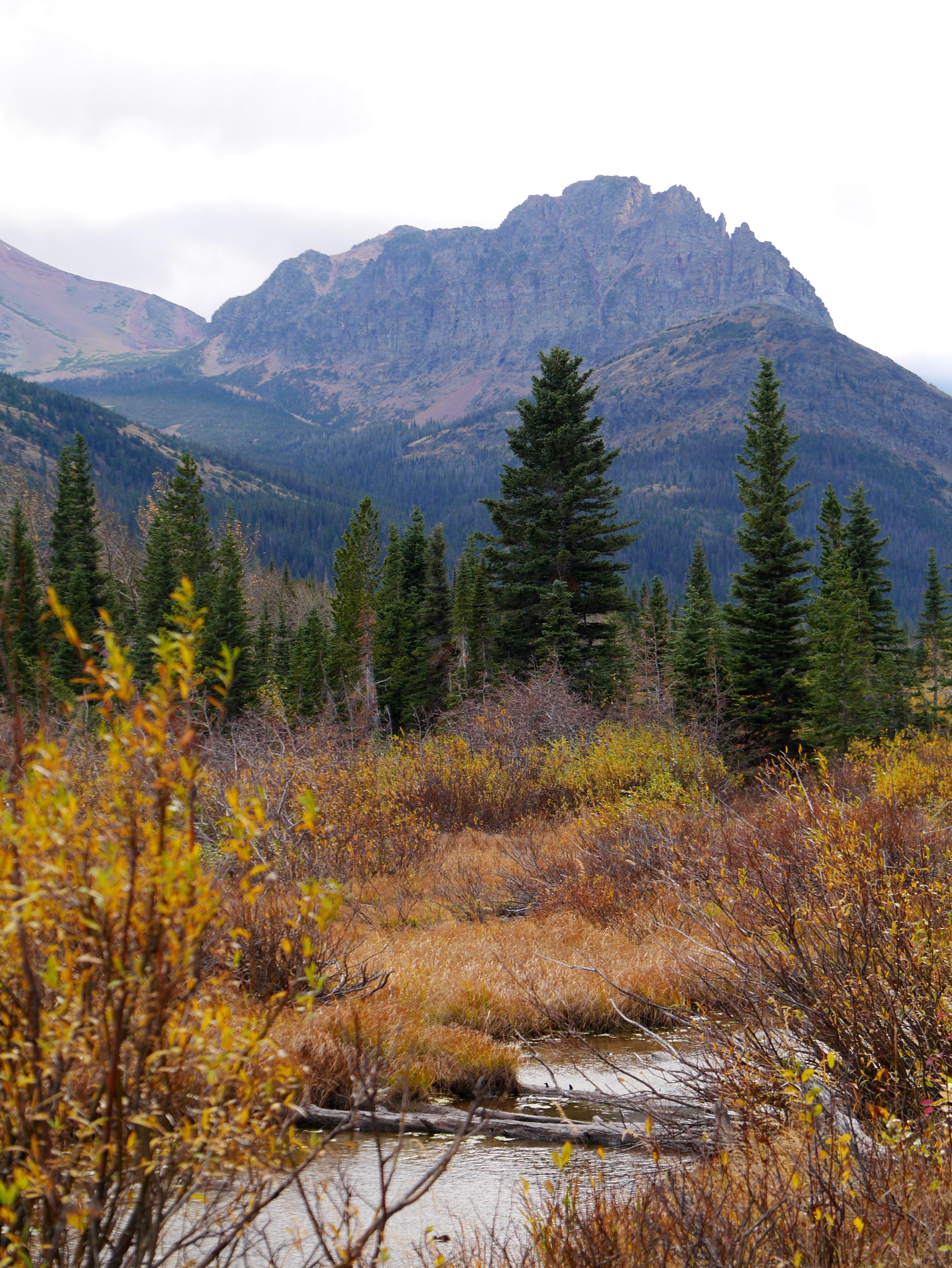
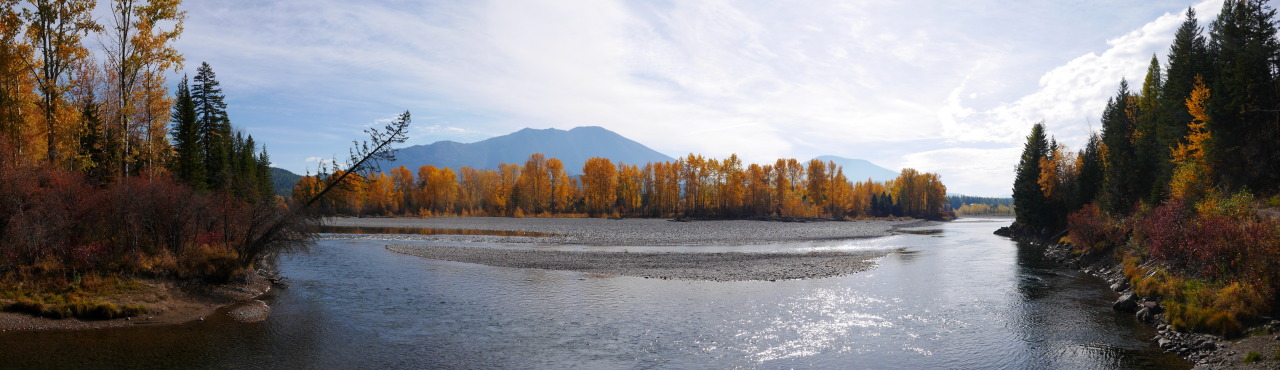
Apgar, Glacier National Park - by Robert NieseGoat Lick, Glacier National Park - by Robert NiesePopulus Leaf, Glacier National Park - by Robert NieseApgar, Glacier National Park - by Robert Niese   Two Medicine, Glacier National Park - by Robert NieseApgar, Glacier National Park - by Robert Niese

Fall is in full swing here in Montana!

I made it up to Glacier National Park this weekend to experience some fall foliage firsthand. It was absolutely stunning!

Here’s a brief guide to foliage colors in Western Montana!

Yellow:

  • Members of Salicaceae (Cottonwoods, Aspens, Poplars, Willows) and Betulaceae (Alders, Birch) dominate the yellow palate of our PNW hillsides. These species begin turning in September and their colors will persist, depending on rain and wind, until late October.
  • Larch (Larix) is our only deciduous conifer in the PNW. Depending on elevation, Larch will begin turning between the first and third weeks of October.
  • Bracken Fern (Pteridium aquilinum) and Thimbleberry (Rubus parviflorus) also maintain a substantial degree of yellowness early in the fall before turning pale brown in October.

Red:

  • Red fall foliage in western Montana is largely restricted to the understory.
  • Ericaceous shrubs such as Huckleberries (Vaccinium) change color depending on sun exposure. On exposed hillsides, they’ll be red before August, while in dense forests, they may only begin changing in October.
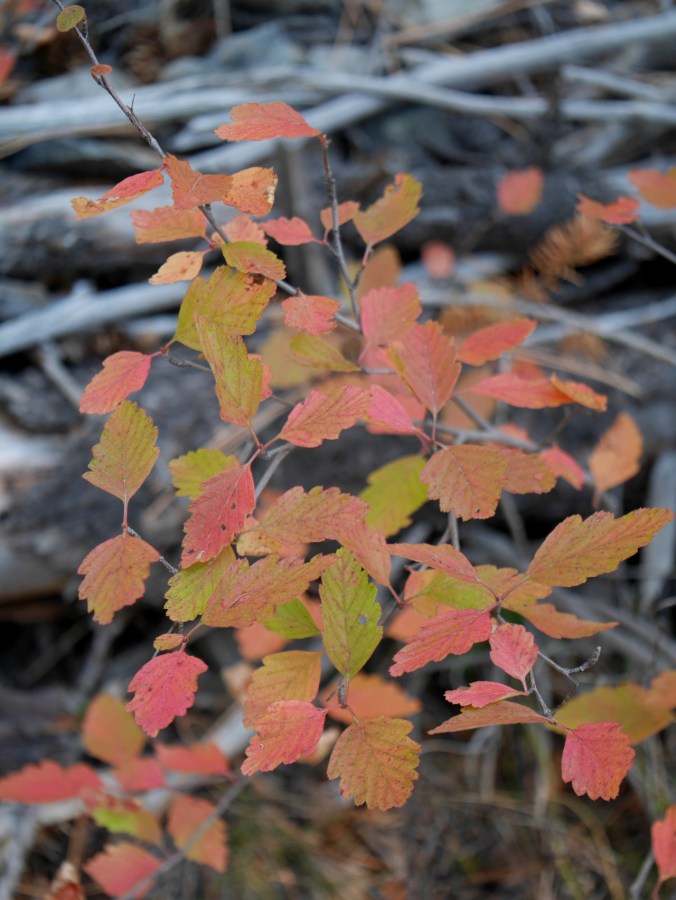
  • Rosaceous shrubs such as Oceanspray (Holoduscus), Ninebark (Physocarpus), Spiraea, Hawthorn (Crataegus), and Rose (Rosa) also tend to go through a red phase in their color change. While some of these species appear to start early (September), most of their change will persist well into October and even November.
  • Red-osier Dogwood (Cornus sericea) has an interesting color change. Here in the riparian areas of Western Montana, they appear to go through a green and maroon phase, which is quite lovely, before losing their leaves entirely. Fortunately, even after losing their leaves, these shrubs have phenomenal red stems that definitely supplement the colors of fall.
  • Maple (Acer) also go through a red phase here in western Montana. These native species appear to have dropped most of their leaves by mid-October.

Species with little color change:

  • I’ve noticed several dominant deciduous trees and shrubs that don’t appear to change color considerably with the seasons. Of these, Ceanothus and Symphoricarpos are the most abundant.
  • Ceanothus tends to keep its green foliage throughout the year or turn straight to brown in the fall.
  • Snowberries (Symphoricarpos) appear to do a variety of things, but here in western Montana, they generally drop their leaves quickly without much ado.

Eriogonum umbellatum “Sulfur Buckwheat” Polygonaceae

Great Burn, Lolo National Forest, MT
July 10, 2015
Robert Niese

While not a true buckwheat (Fagopyrum), members of the genus Eriogonum also produce (mostly) edible, triangular seeds that can be ground into a flour. This particular species is our most common wild buckwheat here in the PNW and can vary drastically in shape, size, and color. Some plants can grow into shrubs nearly 2 meters tall, while others will never ascend more than a 10 centimeters from the ground. Furthermore, the size and color of inflorescences can vary from tiny, tightly-packed yellow clumps, to reddish umbels, to large, spreading, white bunches. To confirm your species ID, look for E. umbellatum’s bare flowering stems (with a whorl of leaves only at the top) and its glabrous tepals (6 petal-like structures) with a long, narrow tube-like base.

Holodiscus discolor “Oceanspray” Rosaceae

Mt. Sentinel, Lolo National Forest, MT
September 12, 2015
Robert Niese

Oceanspray is one of my favorite plants here in the PNW. It’s a modest-sized shrub that grows foamy white inflorescences that brighten up nearly all open hillsides west of the Rocky Mountains in the spring. These inflorescences are long-lived and fade to a creamy beige that contrasts nicely with their rich green foliage throughout the summer. In the fall, Oceanspray leaves begin changing early in the season and progress through a rainbow of colors until becoming a uniform maroon-scarlet after the first frosts of October. These plants have a very tough wood that is resistant to fire and are regularly the first plants to recolonize areas following a burn.

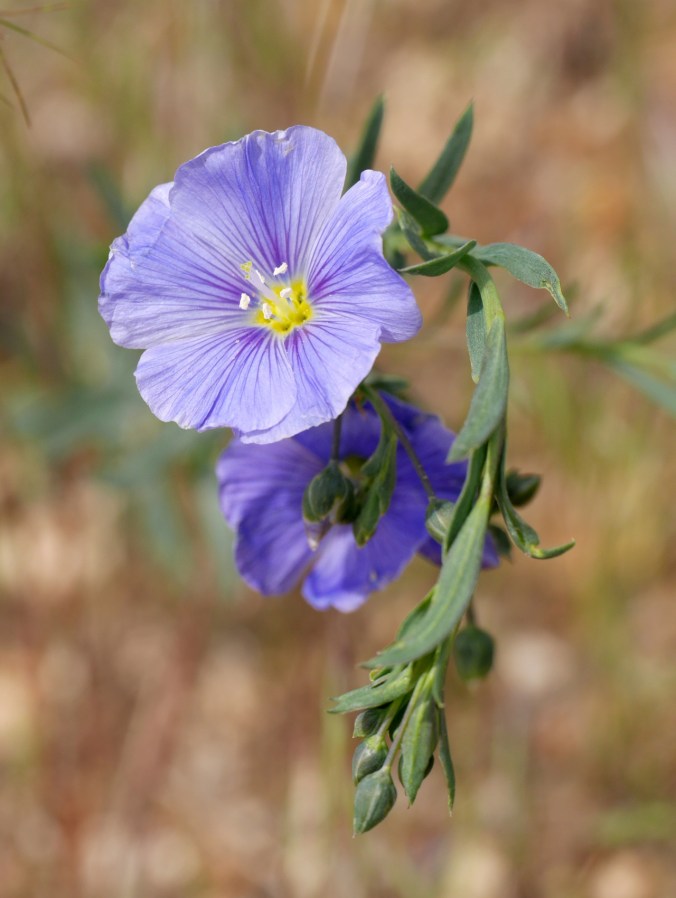
Linum lewisii “Lewis’s Prairie Flax” Linaceae

Drinking Horse Mountain, Bozeman, MT
June 3, 2015
Robert Niese

Prairie Flax is native to western North America where it grows in dry open areas east of the Cascades and west of the Mississippi. This species was first collected on the Lewis and Clark expedition on July 9, 1806, although there is some debate as to whether it was collected by Meriwether himself or by Captain Clark. After the species was formally described by Frederick Pursh in 1814, the original specimen was lost for nearly a century along with many other historic records. Flax (L. usitatissimum) is among the oldest of all cultivated plants and has been utilized by humans for at least 30,000 years. Here in the Northwest, native peoples used fibers from the stems of L. lewisii to create cordage, string, and textiles and used its seeds to treat all manner of dietary problems, to reduce swelling in wounds and boils, and to remove small, irritating particles from the eye. Learn more about the edible and medicinal uses for L. lewisii here, and learn more about its discovery and discussion in the Lewis and Clark expedition here!

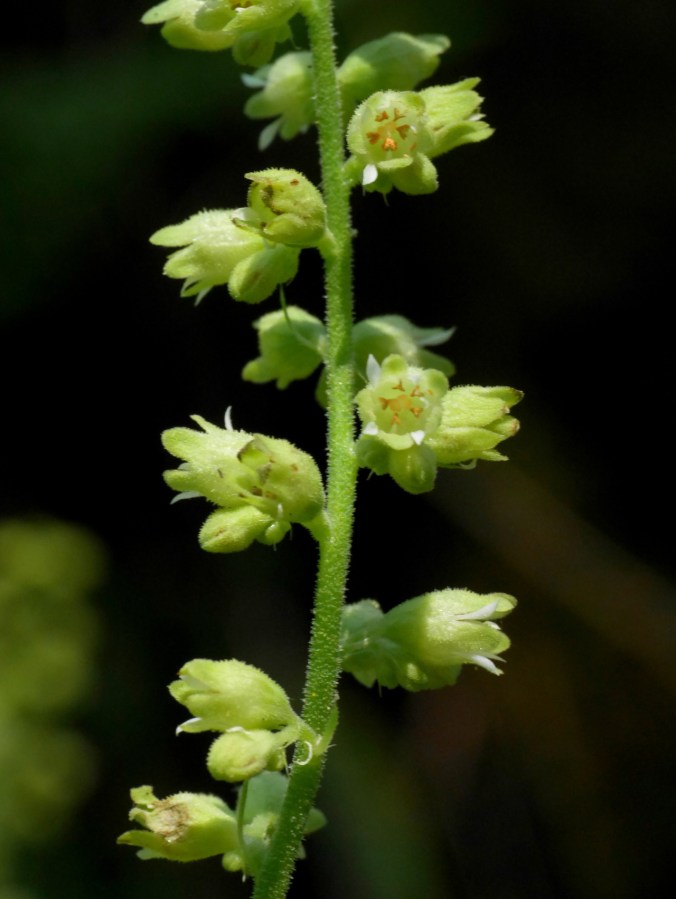
Heuchera grossulariifolia “Gooseberry Alumroot” Saxifragaceae

Weir Hot Springs, Clearwater National Forest, ID
June 8, 2015
Robert Niese

These lovely Saxifrags are endemic to the PNW (southwest Montana to the southern Cascades) where they can be found on well-drained, somewhat shady slopes and cliff-faces. In many parts of its range, two distinct populations of H. grossulariifolia occur side-by-side, and may be evolving into separate species. Due to an accidental duplication of its genome, tetraploid populations of H. grossulariifolia bloom earlier and grow larger than their diploid counterparts, and hybrids between the two populations have low fertility. This suggests that the two populations may be genetically isolated enough to become separate species in the future.

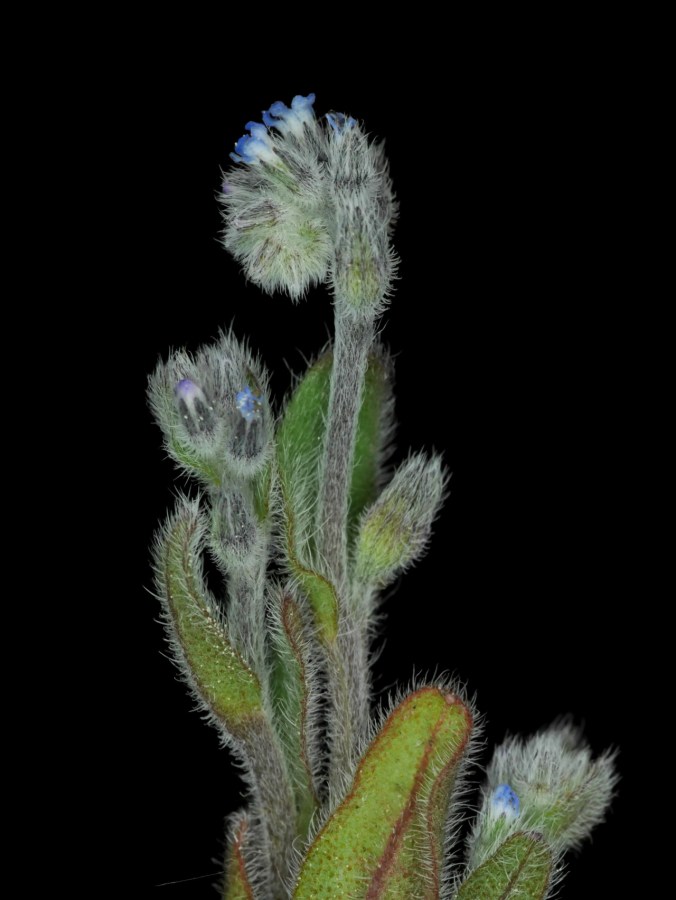
Myosotis stricta (micrantha) “Strict Forget-me-not” Boraginaceae

Missoula, MT
April 23, 2015
Robert Niese

There are several species of Myosotis in our region – four of which have flowers that are less than 5mm in diameter! Of these small-flowered species, M. verna tends to have white flowers, M. laxa has sepal hairs that are not hooked at the tip, and M. discolor produces flowers that are yellow at first, but turn purple with age. M. discolor and M. stricta tend to be our most common tiny, weedy, roadside inhabitants here in the PNW. The flowers on this particular specimen were only 2mm across!

Rhizomnium glabrescens “Fan Moss” Bryales

Deception Pass State Park, Whidbey Island, WA
August 18, 2014
Robert Niese

These mosses are very common in wet forests throughout the western PNW and appear to be particularly fond of rotting logs and rocks. They are a very leafy species of moss and are often mistaken for vascular plants. The star-shaped structures shown here are the sperm-bearing male gametophytes (full of antheridia). This particular arrangement of leaves allows the sperm to splash out of the antheridia whenever it rains. So next time you’re wandering around a wet PNW forest in the rain, I hope you think about moss sex. Learn more about the biology of these mosses here!

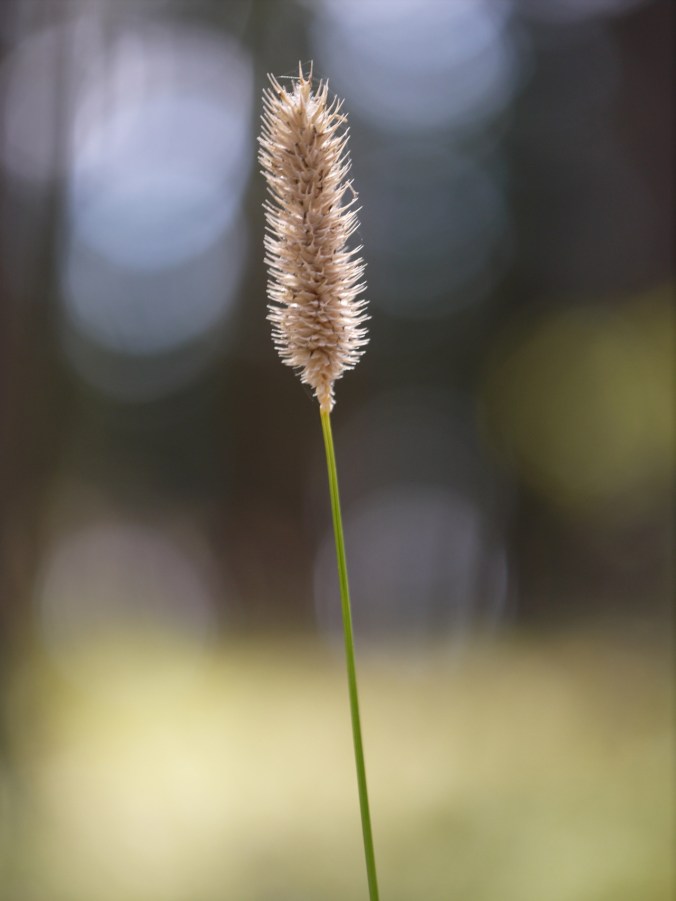
Phleum pratense “Timothy” Poaceae

Seeley Lake, MT
September 13, 2014
Robert Niese

Timothy grass has been introduced throughout most of North America and is commonly found along roads and trails here in western Montana. It flowers late in the summer and by fall its inflorescence dries out and it begins looking quite sedge-like. It is easily distinguished from other similar grasses by its double-pointed, horn-like spikelets.

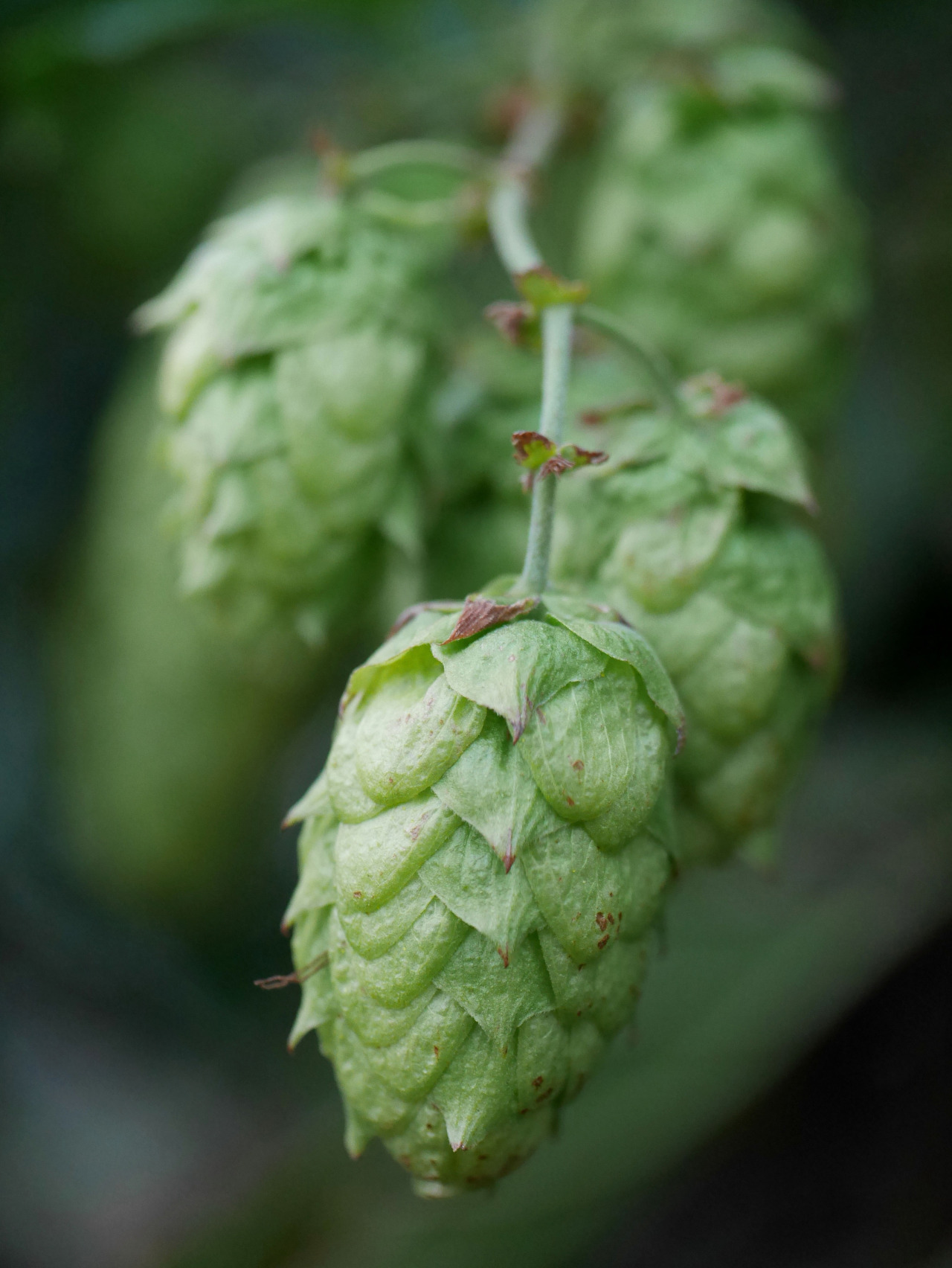
Humulus lupulus “Common Hop” Cannabaceae

Missoula, MT
September 12, 2015
Robert Niese

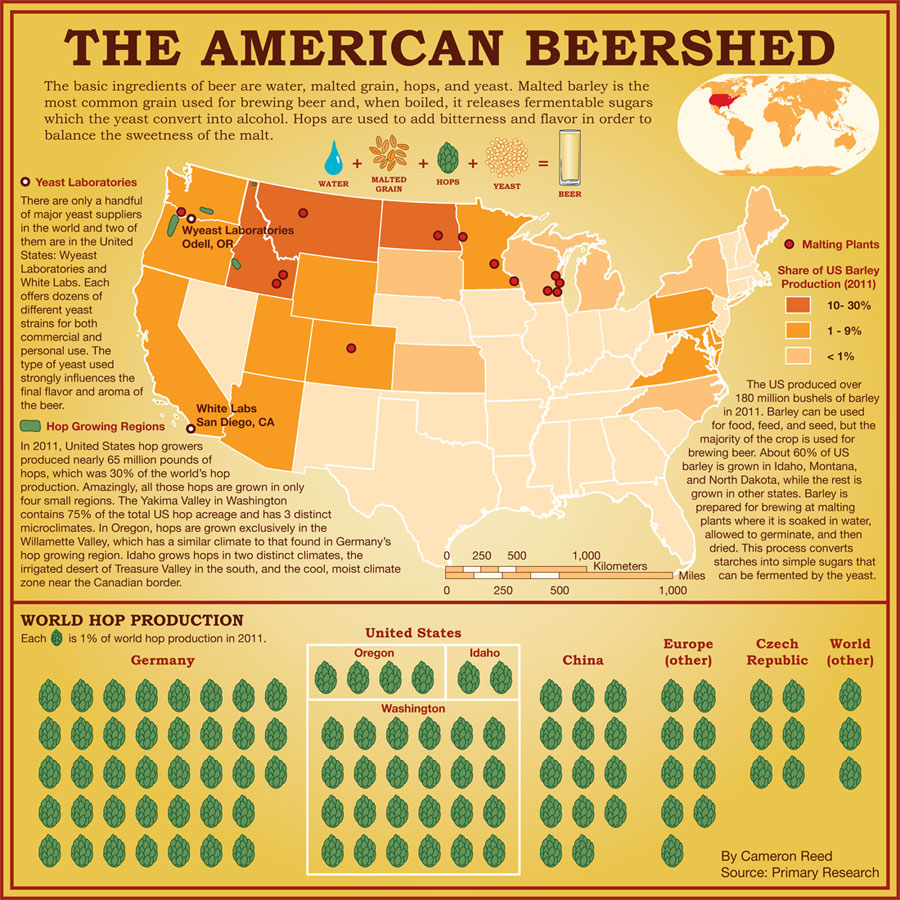
The Common Hop grows particularly well in the PNW and Washington state alone produces nearly a quarter of the world’s hops. Humulus is a member of a rather odd family of flowering plants, the Cannabaceae, which tend to have drab flowers (often unisexual) that lack petals and rely on wind for pollination. In the Common Hop specifically, the structure that is utilized for beer production (the hop) is actually a modified inflorescence of female flowers hiding beneath leaf-like scales called bracts. Beneath each of those bracts, the female flowers produce a the diversity of compounds which, through selective breeding efforts across the centuries, impart bitterness and complex aromas to the beer.