
Mertensia longiflora “Small Bluebells” Boraginaceae
Missoula, MT
May 13, 2014
Robert Niese
A common wildflower found throughout the Northwest east of the cascades.
Mertensia longiflora “Small Bluebells” Boraginaceae
Missoula, MT
May 13, 2014
Robert Niese
A common wildflower found throughout the Northwest east of the cascades.

Sphecodes (arvensiformis) “Cuckoo Sweat Bee” Halictidae
on Lomatium “Biscuit Root” Apiaceae
Missoula, MT
May 13, 2014
Robert Niese
Sphecodes bees are cleptoparasitic, cuckoo-like bees that lay their eggs in the nests of other sweat bees.
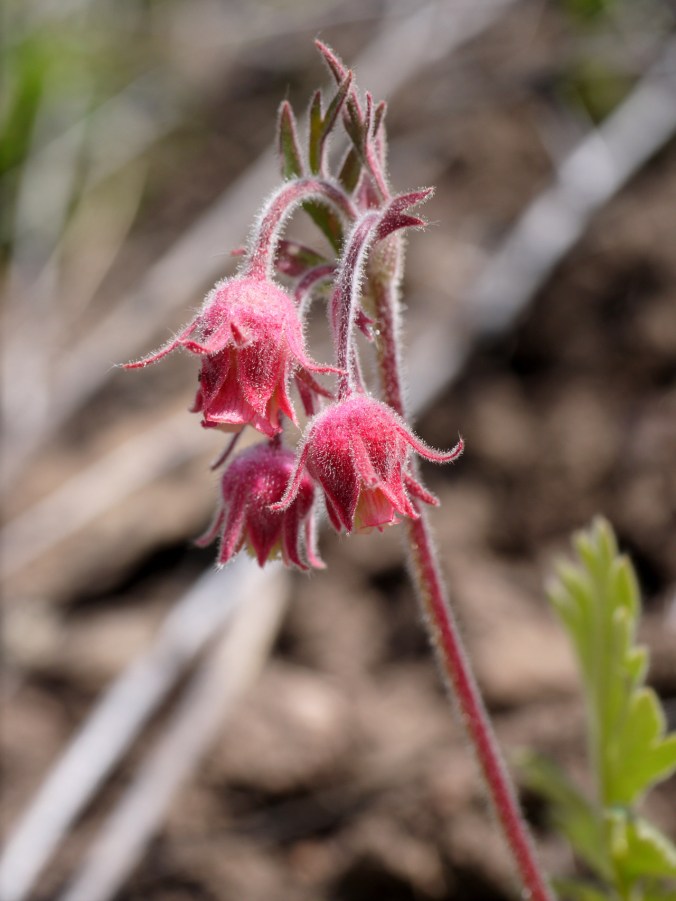
Geum triflorum “Old Man’s Whiskers” Rosaceae
Missoula, MT
May 13, 2014
Robert Niese
This widespread member of the rose family is best known for its fruiting stage in which each flower transforms into a dense bunch of wispy, feather-like seeds earning it common names such as “Old Man’s Whiskers” and “Prairie Smoke."

Trifolium pratense “Red Clover” Fabaceae
Missoula, MT
October 18, 2013
Robert Niese
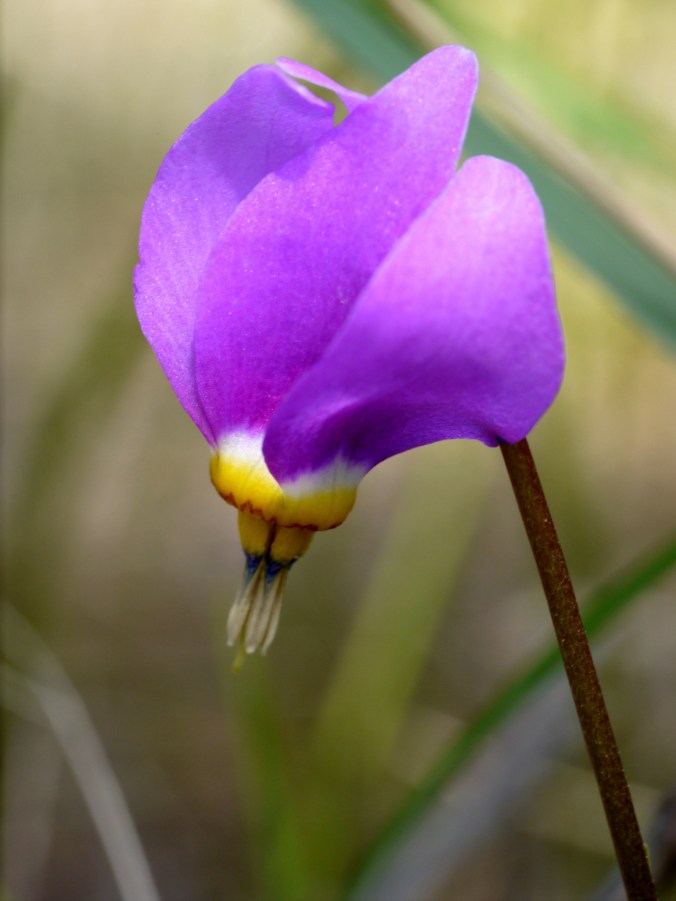
Dodecatheon pulchellum “Shooting star” Primulaceae
Missoula, MT
May 13, 2014
Robert Niese
The flowers of the Dodecatheon genus can only be pollinated by large native bees capable of “buzz pollination.” Small bees and the introduced, European Honeybees can not provide this service to the plants.
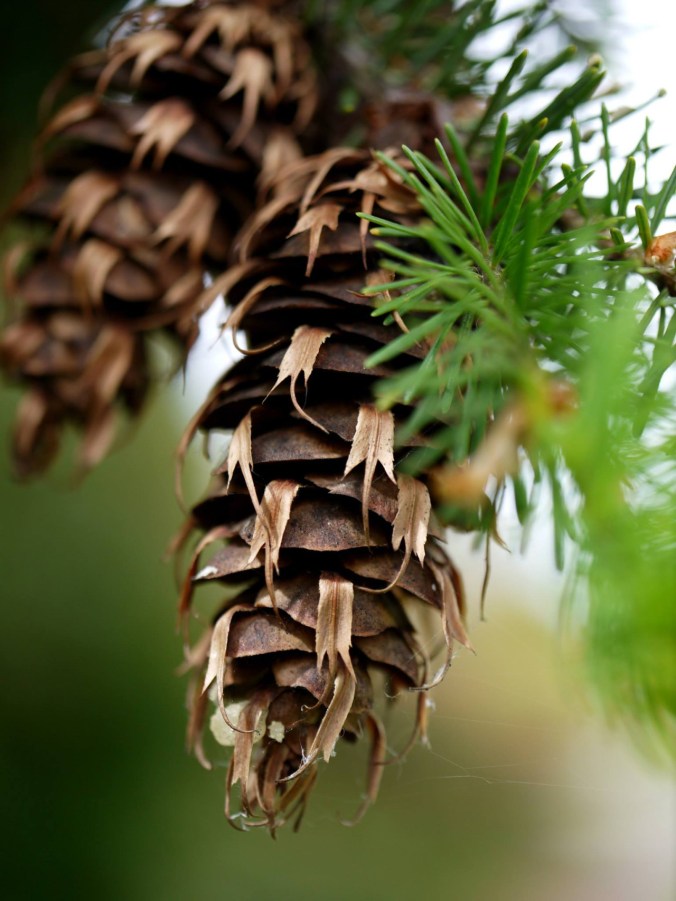
Pseudotsuga menziesii “Douglas Fir” Pinaceae
Tacoma, WA
May 18, 2013
Robert Niese
A Pacific Northwest Indian legend explains where the Doug-fir got its unmistakable leafy bracts (in between the scales of the cone), suggesting that, long ago during an intense fire, tiny mice seeking shelter from the flames hid themselves between the scales of the Doug-fir cones. Today we see their tiny tails and back feet poking out of the cones!
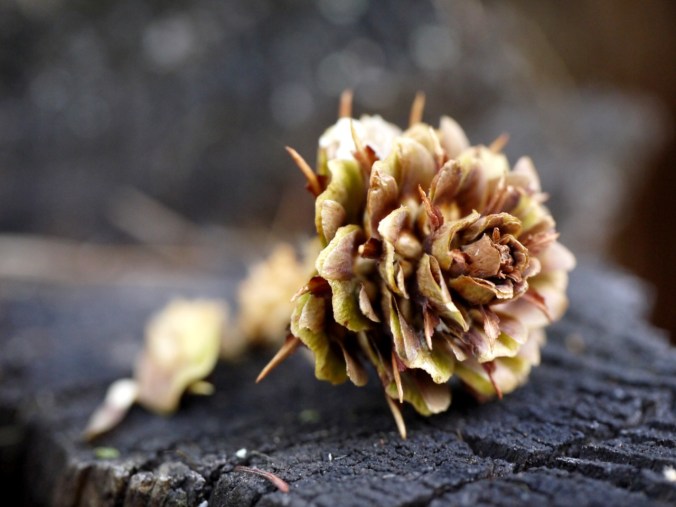
Larix occidentalis “Western Larch” Pinaceae (cone with evidence of seed predation by Tamiasciurus hudsonicus Red Squirrel)
Seeley Lake, MT
September 13, 2014
Robert Niese
Red Squirrels are cone specialists and create massive debris piles, called middens, in areas where they regularly eat (typically atop a stump, fallen log, or low, broad tree branch). These middens are easy to spot and are often more than a meter in width. In Western Washington, these cone middens are usually created by the Red Squirrel’s cousin, the Douglas Squirrel (T. douglasii).

Calypso bulbosa “Calypso Orchid” or “Pink Fairy Slipper” Orchidaceae
Glacier National Park, MT
June 22, 2014
Robert Niese
The Calypso Orchid has an amazingly broad circumboreal distribution. From Japan to Mongolia, Scandinavia to Newfoundland, New Mexico to Alaska – this single species can be found in nearly every montane coniferous forest in the Northern Hemisphere. In spite of this C. bulbosa is considered endangered in Sweden, Finland, and several U.S. states due to its extreme sensitivity to even the slightest human disturbances.

Adiantum pedatum (aleuticum) "Northern Maidenhair Fern" Pteridaceae
Victoria, BC
May 24, 2014
Robert Niese

Vaccinium ovalifolium “Oval-leaf Bluberry” Ericaceae
Mount Rainier National Park, WA
August 9, 2013
Robert Niese
 Northwest Naturalist