Tamiasciurus hudsonicus “Red Squirrel” Sciuridae

Drinking Horse Mountain, Bozeman, MT
June 3, 2015
Robert Niese

Red Squirrels are found throughout Nearctic coniferous forests where they defend territories year-round (they don’t hibernate). In the summer, squirrels will collect cones, seeds, and mushrooms in large caches which they feed from throughout the winter. As they eat these cones, they discard the scales in massive piles, called middens, which can grow to be over a meter tall. Winters here in Montana tend to be devoid of active fauna, however, these squirrels will angrily chirp at snowshoers and cross-country-skiers that wander through their territories.

Heerman’s Gull (Larus heermani) Laridae

Yaquina Head Outstanding Natural Area (BLM), OR
June 12, 2015
Robert Niese

Heerman’s Gulls

are often mistaken for jaegers due to their dark, pointed wings and their habit of chasing other birds (particularly pelicans) to steal their prey. They are the only gull species in North America to breed south of the States, but spend winters north of Mexico. Recently, perhaps due to a surge in southern populations thanks to Mexico’s increased protection for the species, a few individuals have attempted to nest in the US on Alcatraz Island.

Wilson’s Warbler (Wilsonia pusilla) Parulidae, male

Yaquina Head Outstanding Natural Area (BLM), OR
June 12, 2015
Robert Niese

Wilson’s Warbler was first identified by the father of American Ornithology, Alexander Wilson, in 1811. In his honor, the species was placed in a new genus, Wilsonia, in 1838 along with the Canada Warbler (W. canadensis) and the Hooded Warbler (W. citrina). But recent genetic evidence suggests that the genus Wilsonia should be split and merged with Setophaga and Cardellina. Although, considering that the methods used to determine these new relations are six years old, another revision of the Parulid family tree would not be surprising. Wilson’s Warblers are a common resident of moist forests throughout the PNW and perhaps best identified, like all warblers, by their song.

Sebastes pinniger “Canary Rockfish” Sebastidae

Oregon Coast Aquarium, Newport, OR
June 12, 2015
Robert Niese

Canary Rockfish are among three species of PNW rockfish that are listed as threatened or endangered under the Endangered Species Act. All rockfish species are long-lived and overfished, however, and many populations are in massive decline. Fortunately, since 2007, regulations in British Columbia and Washington have banned the the fishing of all rockfish species living in most of the Puget Sound and Georgia Basin.

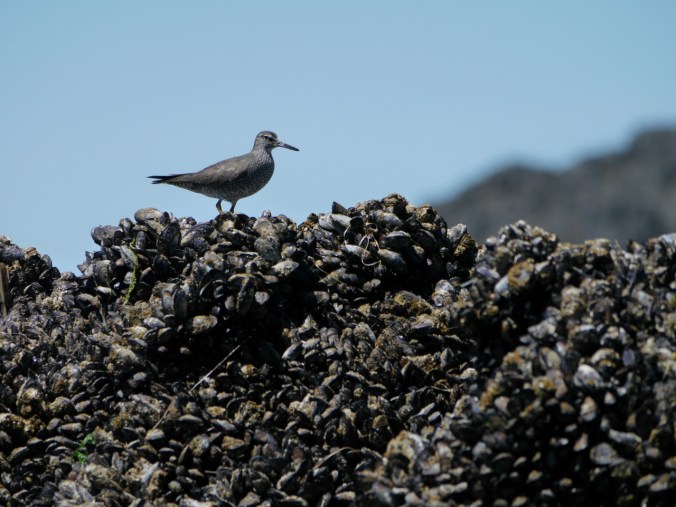
Wandering Tattler (Tringa incana) Scolopacidae

Seal Rock State Park, OR
June 11, 2015
Robert Niese

This Tattler was certainly wandering! It’s breeding season for most shorebirds this time of year, but this lone Wandering Tattler is hundreds of miles away from its typical breeding grounds in NE Russia, Alaska, and NW Canada. What’cha doing here, buddy?

Western Kingbird (Tyrannus verticalis) Tyrannidae

Palouse Falls State Park, WA
June 8, 2015
Robert Niese

Western Kingbirds are well deserving of the genus name Tyrannus because they are truly tyrannical terrors. Any bird that happens to wander too close to a kingbird nest (even fearsome ravens and falcons!) will immediately be assaulted by a flurry of feathers. I decided not to test their patience with human intruders. This guy did not seem too pleased to be my subject for a photo shoot in the first place.

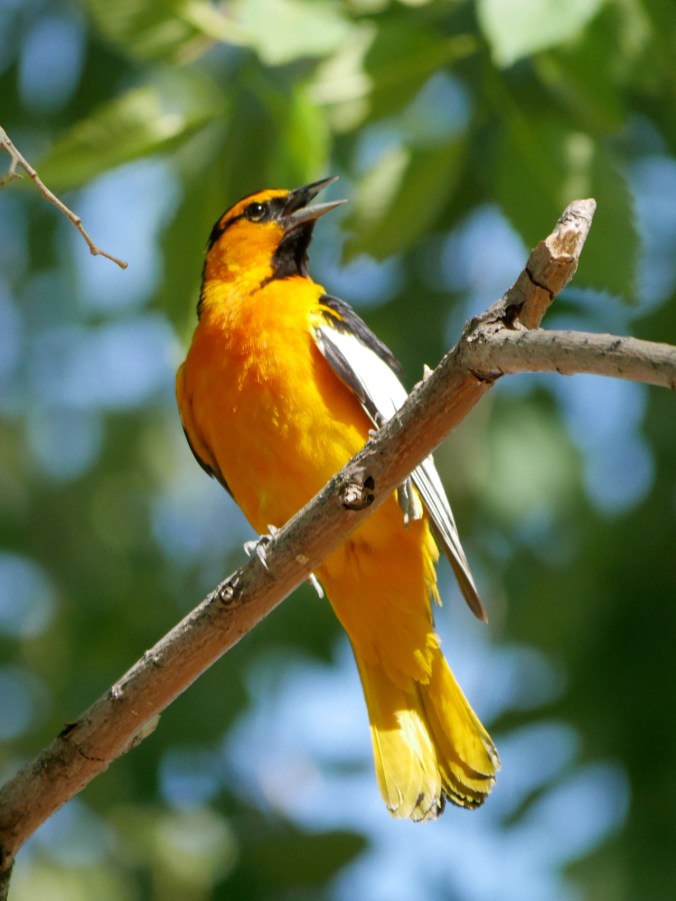
Bullock’s Oriole (Icterus bullockii) Icteridae, male

Palouse Falls State Park, WA
June 8, 2015
Robert Niese

Bullock’s Orioles are the only oriole species found in the Pacific Northwest. They are members of the “blackbird” family which includes a very large fraction of not-black species including the meadowlarks, oropendolas, bobolinks, and, of course, the orioles. Icterid blackbirds are not, however, related to the European Common Blackbird which is actually a robin, which are not related to European Robins which are actually chats, which are not related to Yellow-breasted Chats which are actually New World Warblers in the genus Icteria, which is not to be confused with the genus Icterus, because, as previously stated, orioles are blackbirds which are not robins which are not chats, which are not Yellow-breasted Chats which are New World Warblers, not blackbirds. More reasons to hate common names…

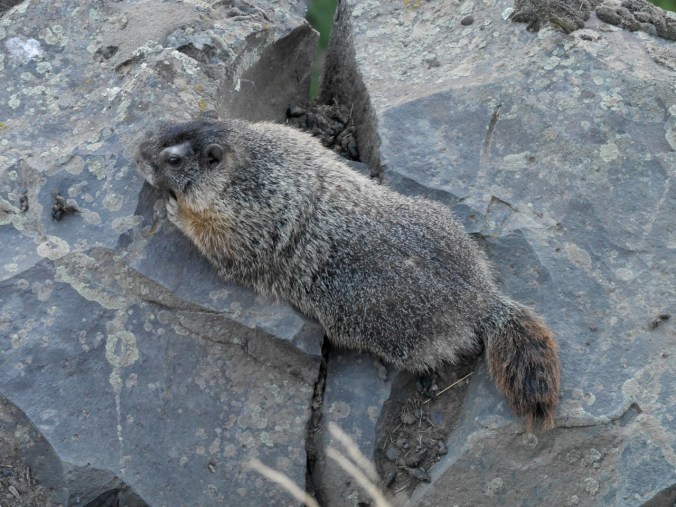
Marmota flaviventris “Yellow-bellied Marmot” Sciuridae

Palouse Falls State Park, WA
June 8, 2015
Robert Niese

Yellow-bellied Marmots are some of the largest rodents in North America. They are a member of the squirrel family, and have a plethora of common names including “whistle pigs,” “wood chucks,” “rock chucks,” and “ground hogs.” Ugh, this is why I hate common names.

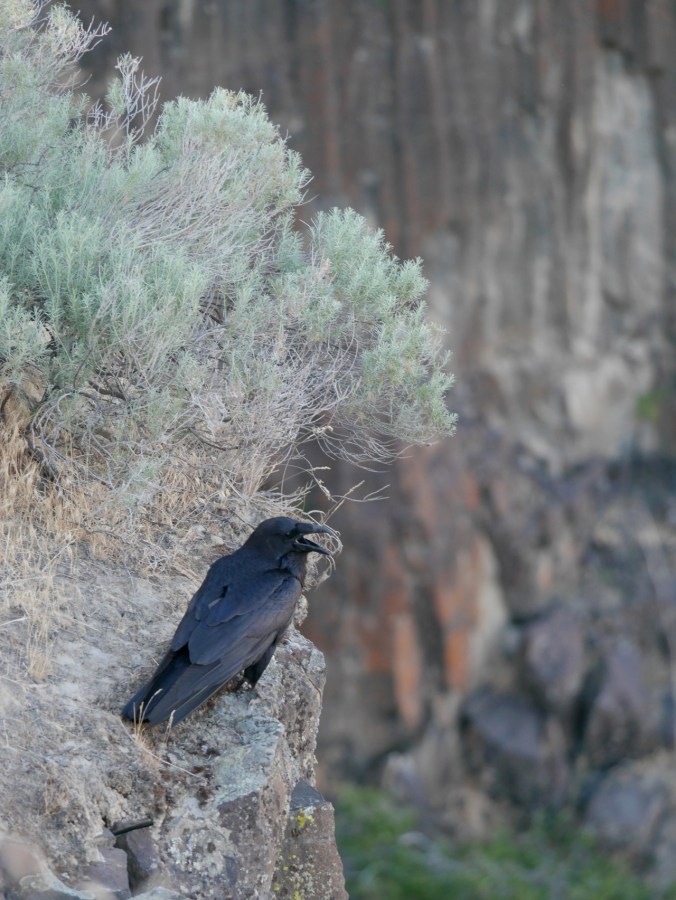
Common Raven (Corvus corax) Corvidae

Palouse Falls State Park, WA
June 8, 2015
Robert Niese

Ravens are always the first birds to greet me upon reaching the sagebrush deserts of eastern Washington. 

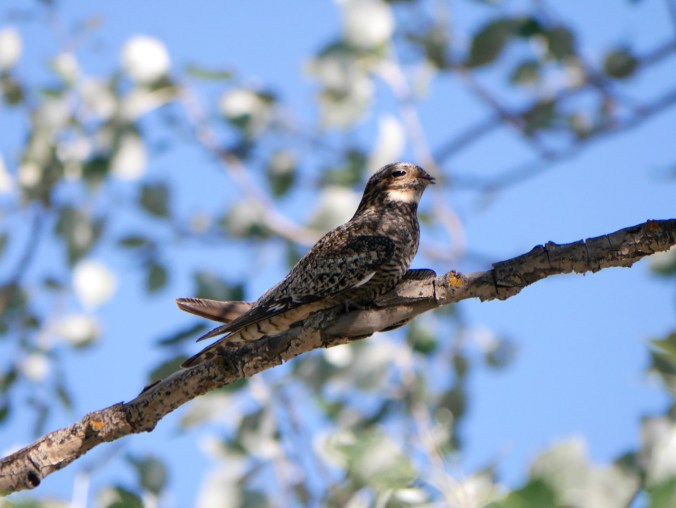
Common Nighthawk (Chordeiles minor) Caprimulgidae

Palouse Falls State Park, WA
June 8, 2015
Robert Niese

Nighthawks are neither hawks nor are they nocturnal. They are more closely related to swifts and hummingbirds than to hawks, and they tend to be more crepuscular (active at dawn and dusk) than nocturnal. They are most easily observed while hunting insects over bodies of water. Look for their characteristic dihedral (v-shaped) wings and listen for their calls. This was the first time I had ever seen a nighthawk perched! So cute!