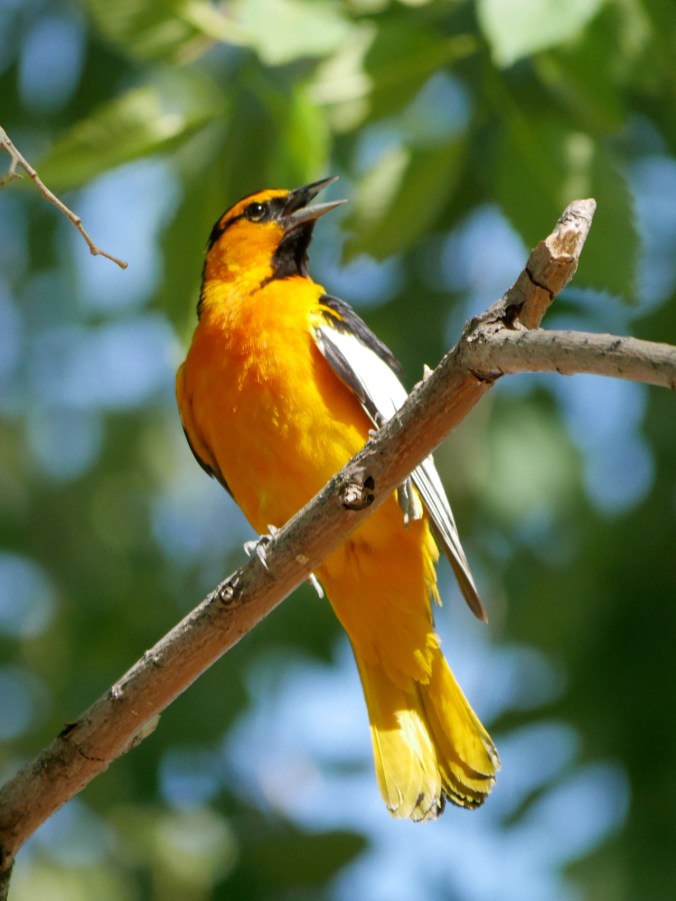
Bullock’s Oriole (Icterus bullockii) Icteridae, male

Palouse Falls State Park, WA
June 8, 2015
Robert Niese

Bullock’s Orioles are the only oriole species found in the Pacific Northwest. They are members of the “blackbird” family which includes a very large fraction of not-black species including the meadowlarks, oropendolas, bobolinks, and, of course, the orioles. Icterid blackbirds are not, however, related to the European Common Blackbird which is actually a robin, which are not related to European Robins which are actually chats, which are not related to Yellow-breasted Chats which are actually New World Warblers in the genus Icteria, which is not to be confused with the genus Icterus, because, as previously stated, orioles are blackbirds which are not robins which are not chats, which are not Yellow-breasted Chats which are New World Warblers, not blackbirds. More reasons to hate common names…
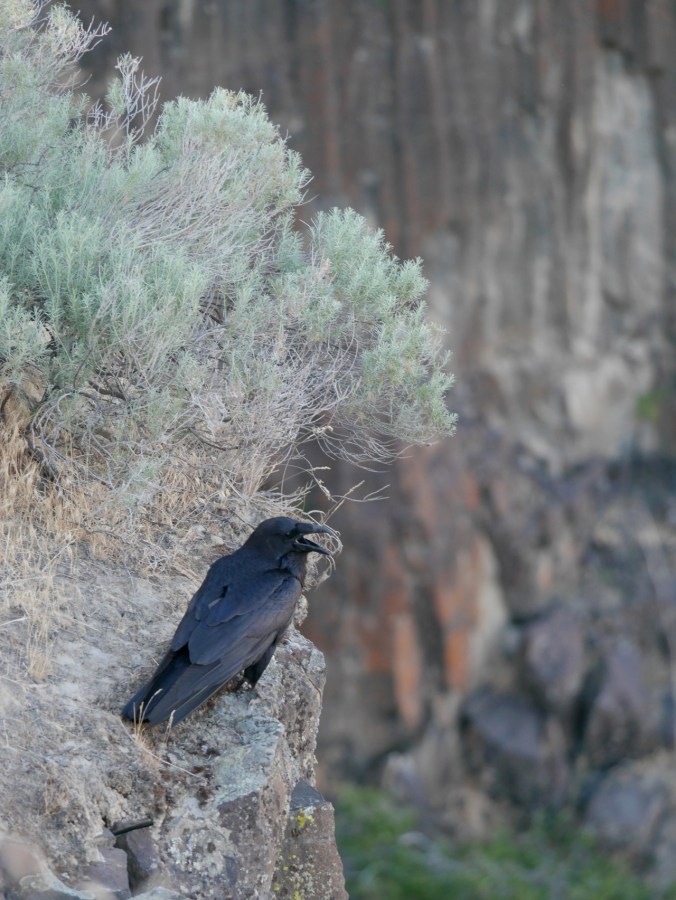
Common Raven (Corvus corax) Corvidae

Palouse Falls State Park, WA
June 8, 2015
Robert Niese

Ravens are always the first birds to greet me upon reaching the sagebrush deserts of eastern Washington. 

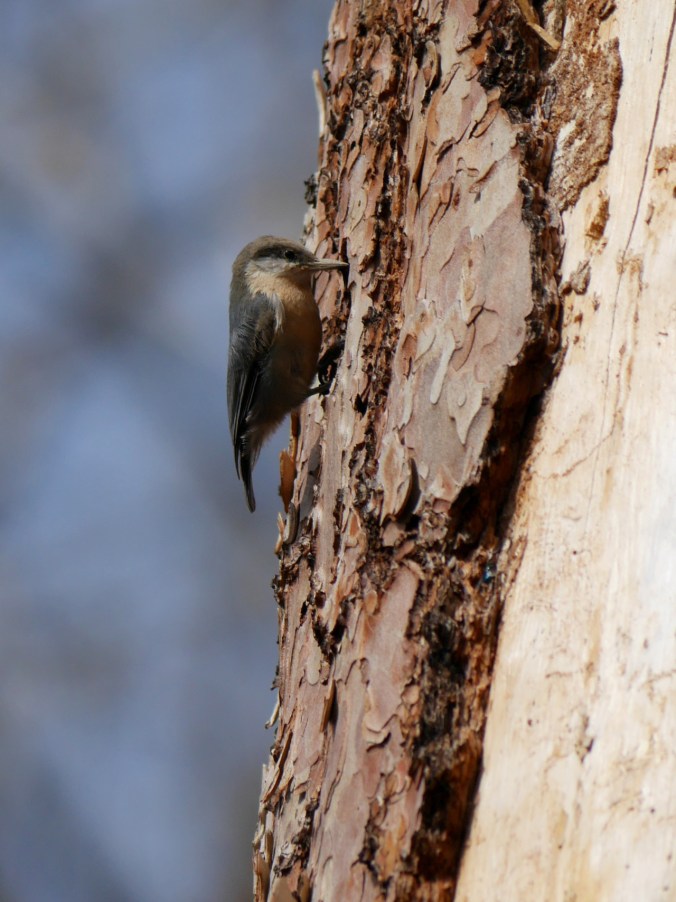
Pygmy Nuthatch (Sitta pygmaea) Sittidae

Council Grove State Park, MT
March 16, 2015
Robert Niese

There are three species of Nuthatch in the Pacific Northwest, but the Pygmy Nuthatch is the only one endemic to our region. These birds are only found in the Rockies and inland Pacific Northwest. They are particularly fond of old Ponderosa Pine forests.

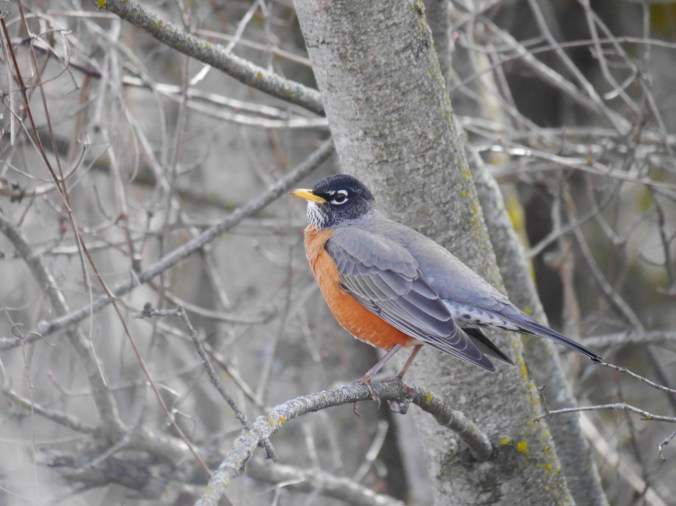
American Robin (Turdus migratorius) Turdidae  

Council Grove State Park, MT
March 16, 2015
Robert Niese

Although American Robins are one of North America’s most ubiquitous birds, there are a few things most people don’t know about these abundant creatures. For example, did you know that males and females show a slight dimorphism? Males tend to have blacker heads and redder breasts which females use as an indicator of the health of potential mates.

Pacific Wren (Troglodytes pacificus) Troglodytidae

Olympic National Park, WA
June 6, 2013
Robert Niese

Pacific Wrens are some of the most accomplished vocalists in the animal kingdom. Displaying birds have been known to sing more than 60 notes per second for 120 seconds without breathing! They’re also one of North America’s loudest animals. Have a listen.

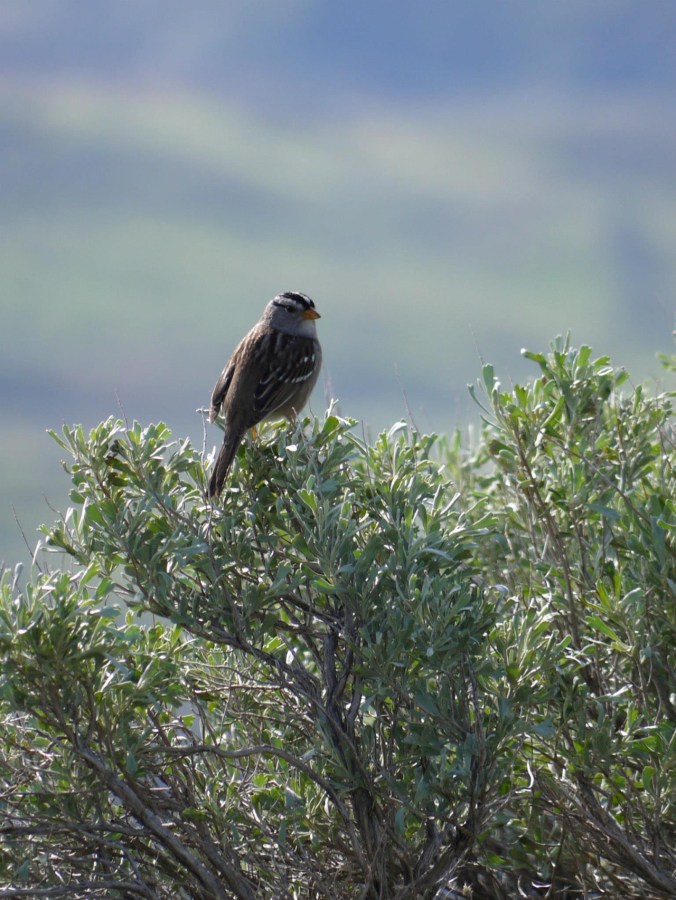
White-crowned Sparrow (Zonotrichia leucophrys) Emberizidae

Burch Mountain, Wenatchee National Forest, WA
April 27, 2013
Robert Niese

White-crowned Sparrows are an abundant migrant (sometimes resident) of the PNW with a very easy-to-identify song. If you’re just starting out learning to identify bird song, try your luck with the local sparrows first.

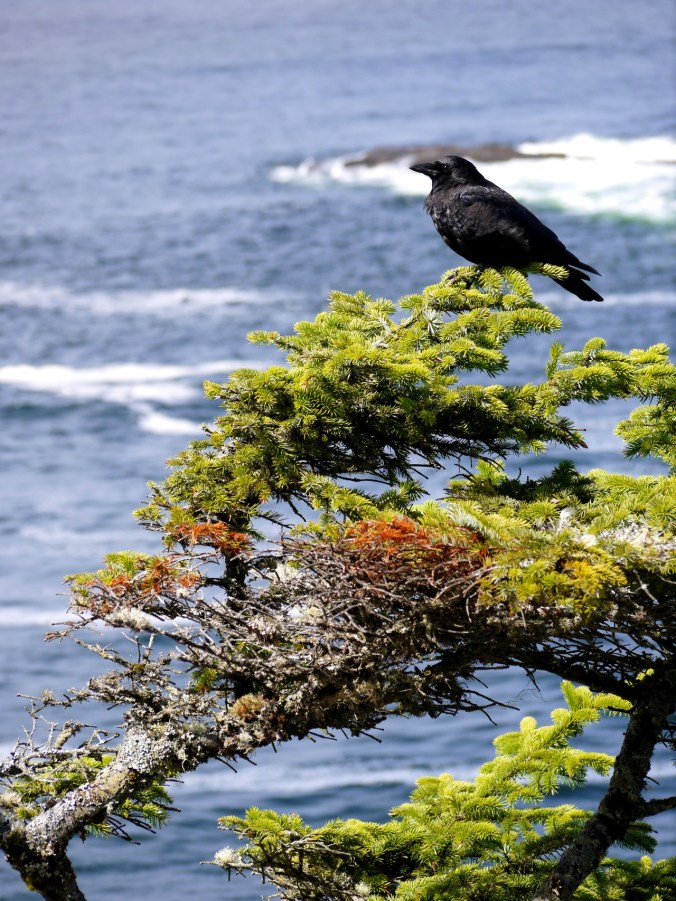
Northwestern/American Crow (Corvus caurinus/brachyrhynchos) Corvidae

Cape Flattery, WA
August 19, 2014
Robert Niese

While, as a scientist, I seriously doubt the validity of the “Northwestern” distinction for our PNW crows, if there were ever a crow that could be called a “Northwest Crow” it would have to be one at Cape Flattery (the northwestern-most point in the contiguous US). Northwestern Crows are, however, likely a subspecies of the American Crow and can only be identified based on their range of occurrence, which undoubtedly overlap for most regions.

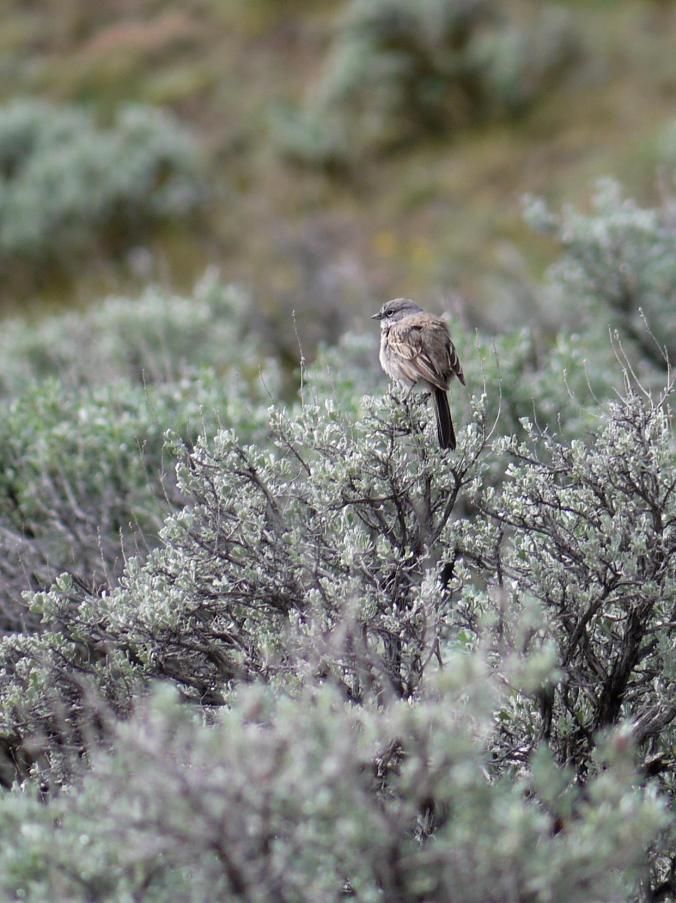
Sage Sparrow (Artemisiospiza nevadensis) Emberizidae

Ginkgo Petrified Forest State Park, WA
April 7, 2013
Robert Niese

Washington is home to the northernmost populations of Sage Sparrows in North America. These birds are sagebrush and chaparral obligates and are threatened throughout the state as these ecosystems get converted into range lands.

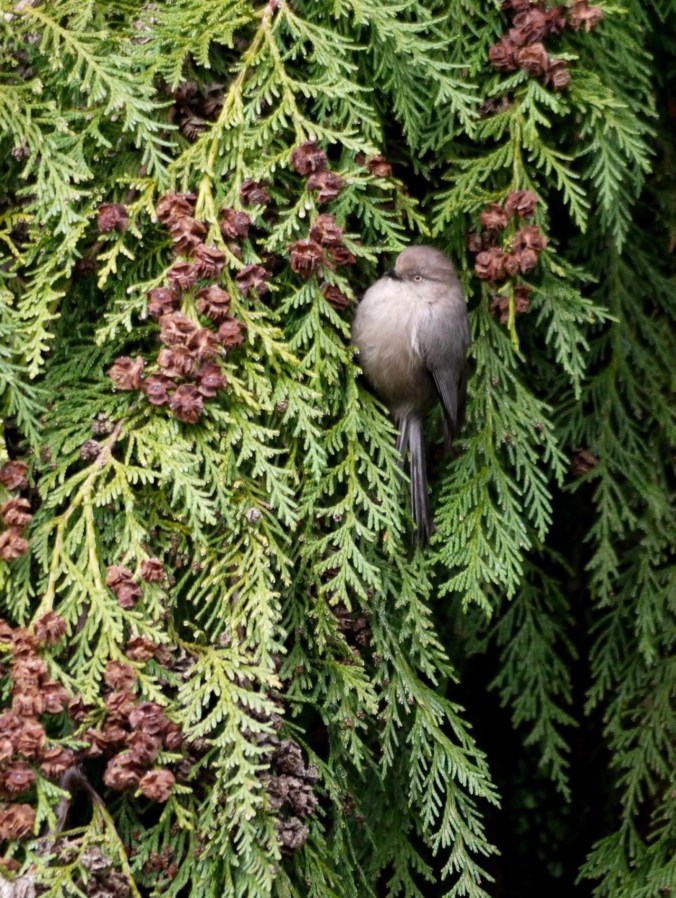
American Bushtit (Psaltriparus minimus) Aegithalidae 

University of Washington, Seattle, WA
January 13, 2013
Robert Niese

American Bushtits are the only member of the bushtit family found in the New World. Did you know you can tell apart the sexes based on their eye color? This is a female. Males have all black eyes.

Black-billed Magpie (Pica hudsonia) wing, Corvidae

No Data Available
Specimen courtesy of the Slater Museum
Photo by Robert Niese

The wings of Black-billed Magpies are quite striking. The deep black feathers covering most of their bodies are actually startlingly iridescent and starkly contrast with the white windows on their outer wing feathers. This contrast could be utilized as a form of visual communication during flight.