tumblr_o8gxmyne7v1tmun60o1_1280

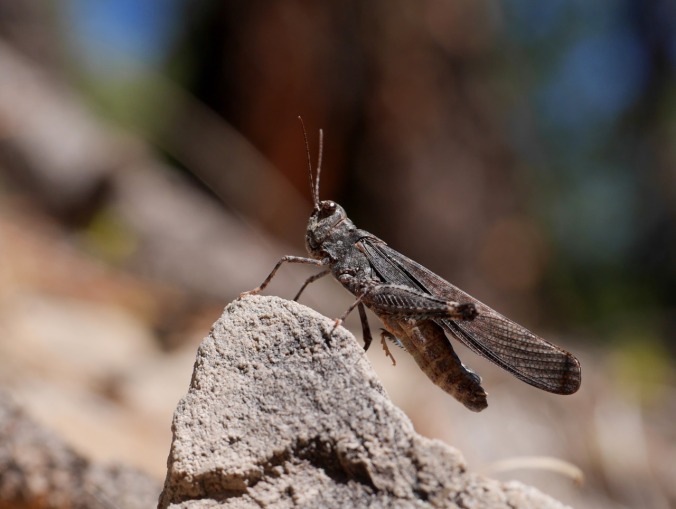
Trimerotropis verruculata suffusa “Crackling Forest Grasshopper” Acrididae

Mt. Sentinel, Lolo National Forest, MT
September 12, 2015
Robert Niese

BugGuide has become an indispensable resource for all my insect identification needs, but rarely do I come across pages so eloquently and comprehensively written as those by David Ferguson. His passion for band-winged grasshoppers makes these entries a joy to read:

“T. verruculata suffusa is one of the most common and conspicuous Band-wing Grasshoppers in open pine forests of the Rockies and Sierras, where it can be seen (and heard) on most any warm summer or autumn day. The “crepitation” produced in flight is a relatively loud crackling sound, and sometimes males will hover and crackle for several seconds at a time. Never is it so loud and conspicuous as Circotettix species (to which it is related and similar), but nearly so.”

Calliope Hummingbird (Selasphorus calliope) Trochilidae, male

Blue Mountain National Recreation Area, MT
May 16, 2016
Robert Niese

Calliope hummers are the smallest breeding bird in North America north of Mexico. Males perform an extravagant display to females that involves a steep dive, a barrel-roll, and a high-pitched sound produced by their tail feathers. Watch the whole courtship display and learn more about how it’s done here!

tumblr_o7lk36bgmx1tmun60o1_1280

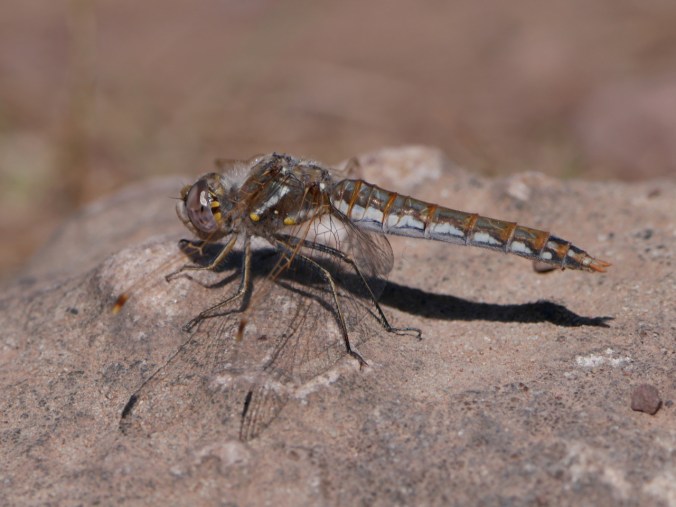
Sympetrum corruptum “Variegated Meadowhawk” Libellulidae

Blue Mountain National Recreation Area, MT
May 13, 2016
Robert Niese

As its name might suggest, these dragonflies are quite variable. So much so, that I’m questioning this ID (corrections would be very much appreciated). For more info on how to identify PNW odonates, check out this field key from the Slater Museum of Natural HistoryS. corruptum is a relatively common dragon found throughout much of northern North America near boggy meadows, swamps or ponds. During migration, however, it can be found wandering through just about any habitat from Honduras to Mongolia. Dragonflies are impressive migrators and some species can regularly travel 100 miles in a single day.

tumblr_o7qw6bnck01tmun60o1_1280

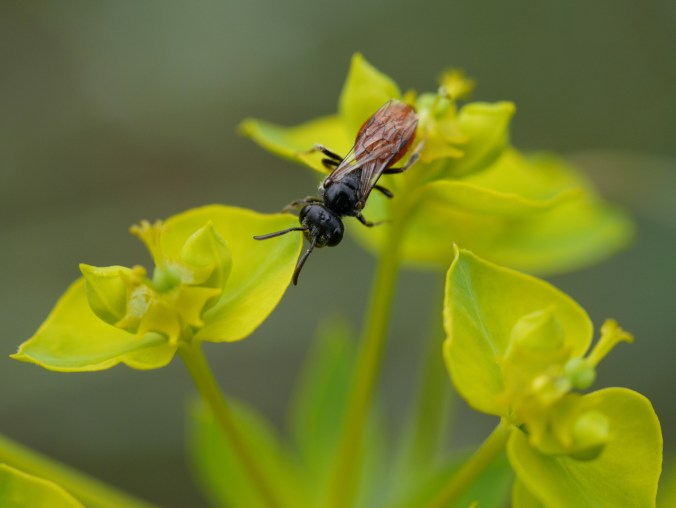
Sphecodes (arvensiformis) “Cuckoo Sweat Bee” Halictidae
on Euphorbia esula “Leafy Spurge” Euphorbiaceae

Blue Mountain National Recreation Area, MT
May 16, 2016
Robert Niese

Sphecodes bees are cleptoparasitic, cuckoo-like bees that lay their eggs in the nests of other sweat bees. Despite their outward appearance, these insects are not wasps, but they have converged on a very cuckoo-wasp-like life-history strategy. A female enters the nests of another Halictid, consumes a developing egg and replaces it with her own. Unfortunately, these bees, like the vast majority of Halictids, are very poorly studied and there are few entomologists capable of accurately identifying them beyond the genus level. Oh, and by the way, Leafy Spurge, while it is one of Missoula’s most widespread invasives, is also one of my favorite spring plants. They’re just such odd organisms! More photos and natural history info to come, I’m sure.

Looking back at my other photos of these bees from years ago makes me realize how far my skills as a photographer and natural historian have progressed.

tumblr_o74mf1byux1tmun60o1_1280

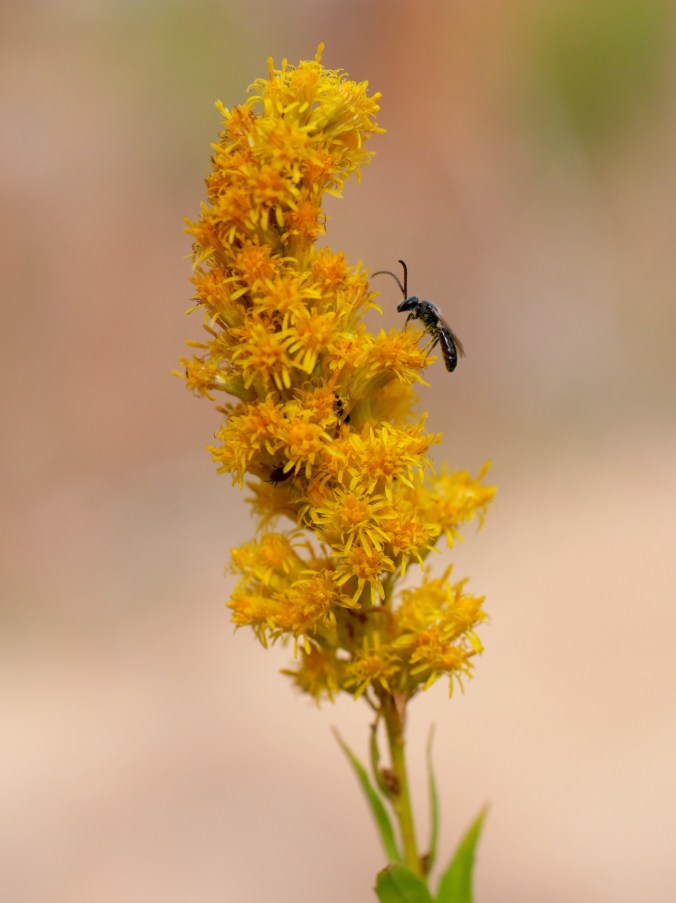
Lasioglossum (Hemihalictus) sp. “Weak-veined Sweat Bee” Halictidae
on Solidago missouriensis. “Prairie Goldenrod” Asteraceae

Apgar Lookout Trail, Glacier National Park, MT
October 9, 2015
Robert Niese

Lasioglossum is the world’s largest genus of bees and contains more than 1700 species worldwide. Like many other speciose invertebrate genera, we know relatively little about these organisms and only a handful of entomologists worldwide are capable of identifying them to species. In the last five years, researchers throughout North America have revised the taxonomy of this group using phylogenetic data, new morphological characters, and over 10,000 museum specimens. According to their keys, this particular individual is possibly a male L. (Hemihalictus) inconditum.

tumblr_o5w6l5nvd71tmun60o1_1280

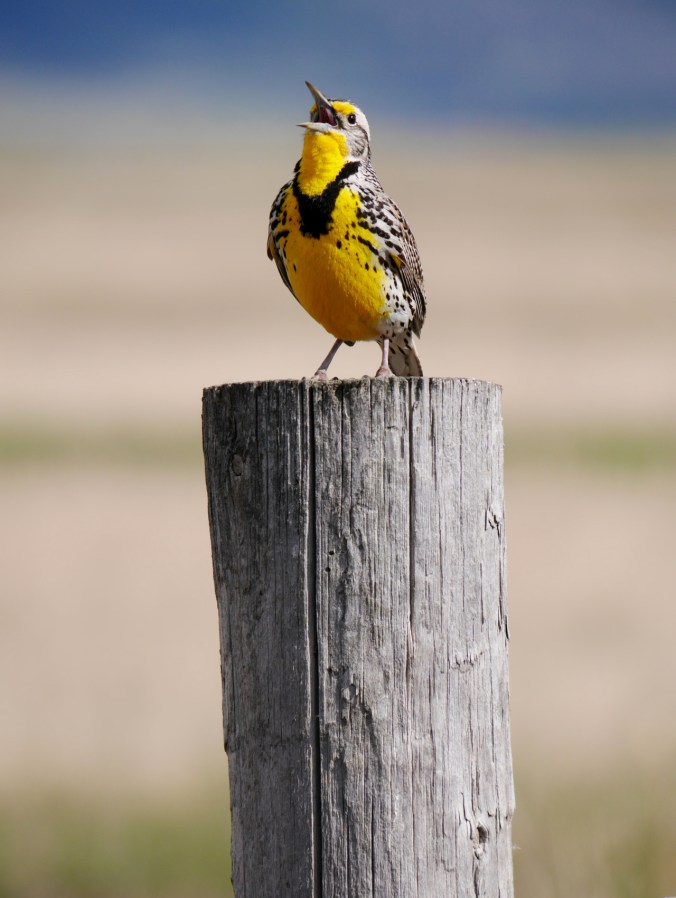
Western Meadowlark (Sturnella neglecta) Icteridae

April 2, 2016
Ninepipe National Wildlife Refuge
Robert Niese

I could photograph and listen to these birds singing all day! Unfortunately, not everyone in the car felt the same way and I only had a single joyous hour with this little guy. Learn more about the “neglected” Western Meadowlark here. Listen to its lovely song here.

tumblr_o3flgk3lkw1tmun60o1_1280

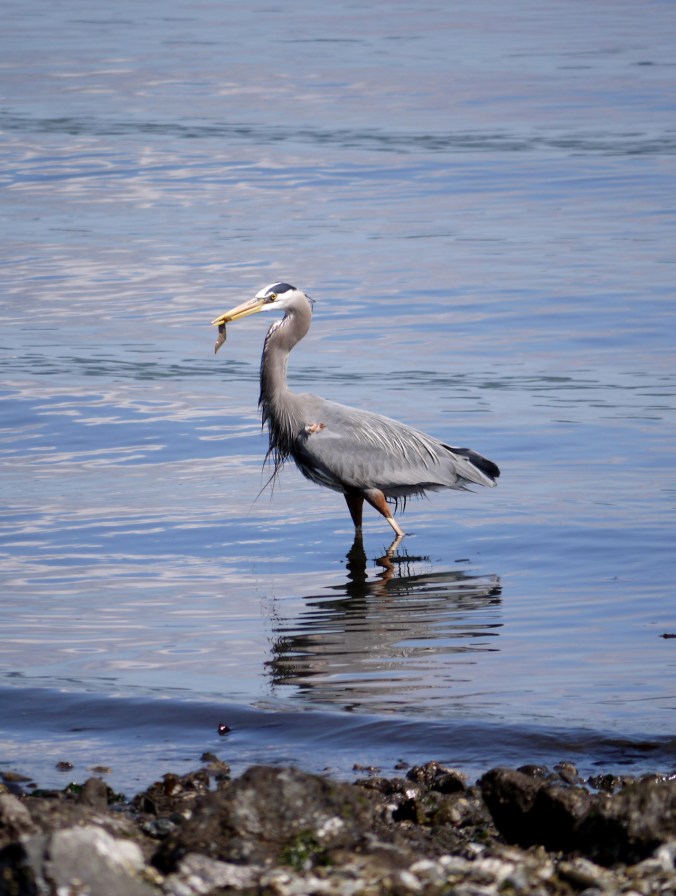
Great Blue Heron (Ardea herodias) Ardeidae

May 6, 2012
Tacoma, WA
Robert Niese

GBHs are master predators. I’ve watched these creatures consume everything from fish and insects to frogs, snakes, and rodents the size of small dogs! They also have a terrifying, rattling, squawk that never fails to make me jump out of my skin whenever I stumble upon an unsuspecting individual while I’m creeping around docks at night (looking for cool nighttime marine invertebrates, of course!). They truly are dinosaurs.

tumblr_o5w7d5l19q1tmun60o1_1280

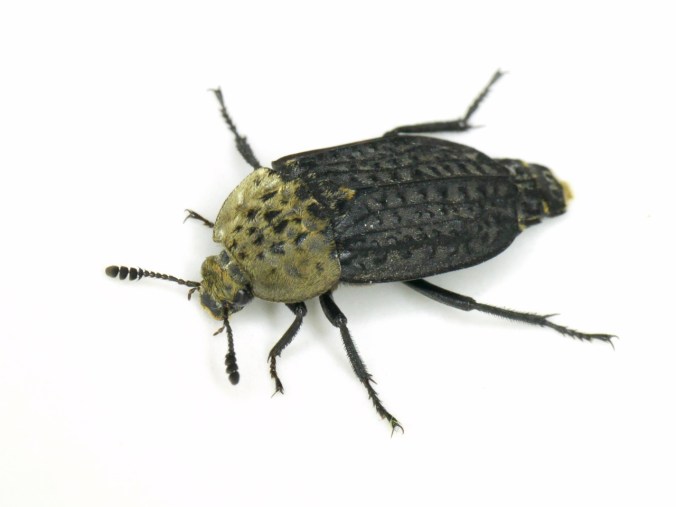
Thanatophilus lapponicus “Northern Carrion Beetle” Silphidae

April 2, 2016
National Bison Range, MT
Robert Niese

Photographed my first Silphid last week and, I must say, it was a horrendously smelly experience. These carrion beetles appear to prefer long-dead organisms, particularly reptiles and amphibians, and this little guy had apparently been hanging out in an extremely ripe carcass. I had to hold my breath every time I went in for a close-up! These beetles often overwinter in these carcasses, consuming the rotting flesh and maggots living there, until emerging at the first signs of spring. I might venture to guess that this is exactly what this individual did all winter, which might have contributed to its particular odor.

tumblr_o54wcrk3xy1tmun60o1_1280

Western Meadowlark (Sturnella neglecta) Icteridae

April 2, 2016
Ninepipe National Wildlife Refuge, MT
Robert Niese

The Western Meadowlark performs a lovely metallic flute-like song throughout the spring and summer. Its Eastern counterpart, on the other hand, has a much flatter, whistled song. Easter and Western Meadowlarks are so similar in appearance that until quite recently they were considered the same species. Since the Eastern species was discovered and named first, the Western, when it finally gained full species distinction, became known as the “neglected” meadowlark (Sturnella neglecta). This species is one of the 37 (including subspecies) named by John James Audubon throughout his career as one of  America’s first ornithologists.

tumblr_o5c1znzxwf1tmun60o1_1280

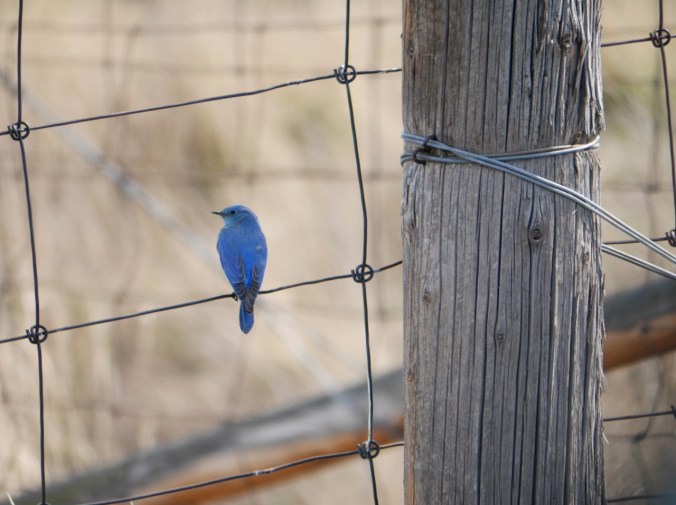
Mountain Bluebird (Sialia currucoides) Turdidae

National Bison Range, MT
April 2, 2016
Robert Niese

Most birds that posses such striking blue plumage typically get these gorgeous colors from tiny air pockets inside the feathers that scatter light in a way that makes them appear blue. Learn more.