
Sphecodes (arvensiformis) “Cuckoo Sweat Bee” Halictidae
on Lomatium “Biscuit Root” Apiaceae
Missoula, MT
May 13, 2014
Robert Niese
Sphecodes bees are cleptoparasitic, cuckoo-like bees that lay their eggs in the nests of other sweat bees.
Sphecodes (arvensiformis) “Cuckoo Sweat Bee” Halictidae
on Lomatium “Biscuit Root” Apiaceae
Missoula, MT
May 13, 2014
Robert Niese
Sphecodes bees are cleptoparasitic, cuckoo-like bees that lay their eggs in the nests of other sweat bees.

Salticus scenicus “Zebra Jumping Spider” Salticidae (female)
Missoula, MT
June 26, 2014
Robert Niese
This abundant, charismatic jumping spider was introduced to the US from Europe, but can now be found throughout most of the North American continent.
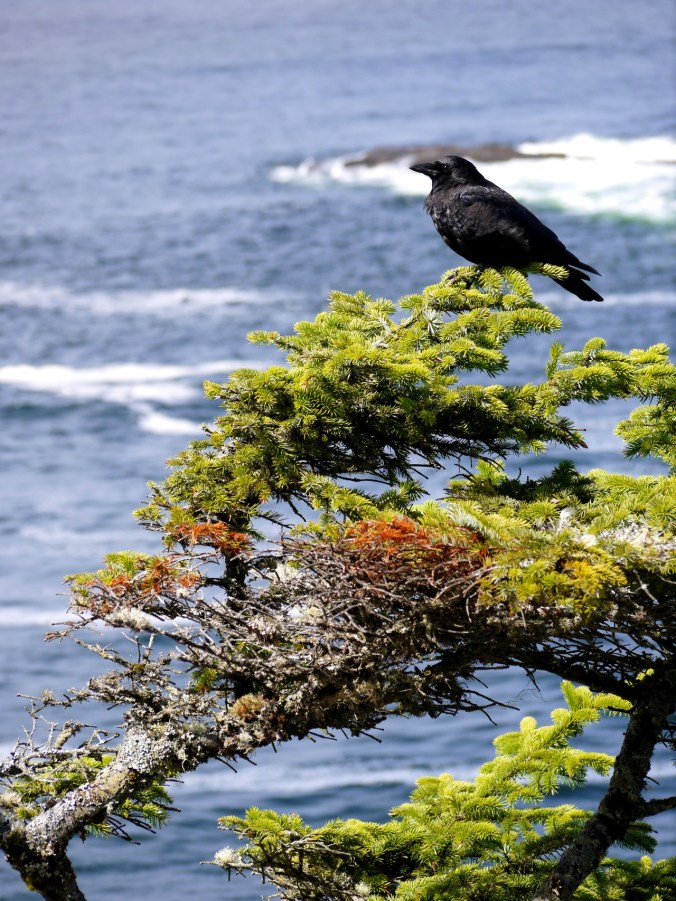
Northwestern/American Crow (Corvus caurinus/brachyrhynchos) Corvidae
Cape Flattery, WA
August 19, 2014
Robert Niese
While, as a scientist, I seriously doubt the validity of the “Northwestern” distinction for our PNW crows, if there were ever a crow that could be called a “Northwest Crow” it would have to be one at Cape Flattery (the northwestern-most point in the contiguous US). Northwestern Crows are, however, likely a subspecies of the American Crow and can only be identified based on their range of occurrence, which undoubtedly overlap for most regions.

Ectoedemia sericopeza “Norway Maple Seedminer” Nepticulidae
Missoula, MT
September 25, 2014
Robert Niese
These teensy-tiny moths are rarely over 2mm in length and are among some of the smallest lepidopterans in the world. Their larvae, which are equally infinitesimal, feed exclusively on (and within!) the tissues of the Norway Maple (Acer platanoides), an introduced species which lines most of our streets here in Missoula.
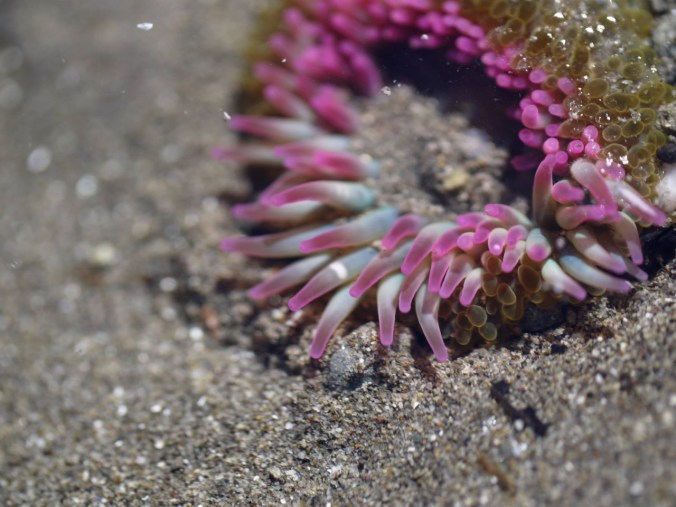
Anthopleura elegantissima “Aggregating Anemone” Anthozoa
Olympic National Park, WA
June 1, 2013
Robert Niese
A very common intertidal resident here in the Puget Sound and on the open coast. If it’s big and green, it’s Anthopleura xanthogrammica. If it’s white and has very fine tentacles (usually subtidal, not intertidal) then it’s Metridium. Now you can identify 90% of the anemones you find in your backyard!
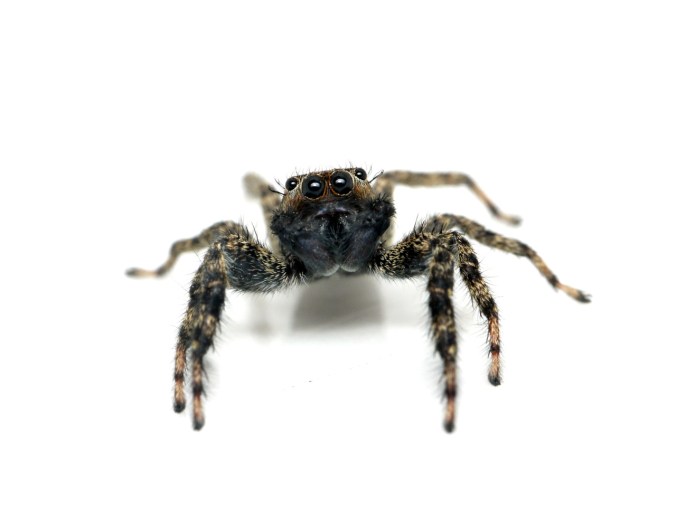
Platycryptus californicus Salticidae
Missoula, MT
June 5, 2014
Robert Niese
An extremely abundant, charismatic jumper commonly found on door frames and windowsills throughout the summer here in Missoula.

Phidippus “clarus” Salticidae
Missoula, MT
September 17, 2014
Robert Niese
Phidippus jumpers are some of the largest jumping spiders in the world. Here in Montana, we have several red-backed species, all of which are about the size of a nickel. They are excellent house-guests and will rid your home of flies, roaches, and other mid-sized arthropods in a matter of days.
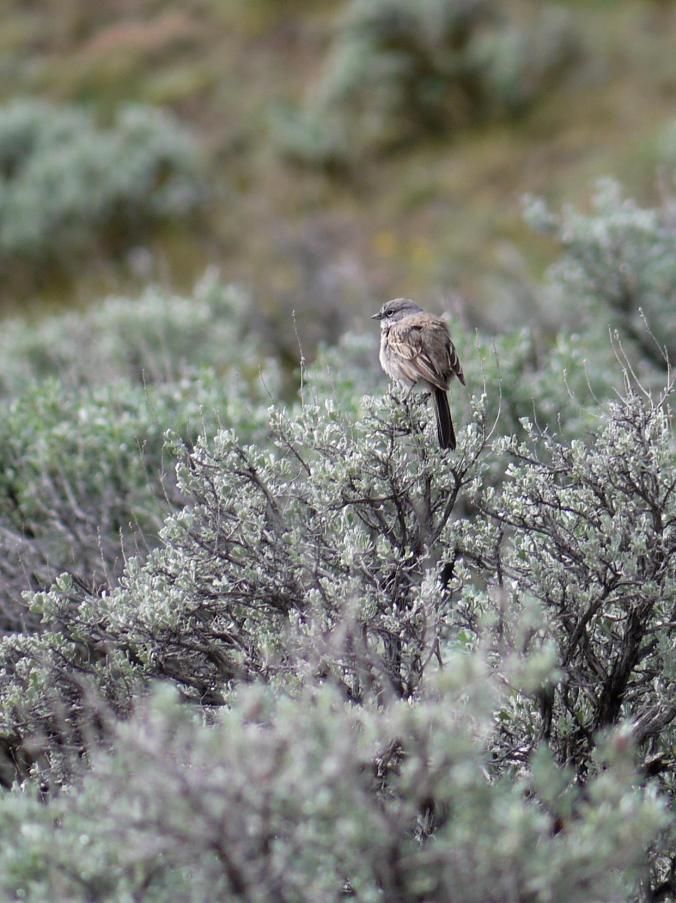
Sage Sparrow (Artemisiospiza nevadensis) Emberizidae
Ginkgo Petrified Forest State Park, WA
April 7, 2013
Robert Niese
Washington is home to the northernmost populations of Sage Sparrows in North America. These birds are sagebrush and chaparral obligates and are threatened throughout the state as these ecosystems get converted into range lands.
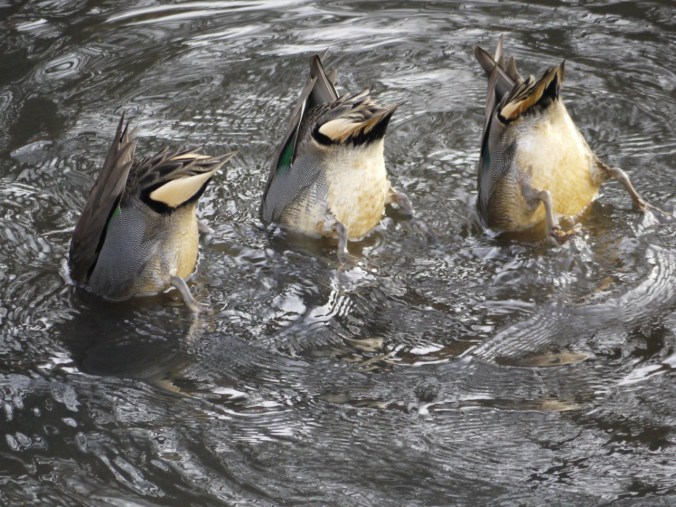
Green-winged Teal (Anas crecca carolinensis) Anatidae, males
Seattle, WA
January 13, 2013
Robert Niese
Teal are dabblers (as opposed to divers), meaning they float on the surface and reach down into the water to grab tasty bits of aquatic plant matter. This makes the ability to identify a duck butts surprisingly useful.
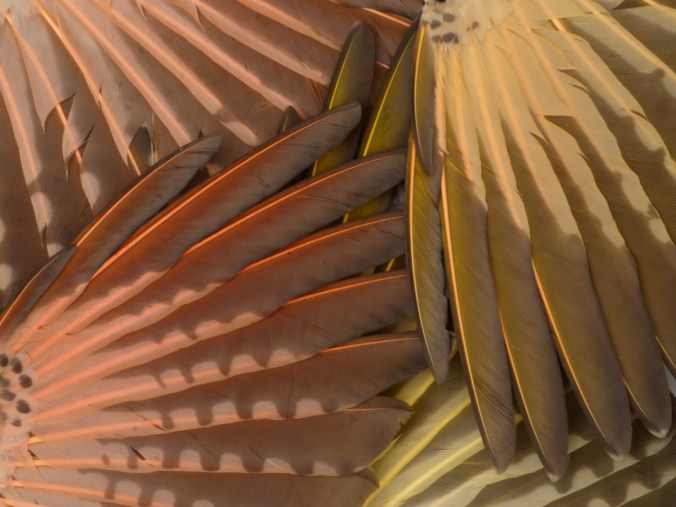
Northern Flicker (Colaptes auratus) wings, Picidae
No Data Available
Specimens courtesy of the Slater Museum
Photo by Robert Niese
Northern Flickers occur in two color morphs across the US. In the west, they are predominantly “red-shafted,” while in the east they are predominantly “yellow-shafted.” Here in western Montana, we have mostly red-shafted, but there are a few areas that are chock-full of “orange-shafted” hybrids (the wing in the upper right is a hybrid). There are extensive hybrid zones throughout BC and AB as well.
 Northwest Naturalist