
Graphocephala fennahi “Rhododendron Leafhopper” Cicadellidae
Tacoma, WA
August 2013
Robert Niese
Apparently, these sharpshooters are native to the south eastern Appalachians, but have since traveled the world in ornamental Rhododendrons.
Graphocephala fennahi “Rhododendron Leafhopper” Cicadellidae
Tacoma, WA
August 2013
Robert Niese
Apparently, these sharpshooters are native to the south eastern Appalachians, but have since traveled the world in ornamental Rhododendrons.

Antheraea polyphemus “Polyphemus Moth” Saturniidae (male)
Missoula, MT
June 11, 2014
Robert Niese
Surprisingly, I found this enormous moth (15 cm wingspan!) in a parking lot on my way into work on the University of Montana campus.

Sphecodes (arvensiformis) “Cuckoo Sweat Bee” Halictidae
on Lomatium “Biscuit Root” Apiaceae
Missoula, MT
May 13, 2014
Robert Niese
Sphecodes bees are cleptoparasitic, cuckoo-like bees that lay their eggs in the nests of other sweat bees.

Salticus scenicus “Zebra Jumping Spider” Salticidae (female)
Missoula, MT
June 26, 2014
Robert Niese
This abundant, charismatic jumping spider was introduced to the US from Europe, but can now be found throughout most of the North American continent.

Ectoedemia sericopeza “Norway Maple Seedminer” Nepticulidae
Missoula, MT
September 25, 2014
Robert Niese
These teensy-tiny moths are rarely over 2mm in length and are among some of the smallest lepidopterans in the world. Their larvae, which are equally infinitesimal, feed exclusively on (and within!) the tissues of the Norway Maple (Acer platanoides), an introduced species which lines most of our streets here in Missoula.
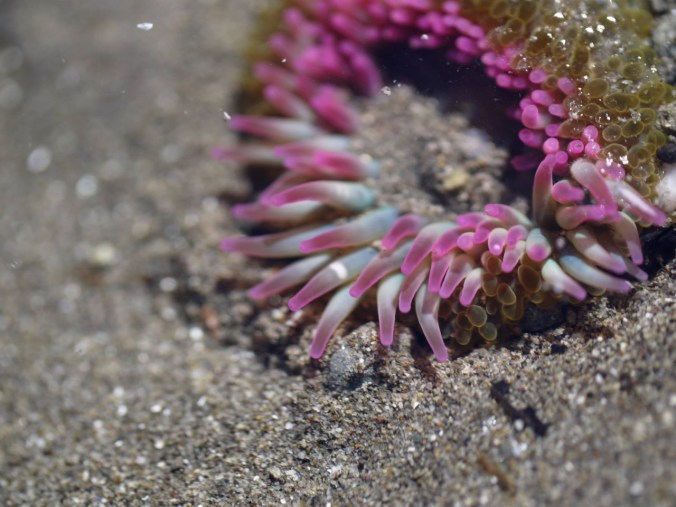
Anthopleura elegantissima “Aggregating Anemone” Anthozoa
Olympic National Park, WA
June 1, 2013
Robert Niese
A very common intertidal resident here in the Puget Sound and on the open coast. If it’s big and green, it’s Anthopleura xanthogrammica. If it’s white and has very fine tentacles (usually subtidal, not intertidal) then it’s Metridium. Now you can identify 90% of the anemones you find in your backyard!
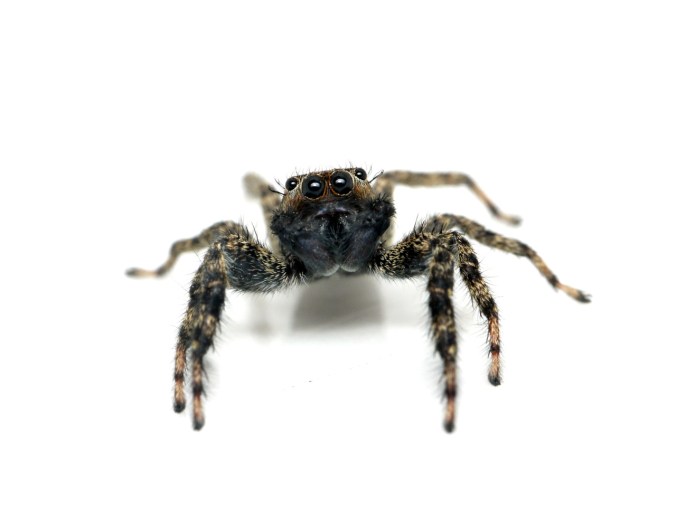
Platycryptus californicus Salticidae
Missoula, MT
June 5, 2014
Robert Niese
An extremely abundant, charismatic jumper commonly found on door frames and windowsills throughout the summer here in Missoula.

Phidippus “clarus” Salticidae
Missoula, MT
September 17, 2014
Robert Niese
Phidippus jumpers are some of the largest jumping spiders in the world. Here in Montana, we have several red-backed species, all of which are about the size of a nickel. They are excellent house-guests and will rid your home of flies, roaches, and other mid-sized arthropods in a matter of days.
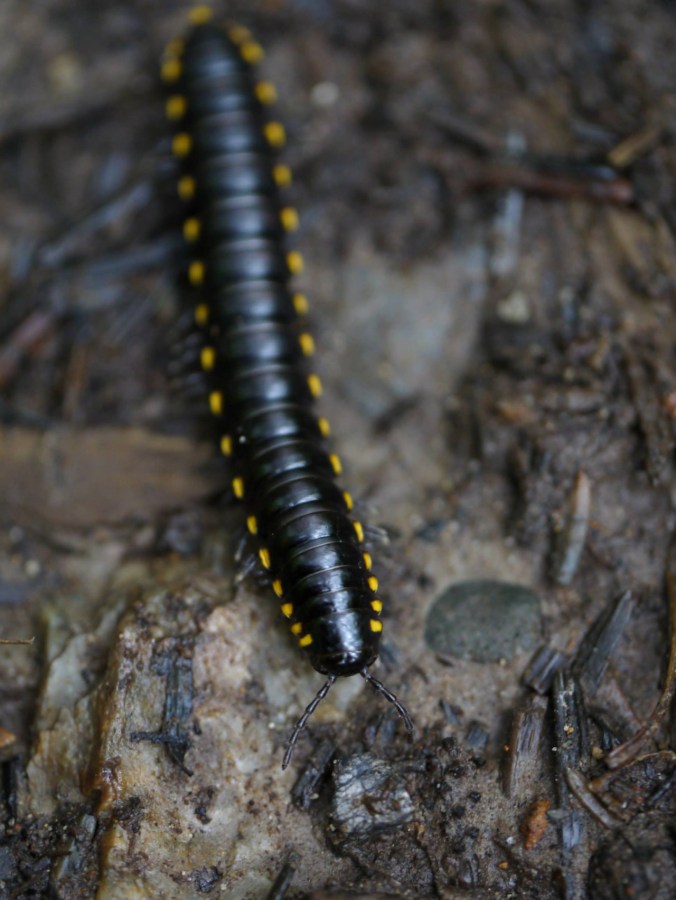
Harpaphe haydeniana “Yellow-spotted Millipede” Diplopoda
Olympic National Park, WA
June 4, 2013
Robert Niese
This adorable PNW millipede is a common denizen of nearly all moist coniferous forests from Alaska to California. It is also known as the “Almond-scented Millipede” due to the odors it produces when disturbed (hydrogen cyanide smells like almonds, apparently). But don’t worry, these little guys cant hurt you (just don’t eat it!). In fact, they are an exceptional critter to handle and explore with your young naturalists-in-training.
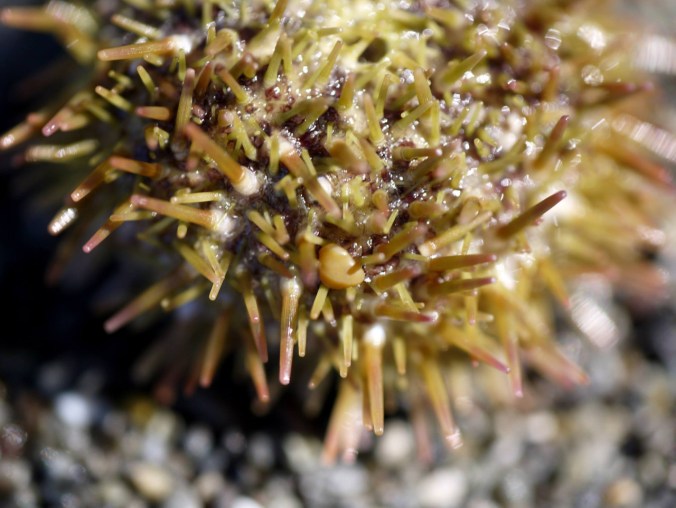
Strongylocentrotus droebachiensis “Green Urchin” Echinoidea
Olympic National Park, WA
June 2, 2013
Robert Niese
Strongylocentrotus droebachiensis has one of the longest binomial Latin names of any organism in the world. It is also one of the most abundant and widely distributed urchins on Earth. Here in Washington, S. droebachiensis is at the southernmost extent of its range.
 Northwest Naturalist