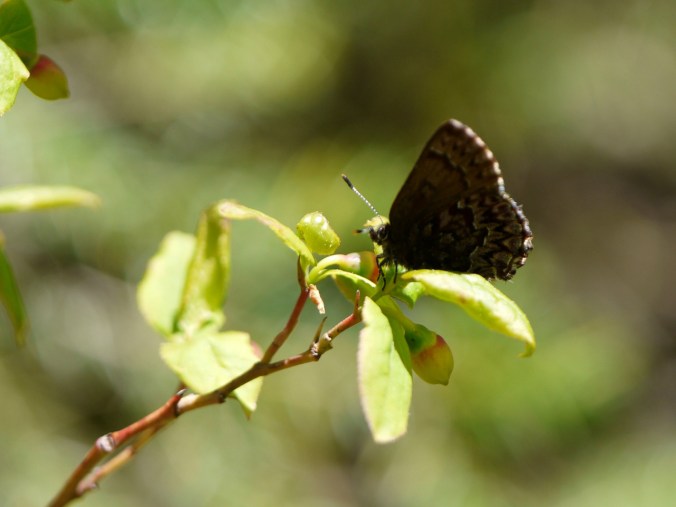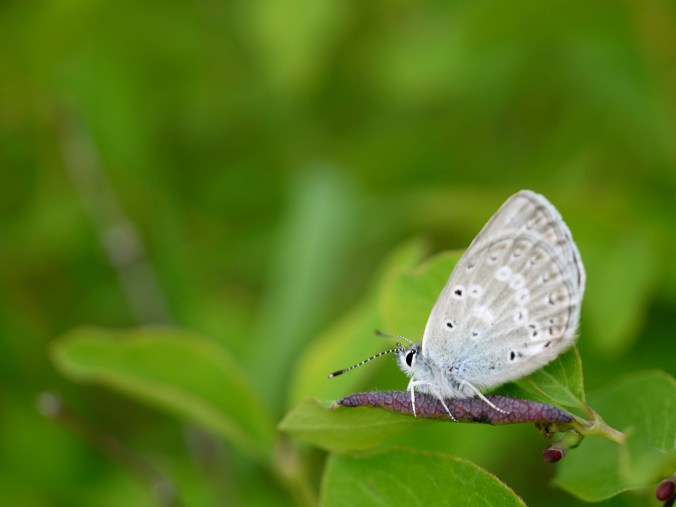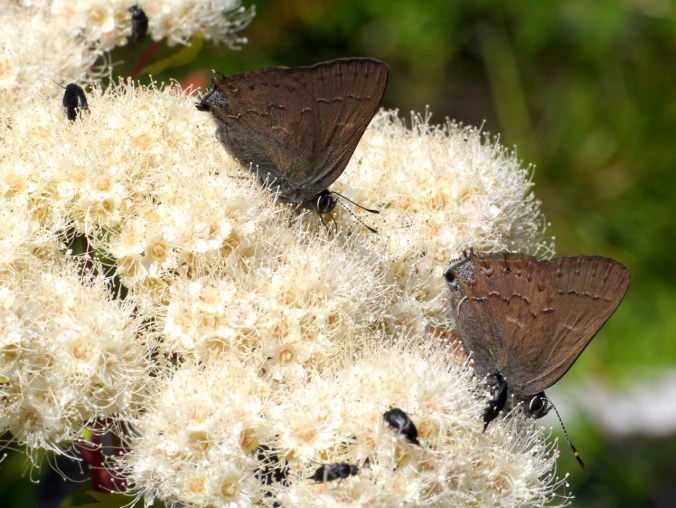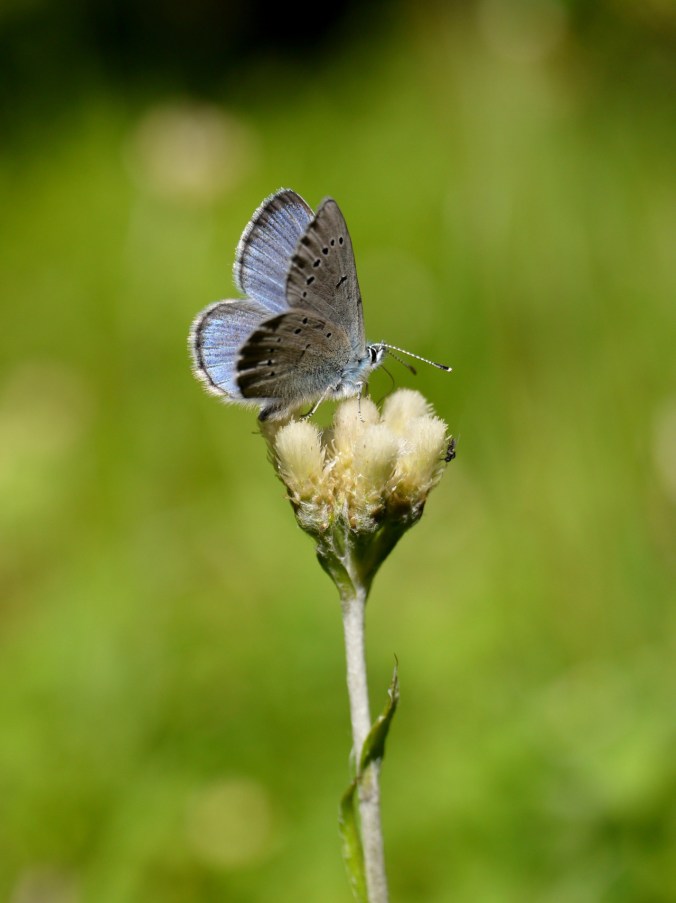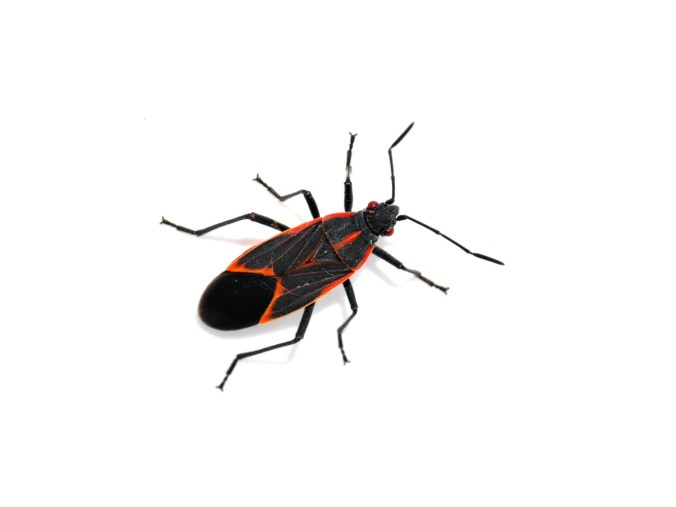
Boisea trivittata “Box Elder Bug” Rhopalidae

Missoula, MT
October 8, 2014
Robert Niese

Box Elder Bugs are Acer specialists, feeding exclusively on the samaras (seeds) of various maple species. Box Elder Bugs tend to create massive congregations in sunny spots to keep warm while feeding and are often considered a nuisance in such large numbers – especially when the days become colder and they seek refuge in my bedroom! But overall, they’re totally harmless.
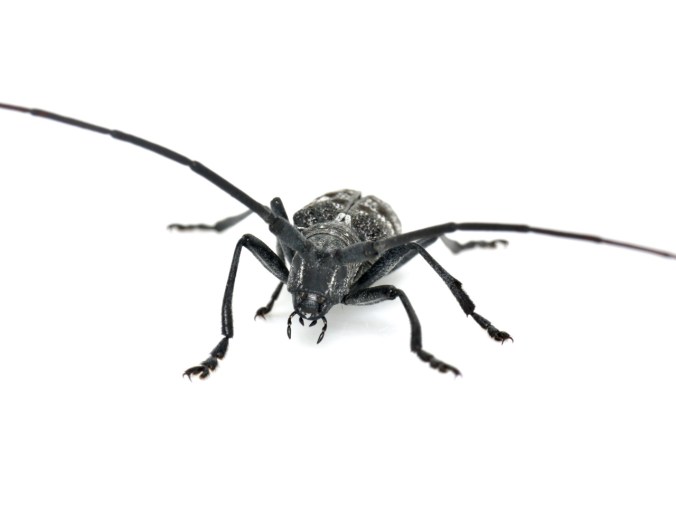
Monochamus clamator “Spotted Pine Sawyer” Cerambycidae (male)

Bonner, MT
July 20, 2014
Robert Niese

Monochamus males have some of the longest “horns” of any Cerambycids here in the northwest. These antennae are used to “smell” for females and are often more than twice their body length.

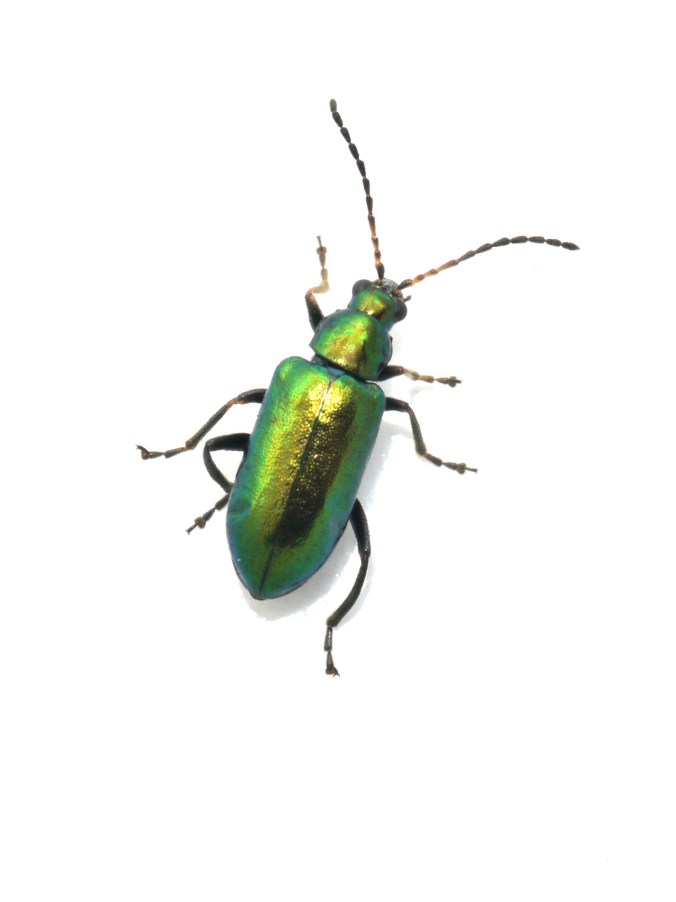
Scelolyperus schwarzii Chrysomelidae

Missoula, MT
June 15, 2014
Robert Niese

This tiny (5mm) leaf beetle is common in moist forests throughout the Pacific Northwest west of the Rockies. They seem to be particularly fond of hanging out in Hydrophyllum flowers.

Callophrys augustinus “Brown Elfin” Lycaenidae

Glacier National Park, MT
June 20, 2014
Robert Niese

This is a pretty common butterfly here in Montana. You can easily recognize them by their Lycaenid shape and dull metallic-y brown color. These guys don’t have tails like the hairstreaks, but sometimes have a tail-like lobe on their hindwings.

Satyrium saepium “Hedgerow Hairstreak” Lycaenidae

Seeley Lake, MT
July 26, 2014
Robert Niese

An adorable coppery hairstreak that rears its young on our abundant Ceanothus velutinus, or Snowbrush, here in Montana. Snowbrush grows best in open, brushy areas like those created after a fire or in a clearcut. And where there’s Ceanothus you’ll find these adorable Hedgerow Hairstreaks.

Glaucopsyche lygdamus “Silvery Blue” Lycaenidae

Glacier National Park, MT
June 21, 2014
Robert Niese

As with many members of the Lycaenidae family (blues, coppers, and hairstreaks), the caterpillars of this species are tended by ants which provide the vulnerable larvae with protection in exchange for sugary “honeydew” which the caterpillars excrete from their backs. Check it out.