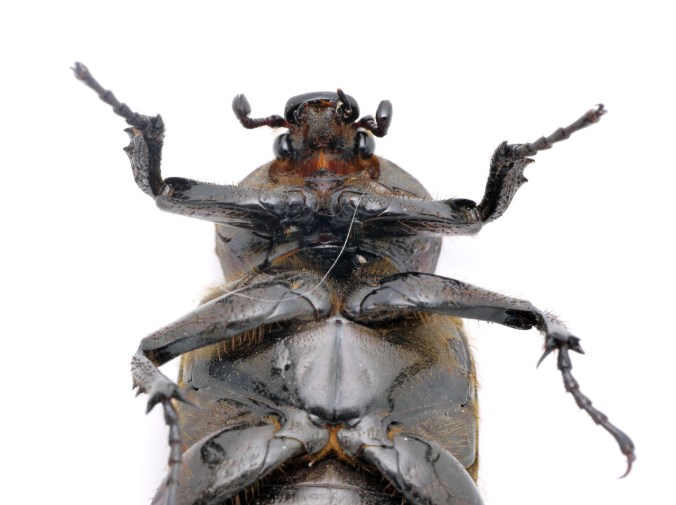
Osmoderma subplanata “Leather Beetle” Scarabaeidae

Missoula, MT
July 30, 2014
Robert Niese

These large (3 cm), circumboreal beetles get their name from the leathery odors they emit from their exoskeleton (Osmo- means smelly, -derma means skin). Adults spend most of their lives feeding on the decaying centers of fallen logs.
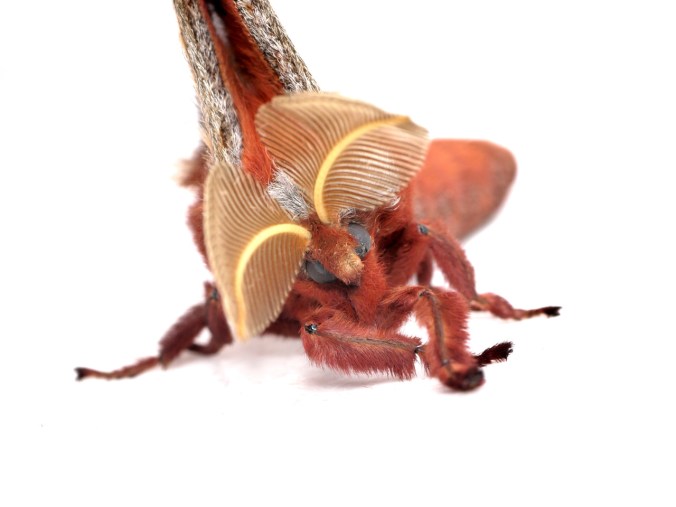
Antheraea polyphemus “Polyphemus Moth” Saturniidae (male)

Missoula, MT
June 11, 2014
Robert Niese

Surprisingly, I found this enormous moth (15 cm wingspan!) in a parking lot on my way into work on the University of Montana campus.

Platycryptus californicus Salticidae

Missoula, MT
June 5, 2014
Robert Niese

An extremely abundant, charismatic jumper commonly found on door frames and windowsills throughout the summer here in Missoula.

Nymphalis antiopa “Mourning Cloak” Nymphalidae

Salmon-Challis National Forest, ID
March 20, 2015
Robert Niese

Mourning Cloaks are very territorial butterflies and will aggressively defend their feeding sites against intruding insects and have even been known to chase off hummingbirds! Also, March is really early to be seeing these guys out and about. There are hardly any flowers blooming that early!

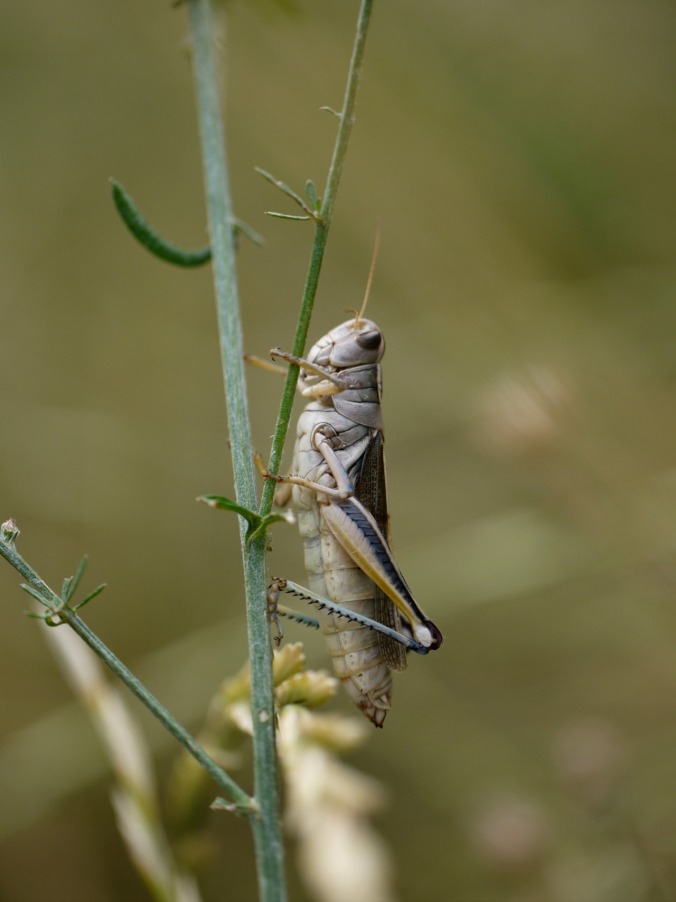
Melanoplus bivittatus bivittatus “Two-striped Grasshopper” Acrididae

Missoula, MT
September 2, 2013
Robert Niese

The Two-striped Grasshopper can be found throughout North America and can be quite variable morphologically. In drier regions here in the PNW, M. bivittatus bivittatus tends to be a dull yellow-brown color with blueish legs. In wetter, coastal regions, M. bivittatus femoratus will be green with red legs. Throughout the Northwest however, these grasshoppers are abundant and often found in gardens and vacant lots around town.

Ochlodes sylvanoides “Woodland Skipper” Hesperiidae

Missoula, MT
September 2, 2013
Robert Niese

These little guys are pretty common around Missoula in the late summer when they complete their metamorphosis. Look for them in grassy areas throughout the Pacific Northwest feeding on Asteraceae flowers like these weedy asters.

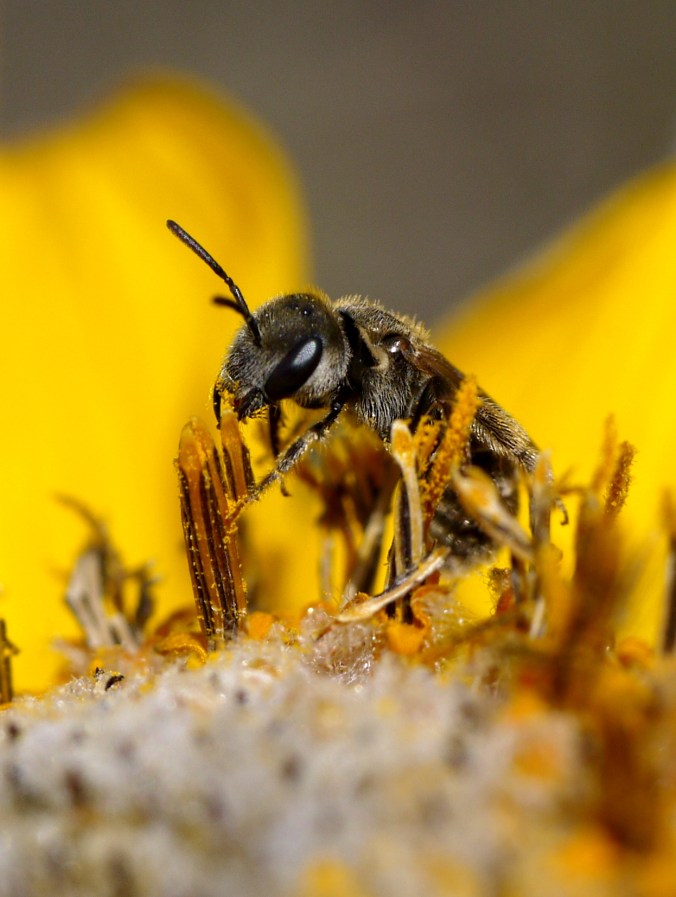
Halictus (Seladonia) tripartitus “Sweat Bee” Halictidae

Missoula, MT
May 13, 2014
Robert Niese

Another species of small Sweat Bee in the genus Halictus. If you’re interested in attempting to identify these bees with a dichotomous key (there are only 10 species in the Northwest, so it’s not too difficult!), check this one out here. Once you learn more about these little guys, you start noticing them everywhere!

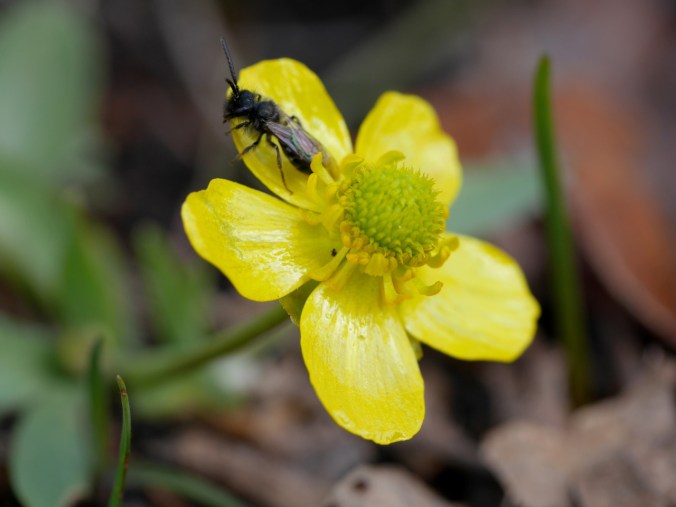
Andrena “Mining Bee” Andrenidae
on Ranunculus glaberrimus “Sagebrush Buttercup” Ranunculaceae

Council Grove State Park, MT
March 16, 2015
Robert Niese

Andrena is one of the world’s largest genera of bees. There are probably only a few people in all of North America who possess the specialized knowledge necessary to make a reliable species identification. Andrena bees are remarkably cold tolerant and are some of the first small bee species to frequent flowers in the spring, although this little guy was clearly struggling with the chilly morning air.

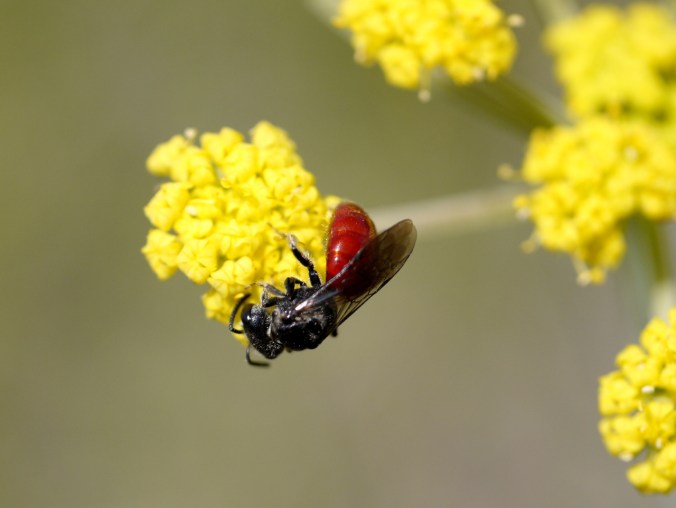
Sphecodes (arvensiformis) “Cuckoo Sweat Bee” Halictidae
on Lomatium “Biscuit Root” Apiaceae

Missoula, MT
May 13, 2014
Robert Niese

Sphecodes bees are cleptoparasitic, cuckoo-like bees that lay their eggs in the nests of other sweat bees.

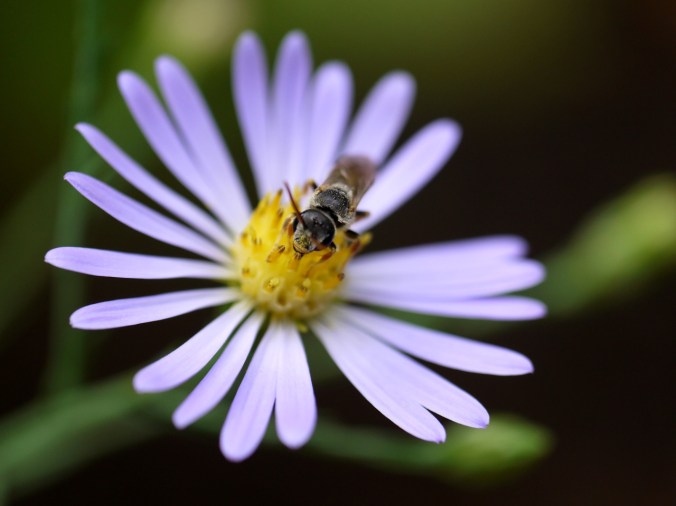
Halictus ligatus “Sweat Bee” Halictidae on Aster (Asteraceae)

Missoula, MT
September 2, 2013
Robert Niese

Sweat Bees in the genus Halictus can be difficult to identify, but fortunately, as compared to other genera in our area (see Lasioglossum), there are relatively few species in the Northwest (10). If you’d like to take a shot at IDing your own photographs, check out this key to our species.