Caenurgina erechtea “Forage Looper” Erebidae

Clinton, MT
July 25, 2015
Robert Niese

Here’s another moth we spotted during our Mothlighting event for National Moth Week with the Missoula Butterfly House. This individual didn’t come to light, however. It came to our sugar lick! A sticky goopy paste of sugar, bananas, molasses, and beer can attract some unique nighttime visitors that you wouldn’t normally see at a light! This Forage Looper was far more interested in a sugary snack, than an insect orgy at a blacklight. And check out that camouflage! So neat!
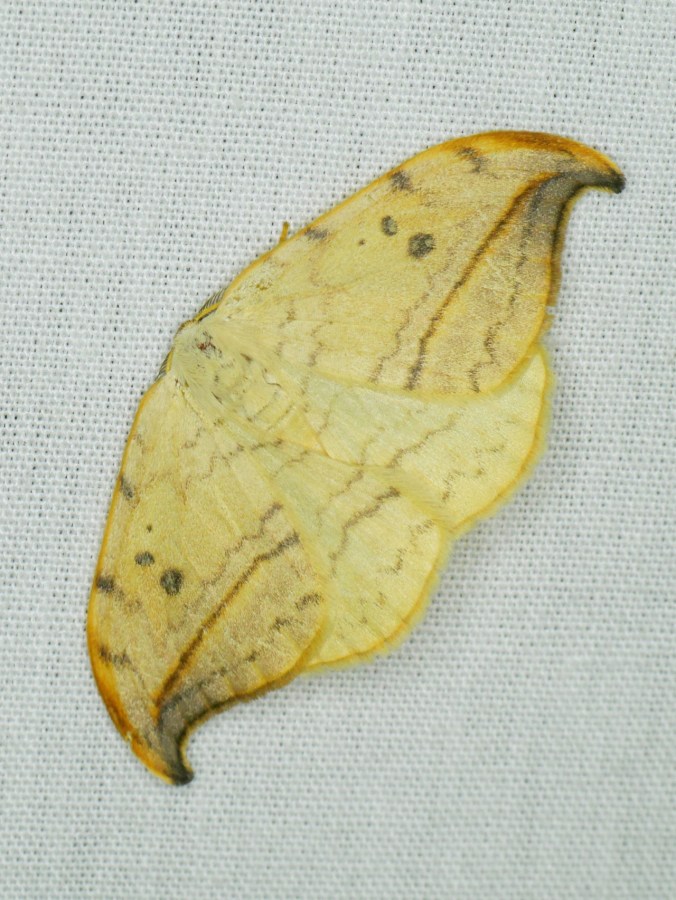
Drepana arcuata “Arched Hooktip Moth” Drepanidae

Clinton, MT
July 25, 2015
Robert Niese


Here’s another moth we spotted during our Mothlighting event for

National Moth Week with the Missoula Butterfly House. These moths are positively unmistakable! In our area there are no other moths that pull-off the “I’m a dead leaf” look quite as well as the Hooktips. The PNW is home to two species of Hooktip moths – D. arcuata and D. bilineata (which, as its name suggests, has two lines instead of one). As larva, Hooktip moths feed on the leaves of Alder and Birch trees where they hide inside folded leaves.

Apache degeeri “Derbid planthopper” Derbidae

Clinton, MT
July 25, 2015
Robert Niese

This little creature looks like something from another planet! Derbid planthoppers are one of entomology’s lesser studied groups of organisms. This particular genus has two members, A. degeeri and A. californicum, and is only found in North America (unlike most planthoppers which tend to be more highly represented in the tropics). This species occurs throughout North America, but tends to be more abundant in the east, while A. californicum is endemic to California. The larvae of these bugs are believed to feed off the hyphae (like roots) of fungi, while adults feed on the sap of trees like Beach, Oak, Maple, and Hickory.

Malacosoma californica “Western Tent Caterpillar Moth” Lasiocampidae

Clinton, MT
July 25, 2015
Robert Niese

Tent caterpillar moths were some of our most abundant visitors during our Mothlighting event for National Moth Week with the Missoula Butterfly House. They are positively adorable as adults, wouldn’t you agree? In our area, we tend to have mostly Western Tent Caterpillars, but we do also get Forest Tent Caterpillars (M. disstria). Caterpillars of M. disstria tend to have broader blue dorsal bands, keyhole-shaped white dorsal spots, and whiter tufts of lateral hairs than M. californica, which, in our area, tend to have more yellow than blue

(however, farther east they tend to lack yellow entirely)

and tend to have dash-shaped white dorsal spots. Adults are far more difficult to distinguish, but in general, M. californica tends to have two lighter-colored lateral bands on its forewings in addition to dark bands, while M disstria tends to lack these bands and only has dark bands. But from the underside, they all just look like teddy bears.

Ceutorhynchus erysimi “Shepherd’s Purse Weevil” Curculionidae

Missoula, MT
June 19, 2015
Robert Niese

These adorable weevils were introduced along with the invasive weed, Shepherd’s Purse (Capsella bursa-pastoris; Brassicaceae) from Europe. They have iridescent green-blue elytra and rarely reach a size of more than 2mm. They’re my new favorite introduced species.

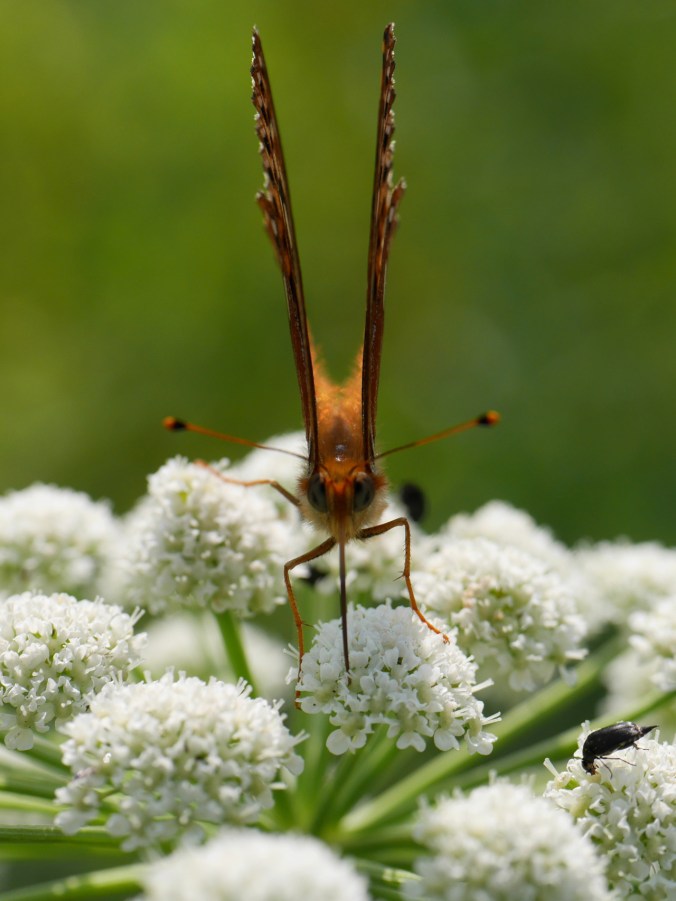
Speyeria hydaspe “Hydaspe Fritillary” Nymphalidae

Great Burn, Lolo National Forest, MT
July 10, 2015
Robert Niese


Fritillaries are common residents of moist meadows throughout North America. They lay their eggs on a variety of violet species. Upon hatching, the larvae immediately burrow into the ground (before eating) and hibernate until spring when they emerge and munch on the violet leaves.

Anatis rathvoni “Rathvon’s Giant Lady Beetle” Coccinellidae

Great Burn, Lolo National Forest, MT
July 10, 2015
Robert Niese

These massive (10mm) ladybugs are endemic to the PNW and are normally found in pines and other conifers where they voraciously consume aphids, caterpillars, and other small, fleshy-bodied herbivores. Their elytra vary in color from yellow, pale brown, to brown-red, darkening with age. Rathvon’s Giant Ladybird Beetles are named for a relatively obscure 19th century entomologist, S. S. Rathvon from Pennsylvania, who was one of North America’s first entomologists dedicated to educating the public about their local beneficial and pest-insects. Learn more about his life here.

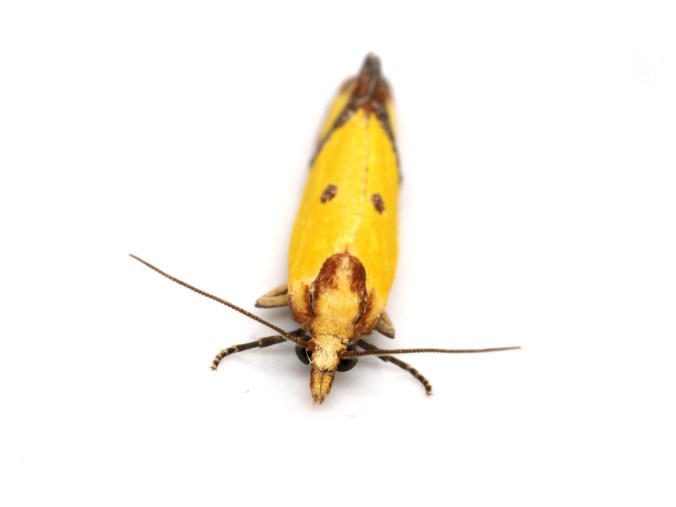
Agapeta zoegana “Sulphur Knapweed Moth” Tortricidae

August 14, 2014
Missoula, MT
Robert Niese

These diminutive moths (10mm in length) are obligate parasites of our invasive knapweed (Centaurea maculosa) and were introduced in 1984 as a potential biological control agent.

Happy National Moth Week!

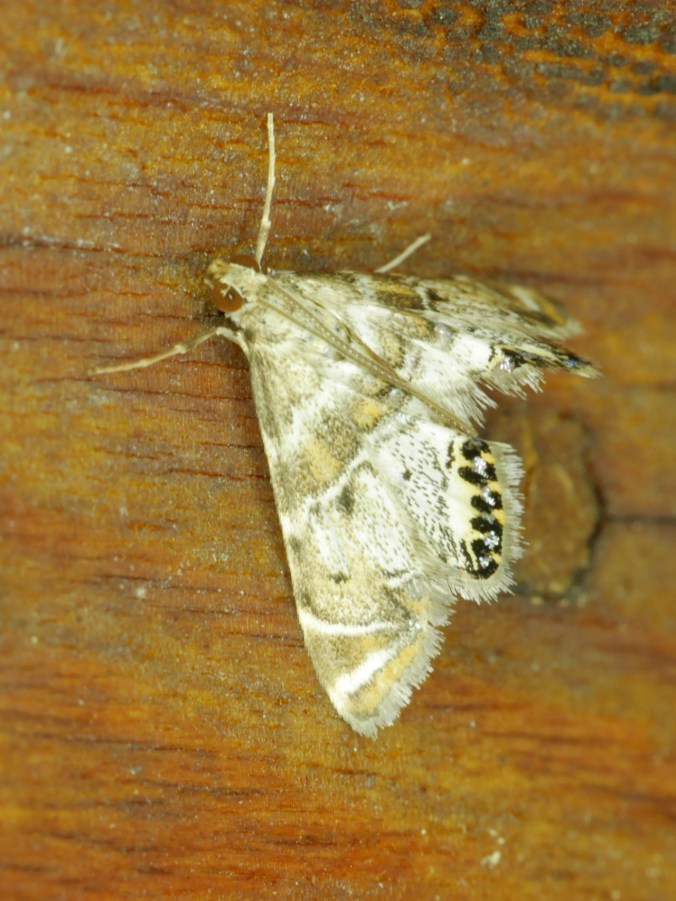
Petrophila confusalis Crambidae

Missoula, MT
July 21, 2015
Robert Niese

These adorable moths are absolutely fascinating! They often rest with their hindwings partially visible, displaying these prominent black spots. It’s likely that these patterns look like jumping spiders to potential predators or parasites (i.e. wasps). Check out this awesome video of the moth moving its wings to make its eyespots look extra scary, and this cool video of a different species chasing a male jumping spider like it’s a potential mate. In addition to this cool ability to mimic its predators, these moths also lay their eggs underwater! Females actually dive down to the bottom of fast-flowing streams to lay their eggs on algae-ridden rocks in riffles and rapids. During these dives, their abdomens get encased in a bubble of air, providing them with oxygen just like a scuba diver! The larvae then hatch and consume the diatoms and algae growing on the stream-bottom.

We must have had six of these moths at our lights last night! Happy National Moth Week!

Malacosoma californica “Western Tent Caterpillar” Lasiocampidae

Drinking Horse Mountain, Bozeman, MT
June 3, 2015
Robert Niese

Normally, tent caterpillars live in large groups in the safety of their silk “tents,” but this individual appears to have wandered off on its own. Often, after defoliating all the foliage on their first tent-plant, caterpillars will seek out food on nearby trees. But this individual looks really big and I suspect that it is seeking some quiet place to metamorphose into an adult moth. Learn more about these awesome moths here.

Happy National Moth Week!