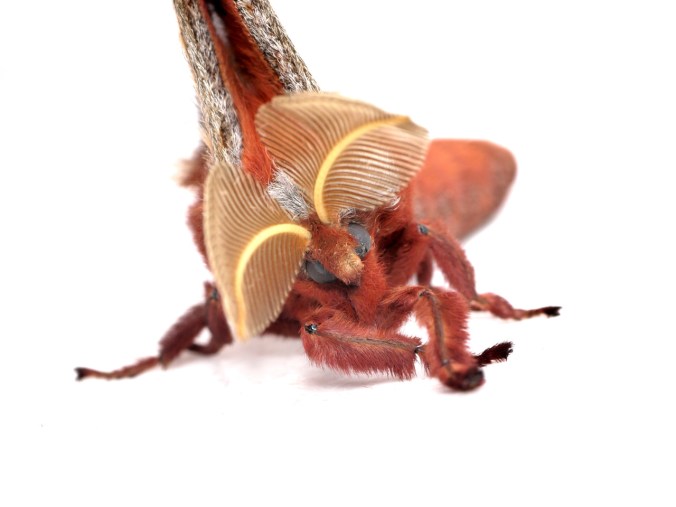
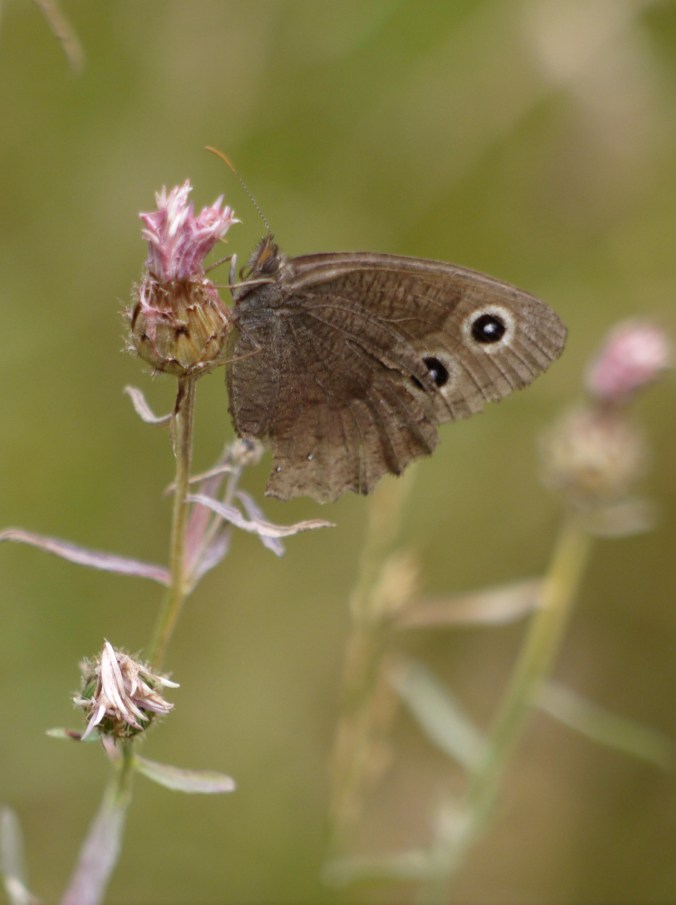
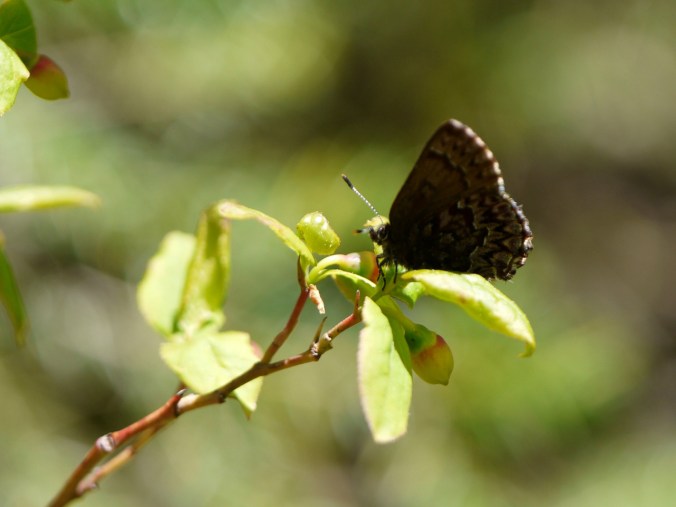
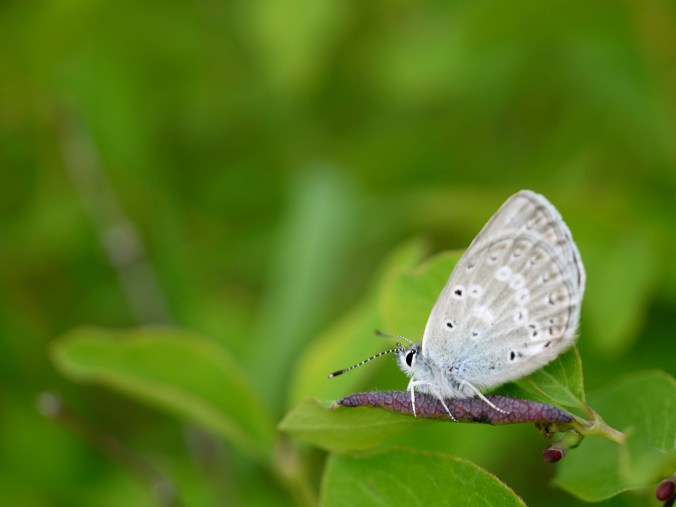
Gnophaela vermiculata “Police-car Moth” Arctiidae (now Erebidae)

Great Burn, Lolo National Forest, MT
July 10, 2015
Robert Niese

The Police-car Moth had a really big year this summer. During our weekend backpacking trip, we must have seen 30 or 40 individuals! These day-flying moths are found in the Northwest, south to Nevada and New Mexico. They tend to be found at mid- to high-elevations in the middle of summer when meadow plants are in full bloom. The adults feed on nectar and copulate for their month-long lives before laying their eggs on any number of Boraginaceae plants (bluebells, houndstongue, Lithospermum, etc.). The larvae will then hatch and eat like crazy until they hibernate as caterpillars, waiting for snows to melt. This individual is a female and will probably be accosted by a hot-and-ready male at any moment.

Happy National Moth Week!

Paonias excaecata “Blinded Sphinx” Sphingidae

Lewis and Clark Trail State Park, WA
June 9, 2015
Robert Niese

These relatively large sphinx moths are quite common throughout the PNW. Their unusual, scalloped forewings are definitely beautiful, but their most striking feature is certainly their hindwings which possess startlingly prominent eyespots. Sorry I couldn’t get a photo of them for you though. Check out this unhappy individual here instead. Look for them around light sources near riparian, mixed-hardwood forests this summer!

Be sure to participate in National Moth Week July 18-26! To find events near you, check out their webpage! This year, we’re focusing on the Sphingids like this guy here!

Vanessa atalanta “Red Admiral” Nymphalidae

Palouse Falls State Park, WA
June 8, 2015
Robert Niese

This lovely Red Admiral sought refuge on this tree as the wind picked up at Palouse. This is an uncommon view of this species whose common name reflects its bright red markings on its upper surfaces. The Red Admiral also has red markings on its underwings, but keeps them hidden while attempting to camouflage itself as it is doing here.

Antheraea polyphemus “Polyphemus Moth” Saturniidae (male)

Missoula, MT
June 11, 2014
Robert Niese

Surprisingly, I found this enormous moth (15 cm wingspan!) in a parking lot on my way into work on the University of Montana campus.

Nymphalis antiopa “Mourning Cloak” Nymphalidae

Salmon-Challis National Forest, ID
March 20, 2015
Robert Niese

Mourning Cloaks are very territorial butterflies and will aggressively defend their feeding sites against intruding insects and have even been known to chase off hummingbirds! Also, March is really early to be seeing these guys out and about. There are hardly any flowers blooming that early!

Ochlodes sylvanoides “Woodland Skipper” Hesperiidae

Missoula, MT
September 2, 2013
Robert Niese

These little guys are pretty common around Missoula in the late summer when they complete their metamorphosis. Look for them in grassy areas throughout the Pacific Northwest feeding on Asteraceae flowers like these weedy asters.

Limenitis lorquini “Lorquin’s Admiral” Nymphalidae

Mount Rainier National Park, WA
August 12, 2013
Robert Niese

These butterflies will aggressively defend their feeding sites throughout the summer, chasing off rival males as well as other intruding insects and even hummingbirds.