tumblr_o8d7ap23dk1tmun60o1_1280

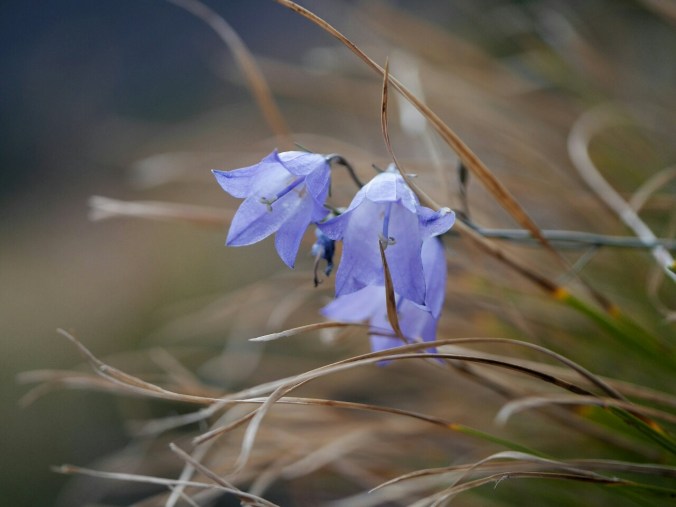
Campanula rotundifolia “Mountain Harebell” Campanulaceae

Two Medicine, Glacier National Park, MT
October 8, 2015
Robert Niese

The Mountain Harebell has a circumpolar distribution where it tends to be a late-blooming perennial. As a native of the British Isles, the harebell has attracted the attention of many a great English poet, including William Shakespeare, John Clare, and Christina Rossetti. Here in the PNW, the Haida people called them “blue rain flowers” and believed that picking them would cause it to rain.

tumblr_o8gxmyne7v1tmun60o1_1280

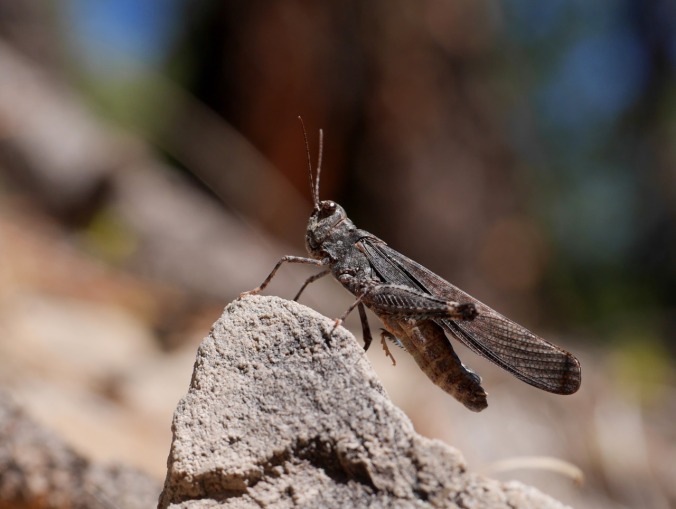
Trimerotropis verruculata suffusa “Crackling Forest Grasshopper” Acrididae

Mt. Sentinel, Lolo National Forest, MT
September 12, 2015
Robert Niese

BugGuide has become an indispensable resource for all my insect identification needs, but rarely do I come across pages so eloquently and comprehensively written as those by David Ferguson. His passion for band-winged grasshoppers makes these entries a joy to read:

“T. verruculata suffusa is one of the most common and conspicuous Band-wing Grasshoppers in open pine forests of the Rockies and Sierras, where it can be seen (and heard) on most any warm summer or autumn day. The “crepitation” produced in flight is a relatively loud crackling sound, and sometimes males will hover and crackle for several seconds at a time. Never is it so loud and conspicuous as Circotettix species (to which it is related and similar), but nearly so.”

tumblr_o8d79mtvoi1tmun60o1_1280

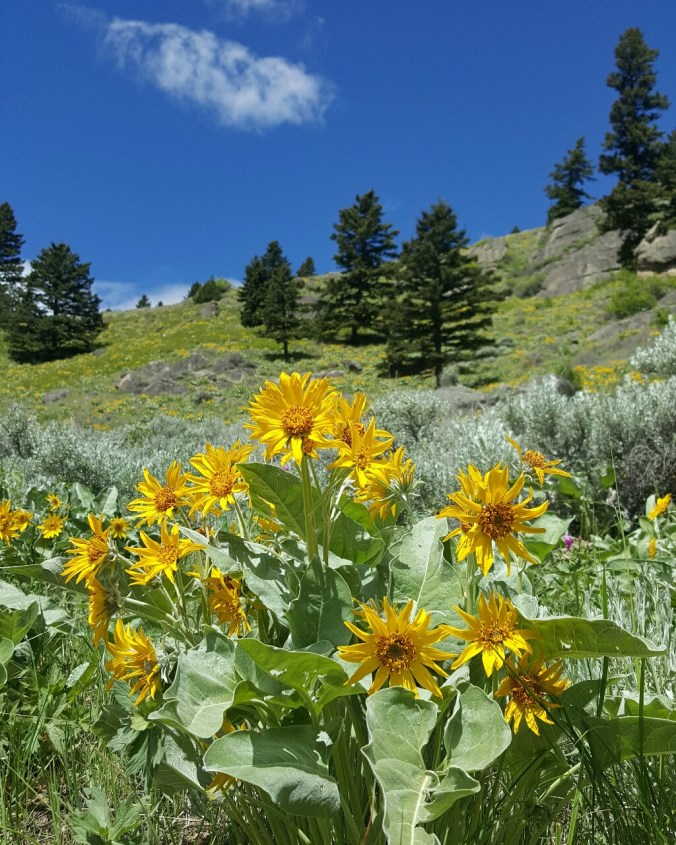
Balsamorhiza sagittata “Arrowleaf Balsamroot” Asteraceae

Tobacco Root Mountains, MT
June 3, 2016
Robert Niese

I recently acquired a new phone with a decent camera! This was especially fortuitous last week when I managed to accidentally stumble upon this huge late bloom of balsamroot without my DSLR handy. These hillsides were still completely blanketed in blooming B. sagittata, while Missoula’s hillsides have all faded in the past few weeks. And for the record, this phone camera has more megapixels than my first DSLR… Weird.

tumblr_o8cztbrubu1tmun60o1_1280

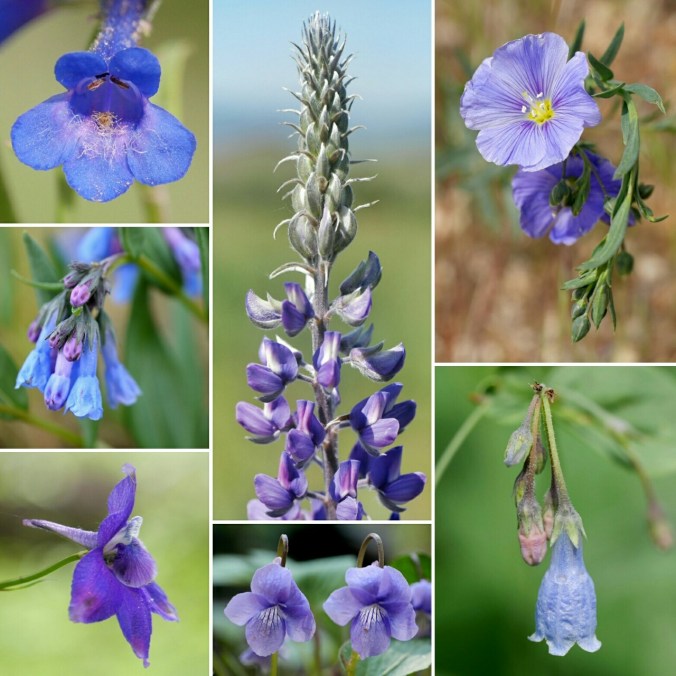
Blue and violet wildflowers in-bloom in the first week of June

(from top-to-bottom, left-to-right: Penstemon sp., Mertensia longiflora,Delphinium bicolor, Lupinus sericeus, Viola adunca, Linum lewisii, Mertensia paniculata)

Lolo National Forest, MT
June 2014, 2015, 2016
Robert Niese

I finally have an instagram with loads of not-so-sciencey nature and personal content! Feel free to drop by and peak into the life of a nerdy natural historian!
www.instagram.com/robertniese/

tumblr_o7lk36bgmx1tmun60o1_1280

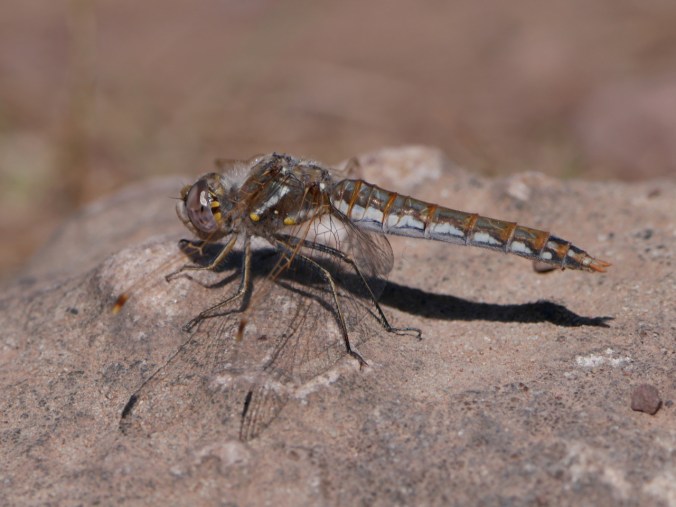
Sympetrum corruptum “Variegated Meadowhawk” Libellulidae

Blue Mountain National Recreation Area, MT
May 13, 2016
Robert Niese

As its name might suggest, these dragonflies are quite variable. So much so, that I’m questioning this ID (corrections would be very much appreciated). For more info on how to identify PNW odonates, check out this field key from the Slater Museum of Natural HistoryS. corruptum is a relatively common dragon found throughout much of northern North America near boggy meadows, swamps or ponds. During migration, however, it can be found wandering through just about any habitat from Honduras to Mongolia. Dragonflies are impressive migrators and some species can regularly travel 100 miles in a single day.

tumblr_o7qw6bnck01tmun60o1_1280

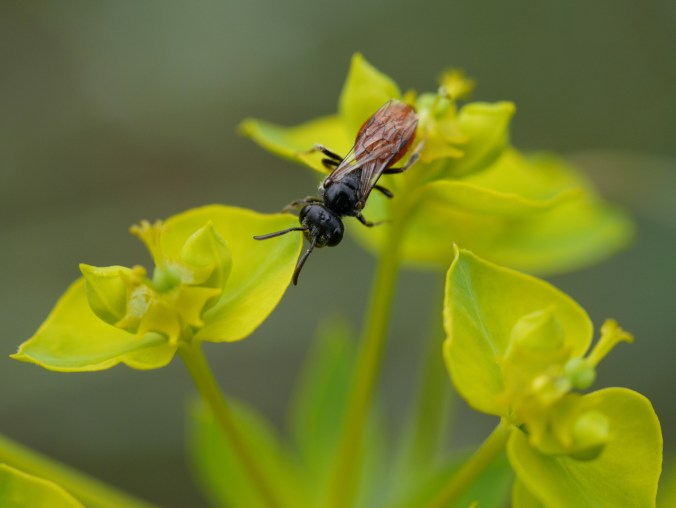
Sphecodes (arvensiformis) “Cuckoo Sweat Bee” Halictidae
on Euphorbia esula “Leafy Spurge” Euphorbiaceae

Blue Mountain National Recreation Area, MT
May 16, 2016
Robert Niese

Sphecodes bees are cleptoparasitic, cuckoo-like bees that lay their eggs in the nests of other sweat bees. Despite their outward appearance, these insects are not wasps, but they have converged on a very cuckoo-wasp-like life-history strategy. A female enters the nests of another Halictid, consumes a developing egg and replaces it with her own. Unfortunately, these bees, like the vast majority of Halictids, are very poorly studied and there are few entomologists capable of accurately identifying them beyond the genus level. Oh, and by the way, Leafy Spurge, while it is one of Missoula’s most widespread invasives, is also one of my favorite spring plants. They’re just such odd organisms! More photos and natural history info to come, I’m sure.

Looking back at my other photos of these bees from years ago makes me realize how far my skills as a photographer and natural historian have progressed.
tumblr_o7qvgovghb1tmun60o1_1280

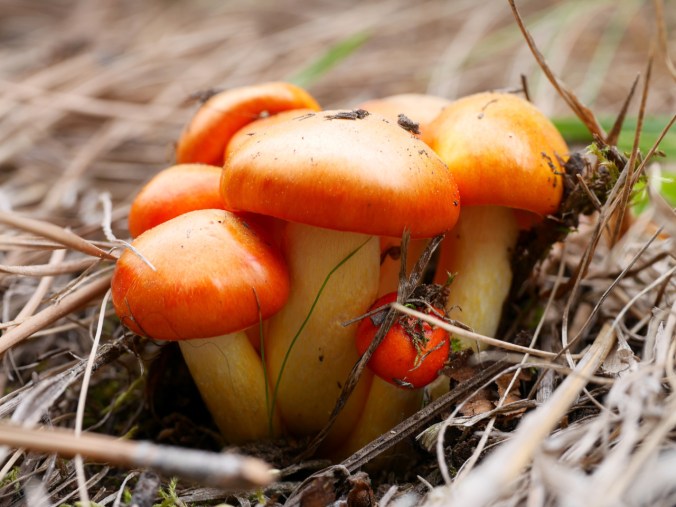
Hygrophorus speciosus “Brilliant Wax-cap” Basidiomycota

Blue Mountain National Recreation Area, MT
May 16, 2016
Robert Niese

The wax-caps were once considered to all be members of the genus Hygrophorus, but have recently been divided into several new genera, all of which are still taxonomically debated. This particular species remains in the genus Hygrophorus due to its ectomicorrhizal growth habit. You can find it in drier, east-side forests where larch is abundant.

tumblr_o7a6g6nfu21tmun60o1_1280

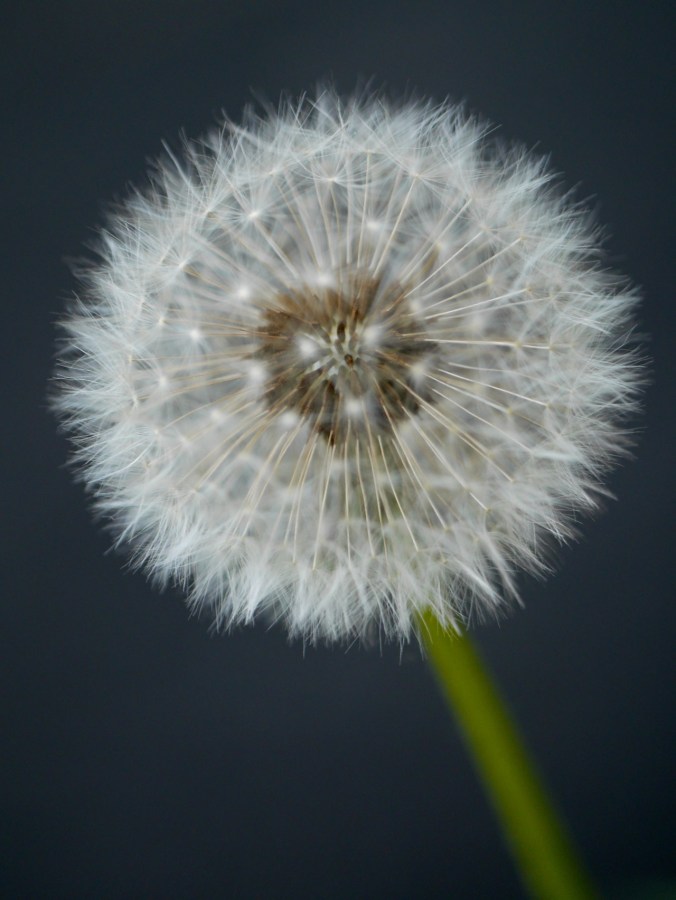
Taraxacum officinale “Common Dandelion” Asteraceae (Compositae)

Missoula, MT
May 2, 2016
Robert Niese

Generic, but beautiful nonetheless. Each of those tiny wind dancers is actually a fruit called an achene. Each achene arose from an individual flower of which there are hundreds in a single dandelion head (actually there are only 50-200 flowers per head, but “hundreds” sounds better) . This is where the family got its old name, “Compositae.” Each of their composite “flowers” are made up of loads of tiny individual flowers. So next time your lover asks for flowers, pick them a couple dandelions and astound them with an offering of many hundreds of flowers instead of a measly dozen roses.

tumblr_o74mf1byux1tmun60o1_1280

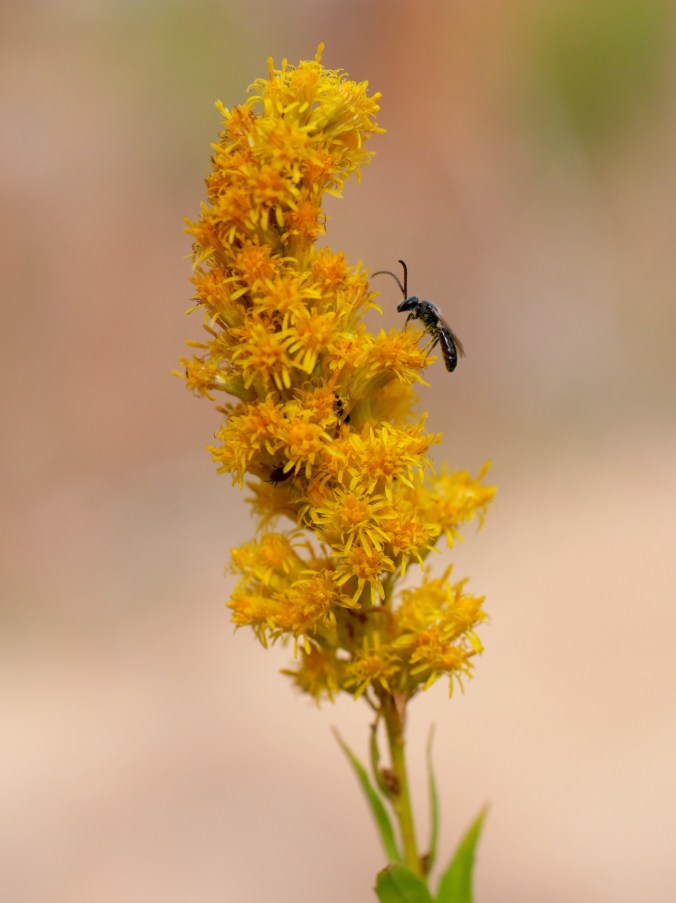
Lasioglossum (Hemihalictus) sp. “Weak-veined Sweat Bee” Halictidae
on Solidago missouriensis. “Prairie Goldenrod” Asteraceae

Apgar Lookout Trail, Glacier National Park, MT
October 9, 2015
Robert Niese

Lasioglossum is the world’s largest genus of bees and contains more than 1700 species worldwide. Like many other speciose invertebrate genera, we know relatively little about these organisms and only a handful of entomologists worldwide are capable of identifying them to species. In the last five years, researchers throughout North America have revised the taxonomy of this group using phylogenetic data, new morphological characters, and over 10,000 museum specimens. According to their keys, this particular individual is possibly a male L. (Hemihalictus) inconditum.