Ectoedemia sericopeza “Norway Maple Seedminer” Nepticulidae

Missoula, MT
September 25, 2014
Robert Niese

These teensy-tiny moths are rarely over 2mm in length and are among some of the smallest lepidopterans in the world. Their larvae, which are equally infinitesimal, feed exclusively on (and within!) the tissues of the Norway Maple (Acer platanoides), an introduced species which lines most of our streets here in Missoula.

Happy National Moth Week!

Anania hortulata “Small Magpie” Crambidae

Tacoma, WA
July 8, 2013
Robert Niese

The Small Magpie is an adorable moth that was accidentally introduced from Europe. Its larvae feed on Stinging Nettle (Urtica dioica) and many members of the mint family.

Happy National Moth Week!

Gnophaela vermiculata “Police-car Moth” Arctiidae (now Erebidae)

Great Burn, Lolo National Forest, MT
July 10, 2015
Robert Niese

Here’s another intimate moment between two Police-car Moths from my backpacking trip the other weekend. They really were copulating everywhere. The males will carry their partners through the forest as they both continue to feed on nectar. Eventually they will detach and the female will seek out a Bluebells plant (Mertensia) or some other member of Boraginaceae to lay her eggs.

Happy National Moth Week!

Alucita montana “Montana Six-plumed Moth” Alucitidae

Missoula, MT
November 20, 2013
Robert Niese

This is a member of a rather large group of moths that fly using rackets, not paddles. The “plumes” of the plume moths are remarkably similar to feathers on a bird. Learn more about how these cool organisms are capable of flying here.

Happy National Moth Week!

Alucita montana “Montana Six-plumed Moth” Alucitidae

Missoula, MT
November 20, 2013
Robert Niese

This is a member of a rather large group of moths that fly using rackets, not paddles. The “plumes” of the plume moths are remarkably similar to feathers on a bird. Learn more about how these cool organisms are capable of flying here.

Happy National Moth Week!

My spider photos and some of my natural history writings have been featured on the Oregonian’s website! I’m so excited to see my work getting out to the public!

Check it out!

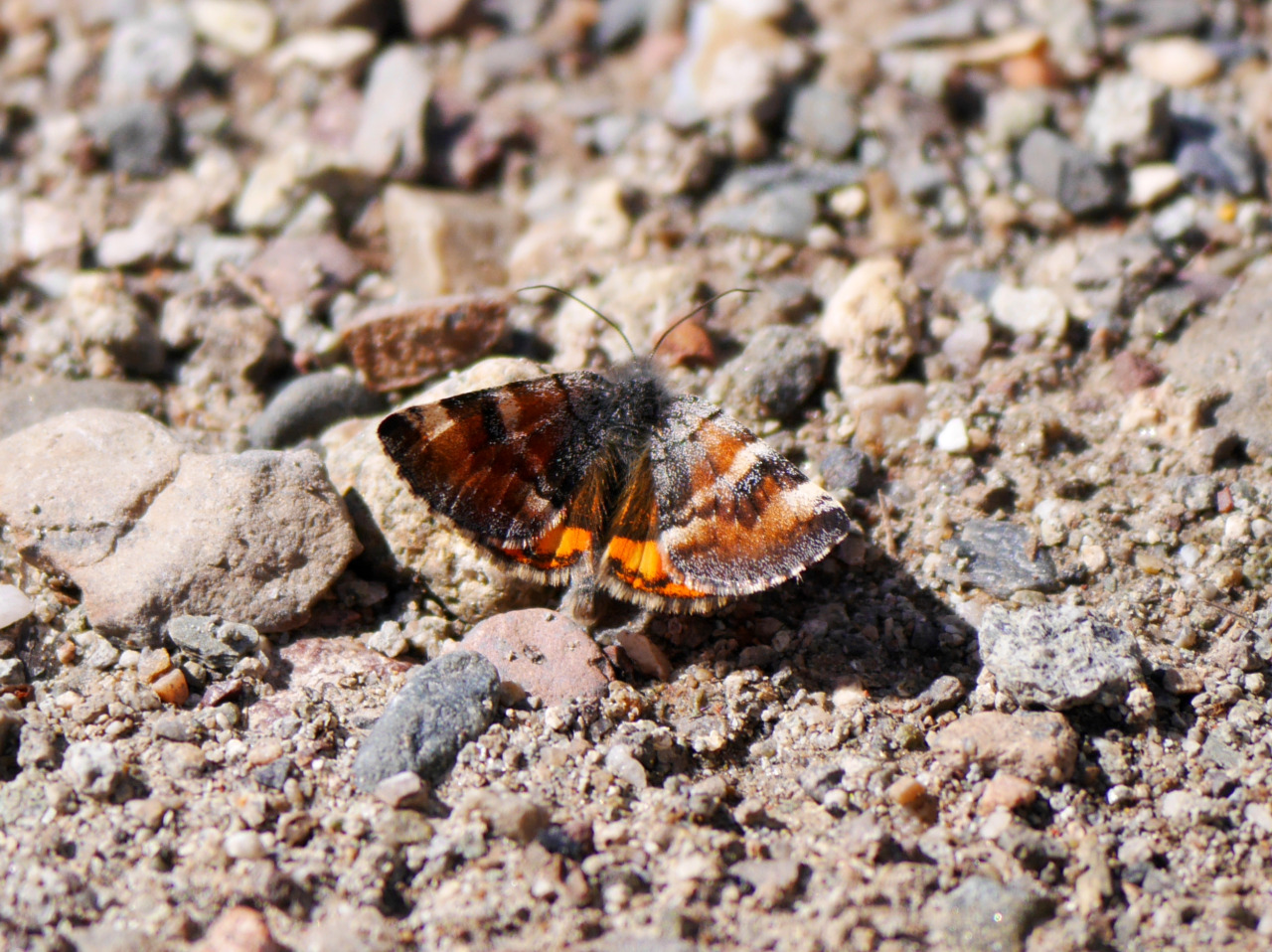
Archiearis infans “The Infant” Geometridae

Salmon-Challis National Forest, ID
March 20, 2015
Robert Niese

When I first saw this flashy, day-flying moth, I immediately assumed it was a skipper butterfly! Took me a while to realize it was actually The Infant, an inchworm moth (Geometridae). This species is called “The Infant” because it is one of the very first moths to emerge from hibernation in the spring. This individual was fluttering around some moist gravel, sipping up water and minerals in the sunshine. Apparently, Song Sparrows have been observed hunting Infants in muddy areas like this, because it is one of the only times the moth is still enough to be captured. The Infant is found throughout the west in areas with birch and alder, and is the only member of this genus in North America.

Happy National Moth Week!
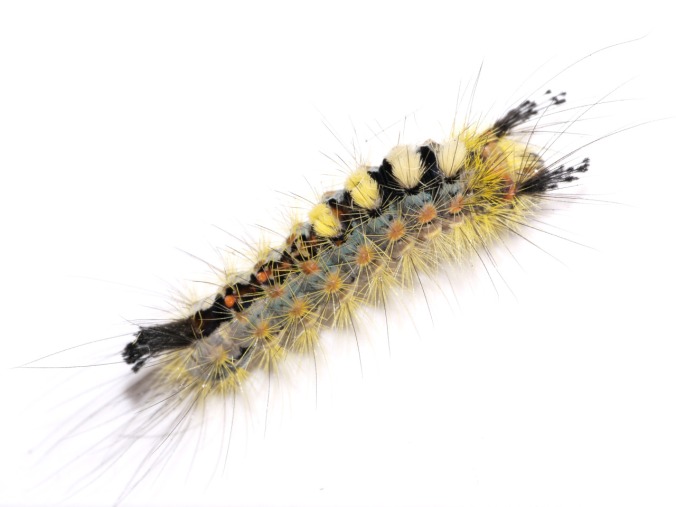
Orgyia antiqua “Rusty Tussock Moth” caterpillar Lymantriidae (now Erebidae)

Tacoma, WA
July 12, 2013
Robert Niese

This species is widely dispersed throughout both hardwood and coniferous forests in North America. Here in the Pacific Northwest, it tends to be restricted to moist, low elevation forests west of the Cascades. The caterpillars of this species are generalists and can eat both conifers and flowering plants.
Fun fact: female tussock moths are flightless and lay their eggs en masse on their cocoon. In order to disperse into the wide world beyond the cocoon they’re born on, freshly-hatched larvae will balloon away on the wind.

Happy National Moth Week!
Scoparia basalis “Many-spotted Scoparia” Crambidae

Point Defiance Park, Tacoma, WA
July 22, 2013
Robert Niese

Our night of mothlighting in Point Defiance Park was chock-full of these adorable little (1cm!) Crambids. Definitely our most abundant moth of the evening! Caterpillars of Scoparia moths are poorly described, but some scientists think they might live in and feed on mosses before reaching adulthood. This might make sense considering that the forests in Point Defiance Park are dripping with mosses!

Happy National Moth Week!