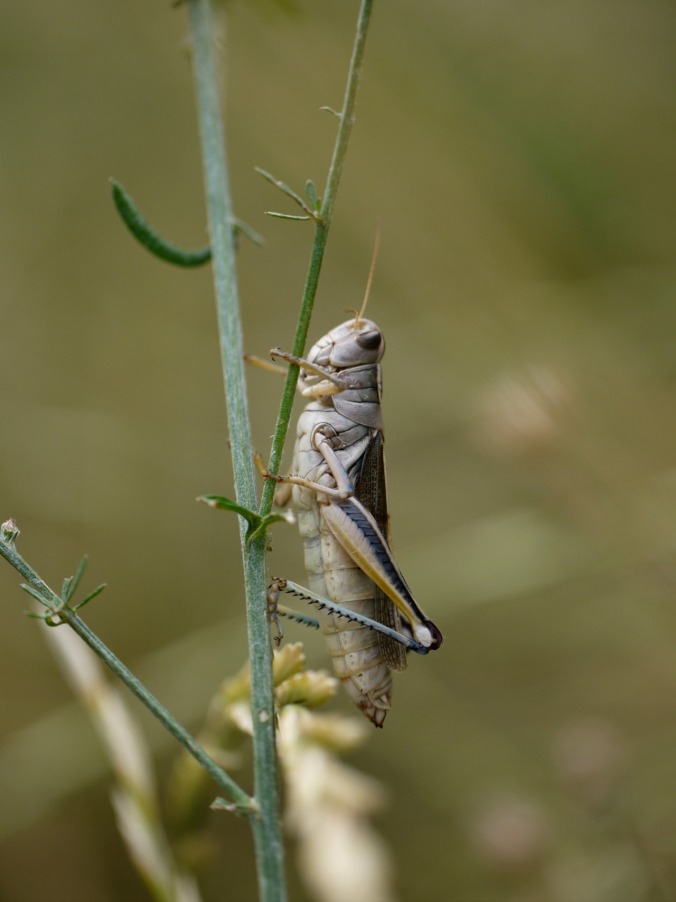
Melanoplus bivittatus bivittatus “Two-striped Grasshopper” Acrididae

Missoula, MT
September 2, 2013
Robert Niese

The Two-striped Grasshopper can be found throughout North America and can be quite variable morphologically. In drier regions here in the PNW, M. bivittatus bivittatus tends to be a dull yellow-brown color with blueish legs. In wetter, coastal regions, M. bivittatus femoratus will be green with red legs. Throughout the Northwest however, these grasshoppers are abundant and often found in gardens and vacant lots around town.

Ochlodes sylvanoides “Woodland Skipper” Hesperiidae

Missoula, MT
September 2, 2013
Robert Niese

These little guys are pretty common around Missoula in the late summer when they complete their metamorphosis. Look for them in grassy areas throughout the Pacific Northwest feeding on Asteraceae flowers like these weedy asters.

Populus tremuloides “Quaking Aspen” Salicaceae

Council Grove State Park, MT
March 16, 2015
Robert Niese

We have several species of willows, aspens (well, one aspen), and poplars in the PNW that produce these adorable fuzzy flowers in the early spring. These compact “pussy-foot” catkins are very typical of willows (Salix), but Quaking Aspen produces a very similar inflorescence. The easiest way to tell the two apart is to look at the buds. In Aspen, you’ll see lots of overlapping bud scales while in willows, the buds are smooth and consist of a single, wrap-around scale.

Halictus (Seladonia) tripartitus “Sweat Bee” Halictidae

Missoula, MT
May 13, 2014
Robert Niese

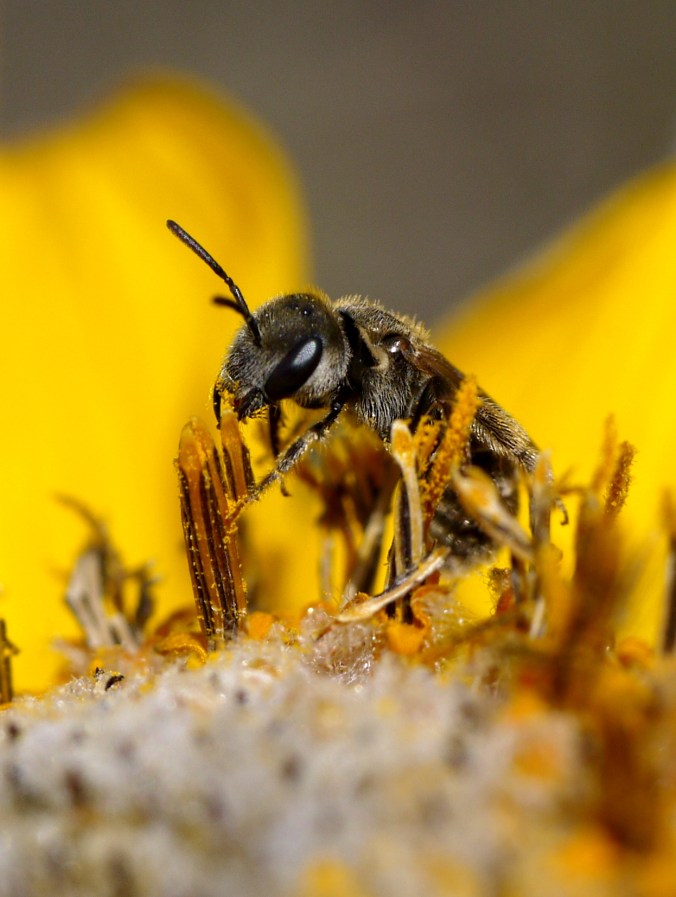
Another species of small Sweat Bee in the genus Halictus. If you’re interested in attempting to identify these bees with a dichotomous key (there are only 10 species in the Northwest, so it’s not too difficult!), check this one out here. Once you learn more about these little guys, you start noticing them everywhere!